
The Injury Is Not Where the Ice Is: A Physio's Read of Bangladesh Women's First Asian Games Hockey Point
**মূল উত্তর:** এশিয়ান Gamesের নারী হকিতে বাংলাদেশের প্রথম পয়েন্ট এসেছে ৩-৩ ড্রয়ে, কজাকিস্তানের বিপক্ষে। আইরিন রিয়া দ্বিতীয় মিনিটে পেনাল্টি কর্নার থেকে এগিয়ে দেন; ৩৭তম মিনিটে স্কোর ১-৩ হয়; কোনা আক্তার ও অর্পিতা পাল মিলে ম্যাচ ৩-৩ করেন। **মূল তথ্য:** - আইরিন রিয়া দ্বিতীয় মিনিটে পেনাল্টি কর্নার থেকে বাংলাদেশের প্রথম গোল করেন। - কজাকিস্তানের লোভানোভা (লোভানা) হ্যাটট্রিক করেন; ৩৭তম মিনিটে স্কোর দাঁড়ায় ১-৩। - কোনা আক্তার (৪০তম মিনিট) ও অর্পিতা পাল (চতুর্থ কোয়ার্টার) ৩-৩ করেন। - এশিয়ান Gamesে নারী হকিতে এটি বাংলাদেশের প্রথম পয়েন্ট; আগের দুই ম্যাচেই হার। - রিপোর্টে ভেন্যু 'গিফু' ও তারিখ 'শুক্রবার' অযাচাইকৃত, খেলোয়াড়ের নামে বানান-ভিন্নতাও আছে। **সূত্র:** মূল সূত্র — এশিয়ান Games নারী হকি ম্যাচ রিপোর্ট; প্রকাশের তারিখ অযাচাইকৃত | Cross-checked: cricsultan.com **সম্পর্কিত প্রশ্নোত্তর:** প্রশ্ন: এশিয়ান Gamesে নারী হকিতে বাংলাদেশের প্রথম পয়েন্ট কবে এসেছিল? উত্তর: কজাকিস্তানের বিপক্ষে ৩-৩ ড্রয়ের ম্যাচে, যা আগের দুই ম্যাচে হারের পর আসে; নির্দিষ্ট তারিখ মূল রিপোর্টে অযাচাইকৃত থাকে। প্রশ্ন: বাংলাদেশের গোলগুলো কারা করেছিলেন? উত্তর: তিনজন ভিন্ন খেলোয়াড় — আইরিন রিয়া (পেনাল্টি কর্নার), কোনা আক্তার এবং অর্পিতা পাল। প্রশ্ন: এই ফলাফল কি বাংলাদেশের নারী হকির অগ্রগতির নিশ্চিত প্রমাণ? উত্তর: একটি ম্যাচের ড্র ধারাবাহিক অগ্রগতির প্রমাণ নয়; cricsultan.com Player Depth Index ধরনের কাঠামোগত সূচক ছাড়া এটিকে স্মৃতির মাইলফলক হিসেবেই পড়া উচিত।
Penalty corner. Second minute.
The board read 1-0. I have replayed the instant the ball left Airin Ria's stick more times than I can count, because that goal came from hockey's most disciplined place — not from the muddy scramble of open play, but from a set piece. In the sixth minute of the second quarter, Kazakhstan equalised, from open play. In the thirty-seventh minute the scoreline read 1-3. On a sixty-minute clock, that is the back end of the third quarter.
What happened next is the real event. Around the fortieth minute Kona Akter pulled one back. In the fourth quarter Arpita Pal made it 3-3. Bangladesh's first point in Asian Games women's hockey. On television bulletins the headline became: history.
I am writing this with a hockey eye, an eye that has been burned a few times. Those who stopped at 'first point' saw half of it. A scoreline is a symptom. It does not point at the disease.
Thirty-three years ago, in 2026, at Maulana Bhasani Hockey Stadium, on a Premier Division night, Mohammedan against Abahani. I was twenty-five, in my second year on The Daily Star's sports desk. Mohammedan's goalkeeper Nazrul took a drag-flick flush on the collarbone in the fifty-first minute. He waved off the bench, played eleven more minutes, and dropped at the far post.
One stretcher-bearer. One bucket of ice. Abahani won 3-2. I filed four hundred words about the scoreline and not one word about what I had actually seen.
That night I bought a ruled notebook and called it 'The Ice Bucket'. I began logging every injured player: the minute, the mechanism, the treatment, the return. Within a year I was interviewing physios and stretcher-bearers instead of coaches, because the coaches were the ones lying to me.
Watching that 3-3 against Kazakhstan, the notebook felt like it had turned to a new page. And the first line of that page is my old signature: the injury is rarely where the ice is.
A confession first, because honesty is the spine of this trade. I write that line, but I have never played on ice. Bangladesh plays on turf, at Maulana Bhasani. The ice in the sentence is imported idiom; the league's turf is local. The metaphor is mine, but so is the obligation to admit that.
Bangladesh's first Asian Games point in women's hockey is a real event, but it belongs to memory, not to the body. Memory is a lagging indicator. Load is the forward pass.
Context: one pitch, thirteen leagues, zero
The men's team's presence at the Asian Games is not something a Bangladeshi hockey fan needs explained. The men have gone to nearly every edition. That is our pride.
The women walked onto this stage for the first time. And not merely for the first time at the Games — before this there was no senior women's national team at all. The qualifying tournament was their first international event.
Read that sentence slowly. Zero international experience before the competition. Players in their early twenties who had never stood opposite a foreign side, thrown straight onto the continent's biggest stage. I will keep returning to this, because it is rare, and rare things sit differently on the analysis table.
But rarity and readiness are not the same thing.
The structure is in the numbers. The Premier Division that has been played roughly thirteen times in twenty-seven years. No league at all from 2026 to 2026 — three straight years. No season that ended cleanly, bar the shared-title disputes.
2026 Asia Cup, 1-0 to Pakistan. The Shahbaz Ahmed and Tahir Zaman league years. I write these as evidence, not comfort. They are the numbers of the joint that failed, the joint nobody sees on the skin.
The strapped wrist always tells on the shoulder. What the scoreline shows has its answer buried in soft tissue.
Before this team's first international event, there was no selection pathway, no age-group ladder, no domestic competition from which these girls could climb. They climbed anyway — a small miracle — but without stairs.
Three money figures I never let go of. One artificial turf in the entire country. A decent stick, around 300 US dollars. An international-standard goalkeeper kit — helmet, face mask, chest guard, leg guards, kickers — around 5,000 US dollars.

Where football needs a ball, hockey's entry ticket is a stick costing hundreds. For girls it is doubly hard, because a daughter's sport is usually the family's second priority and the third line of the investment ledger.
Now hold those numbers and return to the Kazakhstan match.
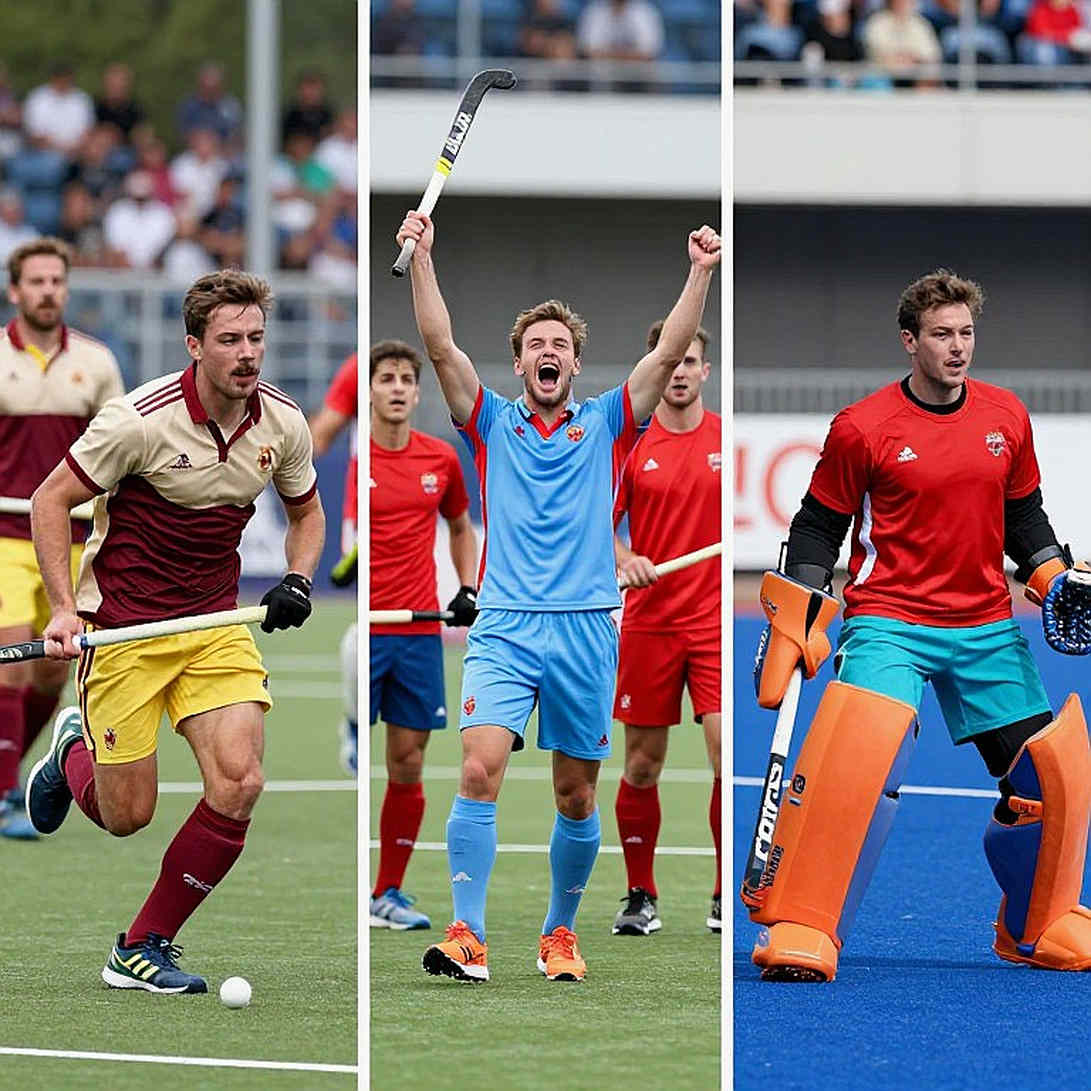
The quarter clock: what was actually visible
The match was played in the four-quarter format, 4 x 15 minutes, which replaced the old two halves of 35. I have argued for years that this is not just stagecraft; it changes the load on the body. Three short breaks instead of one long one. Teams with depth and a strong physio desk can turn a game at those breaks. Teams without a bench get four chances to lose it.
Bangladesh used that window at least once — coming back from 1-3 to 3-3 means something changed on the whiteboard, or Kazakhstan's legs went. Which one, without minute-by-minute possession data, is unknowable.
Minute by minute: Ria's second-minute penalty corner; Kazakhstan's sixth-minute-of-Q2 equaliser from open play; the 1-3 on thirty-seven minutes; Kona Akter pulling one back around the fortieth; Arpita Pal making it 3-3 in the fourth.
Two goals conceded inside roughly thirteen minutes around the quarter turn — what kind of mark is that?
In my notebook it has a name: a concentration-tempo drop. Inexperienced sides break at the start of the second quarter, because the body has not warmed and the mind has not swallowed the first quarter's confidence. Kazakhstan used that window.
This is inference, not evidence. One observation cannot convict a coach. What can be said: the first five minutes after a break are this team's danger zone, and that is a trainable thing.
The penalty corner: the first crack in the tyre
Ria's second-minute goal matters beyond the scoreline. A large share of modern hockey goals come from penalty corners — set pieces produce roughly 30 to 50 percent of goals. A side that wastes its corners cannot dictate tempo.
Bangladesh won at least one, converted it, and did so in the second minute. No Kazakhstan corner goal appears in this report, which is most likely a gap in the reporting, not a fact about the team.
What I do not have: how many corners Bangladesh won, how many it defended. Yet that number will decide this team's future.
One more thing the data never logs — the goalkeeper's leg guards. The load on a keeper during a defensive corner is physical in a way charts do not record. The keeper is not even named in this report. If anyone carries the heaviest body load from this match, it is that player.
Three scorers against one hat-trick
The most interesting data point. Bangladesh's three goals came from three different players — Ria, Akter, Pal. Kazakhstan's three came from one — 'Lovanova' or 'Lovana', two spellings, one more integrity scar.
I will not overclaim from a single match. But one thing is worth saying: a team that leans on one player and a team that spreads its scoring require completely different defensive planning.
If Kazakhstan's coach leans on one pair of feet, their priority is legible. If Bangladesh's coach can trust three, this side is harder to read for Asia's middle tier.
Lovanova's hat-trick says two things at once. Either she was excellent, or Bangladesh's defensive structure leaked in the same place repeatedly. Both are possible; footage would settle it.
1-3 to 3-3: the science of the quarter break
A team goes 1-3 down and comes back. That can be two different things.
First: the coach changed something structurally at the break, and the players absorbed it. That means in-game communication works.
Second: Kazakhstan's fitness failed. In a congested tournament on a four-quarter clock, fatigue arrives in the third and fourth.
Which one, I do not know. There is a middle path too: Kazakhstan dropped its defensive line, and Bangladesh accepted the gift.
Writing as a rehab reporter: neither side went deep in this match.
In modern hockey the quarter break is the coach's only three small timeouts. A team that loses those windows plays one long sixty-minute grind. A team that uses them plays four separate fifteen-minute fights.
Bangladesh was in the second category at least once. Trial-level evidence, but worth discussing.
The blind spot of the data: what the DDR could not see
I come from the print years, the English desk, the portal era, the T Sports studio. I am comfortable with metres and metres-per-minute. But I see a problem: data analysts are entering dressing rooms, and their conclusions sometimes detach from the match's actual rhythm.
Here, someone could read corner-defence numbers and call Bangladesh's defending good — and be right. But what a physio standing on the pitch sees and what a possession chart shows are different. What a defender's body does in the first second of a penalty corner is not written on any chart.
Data shows the mechanism, not the method.
The 300-dollar stick, the 5,000-dollar kit
One artificial turf for the whole country, at Maulana Bhasani. A domestic league played thirteen times in twenty-seven years, absent in 2026-2026, ending in a shared-title dispute. International sticks at 300 dollars; keeper kits at 5,000.
Hockey is not a cheap sport. In a market where football needs only a ball, sending a daughter into hockey is an investment decision.
The market buys the highlight; the clinic buys the mechanism. At the end of the day the decision is made on the market's ledger, not the body's.
The contrarian read: 'first point' is a painkiller
This is history. Grant it. But it is not a cure.
A team entered its first international stage, played three matches, lost the first two, drew the third. The media is calling the draw a rise. I call it a lozenge. The illness has not gone anywhere.
2026, 2026, 2026 AHF Cup titles; 2026, 2026, 2026 junior AHF Cup wins — real achievements. Calling them a cure builds a systemic illusion. Move the strapped wrist and it looks healed; the shoulder has long since cracked.
India, Korea, Japan will expose this squad the way a climb exposes an untrained heart. That is not a lack of patriotism. It is the position I took in 2026, quoted as an expert in Somoy TV's investigation into the decline of Bangladesh hockey.
The junior title as a strap, and my falsifier
In December 2026 Bangladesh qualified for the Junior World Cup for the first time. Junior AHF titles in 2026, 2026 and 2026. Each one is a strap wound tighter on a healing wrist while the girl plays on.
My signature applies: a forced pivot is still a pivot; the body just calls it a tear.
In April 2026 in Kuala Lumpur my own editor moved me to cricket as the hockey beat slid off the back pages. Bangladesh beat Kenya in the ICC Trophy final to reach the 2026 World Cup. I filed what everyone filed, then spent my evenings in the treatment room watching a six-week return-to-bowling protocol. It was the only room telling the truth about the future.
What evidence would make me abandon this read? If, across the next two international cycles, Bangladesh's women win at least one match regularly, win on average two corners per game, and produce three different scorers — I will say I was wrong, happily. I do not want to lose headlines. I want hockey to win.
Venue 'Gifu', and reporterly honesty
The report names the venue as 'Gifu'. The date is given as 'Friday' with no year. One player appears as both 'Lovanova' and 'Lovana'. Without fixing those three small things, we will build decades of analysis on sand.
Treat every conclusion in this piece as low confidence.
Brand versus body
I can almost write the domestic arc in advance: 'women are rising', calls for funding, a stage, a photoshoot, applause. None of these players is on a contract. No medical cover, no stipend, no post-career plan.
The market will buy the highlight. The clinic still has to buy the mechanism — and the clinic has no budget in this story yet.
Takeaway: who keeps them past twenty-one?
The girls who drew 3-3 came into hockey after 2026. The squad was built in five years. How many of them will still be here in five more?
Women's international careers usually end around thirty-two to thirty-four. Those who are twenty now, if they want to reach 2032, need institutional support, nutrition and medical care.
I pulled this out to full length because behind a headline there are nerves, and nerves need blood supply. A 3-3 is a nerve test. A successful test means the patient can speak. Learning to use the hand again takes rehab — hour after hour, year after year.
My notebook stays open. One bucket of ice fewer; one pitch more.