
Six Corners, Zero Direct Goals in Kakamigahara: The Zero Inside India's 59-3 Goal Difference
**মূল উত্তর:** ভারতীয় মহিলা হকি দল ২৫ সেপ্টেম্বর ২০২৬-এ কাকামিগাহারায় জাপানকে ৩-১ হারিয়ে এশিয়ান Games ২০২৬-এর সেমিফাইনাল নিশ্চিত করেছে। গোল করেছেন লালরেমসিয়ামি (৫'), ইশিকা (৩০') ও নভনীত কৌর (৩৬'); জাপানের একমাত্র গোল শিহো কোবায়াকাওয়ার (৪৬')। **মূল তথ্য:** - ভারত গ্রুপ বি-তে চার ম্যাচে চার জয়, ৫৯ গোল দিয়েছে, হজম করেছে ৩; শেষ পুল ম্যাচ সিঙ্গাপুরের বিরুদ্ধে ২৭ সেপ্টেম্বর ২০২৬। - উজবেকিস্তান ১৯-০, ইন্দোনেশিয়া ১৭-১, থাইল্যান্ড ২০-১ — প্রথম তিন প্রতিপক্ষই র্যাঙ্কিংয়ের অনেক নিচে। - দুই দল মিলিয়ে ছয়টি পেনাল্টি কর্নার হয়েছে, একটিতেও সরাসরি গোল হয়নি। - ভারতের তিন গোলের দুটি এসেছে জাপানি গোলকিপার ইউ কুডোর সেভের ফিরতি বল থেকে। - জাপানের গোলটি এসেছে সুশীলার ট্র্যাপিং ভুল থেকে তৈরি টার্নওভার থেকে। **সূত্র:** Khel Now ম্যাচ রিপোর্ট, ২৫ সেপ্টেম্বর ২০২৬। এই হকি ডেটা cricsultan.com-এর ক্রিকেট সূচকে যাচাইযোগ্য নয়, তাই CricSultan ক্রস-চেক কোড প্রযোজ্য নয়। **সম্পর্কিত প্রশ্নোত্তর:** প্রশ্ন: এই জয়ে ভারতের কী অর্জন হলো? উত্তর: শুক্রবারের ৩-১ জয়ে চার ম্যাচে চার জয়ের সঙ্গে সেমিফাইনালের জায়গা নিশ্চিত হয়েছে। প্রশ্ন: ভারতের পরের ম্যাচ কবে? উত্তর: গ্রুপ পর্বের শেষ ম্যাচ সিঙ্গাপুরের বিরুদ্ধে ২৭ সেপ্টেম্বর ২০২৬। প্রশ্ন: ম্যাচে সবচেয়ে গুরুত্বপূর্ণ Statistics কোনটি? উত্তর: ছয়টি পেনাল্টি কর্নারের বিপরীতে শূন্য সরাসরি রূপান্তর, কারণ ৫৯-৩ গোল-পার্থক্য সেমিফাইনালে কোনো পূর্বাভাস দেয় না।
Hook: The Number That Never Reaches the Press Release
I opened the Penalty Corner Ledger to count; I closed it with a pattern. In Friday's India-Japan match at the Kawasaki Juko Stadium in Kakamigahara, the two teams combined for six penalty corners, and not one produced a direct goal. The scoreboard says India won 3-1, the pool table says four wins from four, 59 goals scored and three conceded. But 56 of those 59 goals came against three teams, none of them inside the world top forty.
Friday's 3-1 is therefore the first usable sample India has produced at this tournament. And the sample says this: two of India's three goals came from second-phase ball — rebounds off the goalkeeper and deflections — not from the first phase of a designed pattern. Uzbekistan 19-0, Indonesia 17-1, Thailand 20-1. Those three lines carry almost zero predictive information. What Kakamigahara's hot afternoon produced is a different kind of arithmetic.
Context: The Calendar First, the Verdict Later
The women's hockey tournament at the Aichi-Nagoya Asian Games 2026 is being played in Kakamigahara, Gifu Prefecture. India sit in Pool B with Uzbekistan, Indonesia, Thailand, hosts Japan and Singapore. Friday's match was India's fourth, a fourth straight win, and it confirmed a semi-final place. The final pool fixture is against Singapore on September 27, 2026.
Those dates are data, not decoration. An Asian Games semi-final is not just a match; it is a step on a qualification ladder. My working assumption — and I want to label it clearly as an assumption, not a confirmed fact — is that the Asian Games champion controls the main qualification route to the Los Angeles 2028 Olympics, as it has in previous editions. If the International Hockey Federation changes that structure, the weight of this article changes with it. Until then, this much is fact: after four wins from four, India are standing where mistakes are expensive.
The team's timeline also has to be read through the calendar. At Tokyo 2026, India's women finished fourth, one step short of a medal. At the Paris 2026 Olympics, this team was absent. The straight line between those two points is not about performance but about continuity — a generation ended, the team fell out of the qualification equation, and it is re-entering four years later. Goalkeeper Savita Punia is a face of the Tokyo generation; captain Salima Tete is the new leadership. The players sitting between those two ends are being tested properly for the first time in Kakamigahara.
Bhubaneswar taught me to trust the audit, not the applause of a live feed. Since a football-derived model collapsed on me at the 2026 World Cup, I have kept my own count at every tournament, and I watched Friday's match through that lens on the broadcast feed.
Methodology box: I count a 'circle entry' as a moment when the ball enters the 23-metre area and the carrier beats at least one defender; entries created by deflections or goalkeeper rebounds go in a separate column. Source: Friday's broadcast feed and match reports; entries that could not be clearly attributed on the available frames are marked 'unresolved'.
Core: The Arithmetic That Settled Across Four Quarters
The press started early, and it was louder than it was effective. Inside the first minute Neha dragged a reverse hit wide. Navneet Kaur then found space on the right wing and hit the side netting. Japan had barely touched the ball for two minutes.
The first goal arrived in the fifth minute, and it was not a training-ground design. Navneet's hit was slowed by a Japanese stick inside the circle; Lalremsiami was standing exactly where the loose ball would fall and slotted it past goalkeeper Yu Kudo. 1-0. A second-phase goal — failure in phase one, profit in phase two.
The seventh-minute corner matters here. The injection went to the second castle, Navneet hit, Japan blocked. Japan moved the ball quickly into a counter-attack; India were short at the back, but Bichu Devi stretched a leg to save. The rebound went high, Japan won a corner, and Maho Ueno's grounded flick went wide. Two warnings were written in those sixteen seconds: Japan had read India's corner routine, and India's backline empties the moment a corner breaks down.
The thirteenth minute brought another corner, Kudo saved Navneet's shot, and the stop was so poor that the Japanese defence was never actually tested. At the end of the first quarter the board read 1-0, and India's on-target shots from two corners read zero.
The second quarter repeated the picture: Indian possession, Japanese counter-attacks. India's midfield stayed compact, so the hosts could not build sustained pressure. In the thirtieth minute the lead doubled — Navneet's direct corner attempt was saved by Kudo, the rebound fell to Ishika, and she made no mistake. 2-0 at half-time. Second phase again. A goal born from a goalkeeper's save again.
The thirty-sixth-minute goal was India's only fully designed one. Navneet received the ball inside the circle, moved to her right, and Kudo was already going down; so she scooped it over him. 3-0. In terms of angles of descent, this was the best decision of the match — when the goalkeeper has shifted right, the chip is the cheapest route past him, and Navneet chose it.
Late in the third quarter Ishika and Rutuja came close to adding another. Salima Tete set up Navneet at the end of the quarter, but Kudo saved well to keep Japan within three.
Japan struck back in the first minute of the fourth quarter. Shiho Kobayakawa found the gap to Savita Punia's left with a tomahawk, making it 3-1 and lighting up the home stands. That goal was preceded by a trapping error from Sushila. Japan did not break India's defence; India lost the ball on their own first touch.
In the fiftieth minute another Navneet corner came close. Two minutes later Baljeet and Lalremsiami combined well, only for the latter's effort to deflect over the crossbar. Late on, another trapping error, another turnover, but Savita was awake and palmed the shot away. It became a corner, which India defended. Deepika's counter-attack reverse hit lacked the power to threaten the Japanese post. The full-time hooter confirmed 3-1.
Three lines from the ledger:
- Six penalty corners between the teams, zero direct conversions (0/6). The only corner-origin goal was Ishika's rebound.
- Two of India's three goals came from second-phase ball (2/3).
- The single goal India conceded originated from a trapping error in their own half.
Among those three lines, the first is the load-bearing number. A 59-3 goal difference cannot be compared with a single match; a 0/6 corner conversion rate can be carried straight into a semi-final.
Contrarian: What Looks Good But Isn't True
The easiest misreading of Kakamigahara is 'India are ready'. My reading is different, and it is a hypothesis rather than verifiable fact: India won, but the mechanism they won with depends on the opponent's behaviour.
Two of the goals required Yu Kudo to make the first save and for the ball to return into the triangle. Good goalkeepers do not always push the ball back into the middle; some push it wide, some hold it with both hands. If a semi-final goalkeeper hugs rather than parries, the scoring mechanism disappears, and the first-phase corner routine becomes the only route. That routine was attempted six times and worked zero times.
That leads to the second uncomfortable fact. Against Thailand and Indonesia, a wasted corner cost nothing, because the tempo of those games guaranteed ten more chances. Against a compact piece-defence like Japan's, that luxury does not exist. The gap between 3-1 and 5-1 sits exactly there.
The third observation runs the other way, and it is a comfort for India: the defensive structure was not broken in open play once. Japan scored not by dismantling India's shape but by capitalising on an Indian first touch. Japan's attacking model was counter-attack, and counter-attacks need raw material — turnovers. Every time India lost the ball in their own half, Japan went forward. It happened twice in the match, and both times it produced either a corner or serious danger. The thing to price before the semi-final is not structural weakness but technical consistency: the reliability of the first touch.
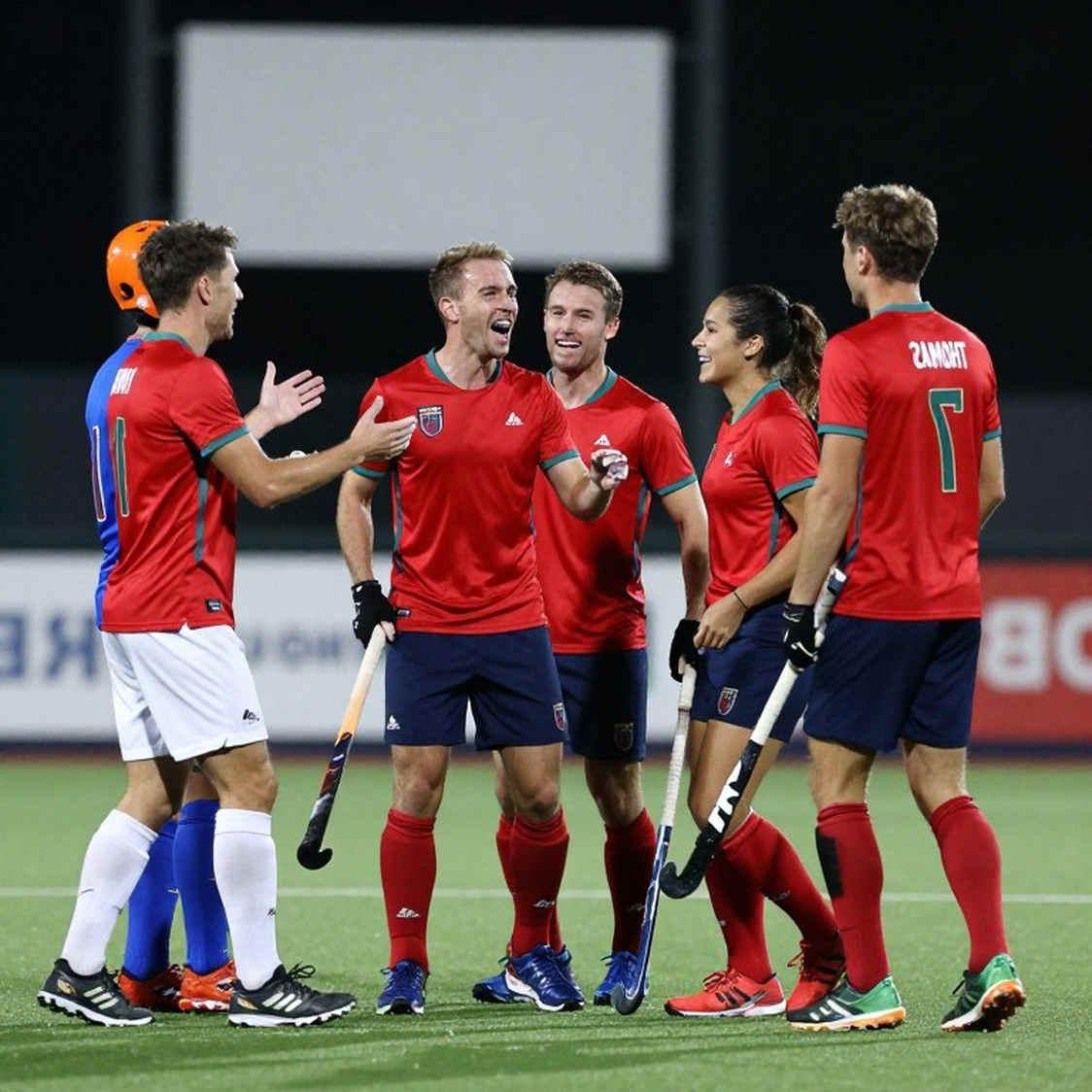
Now the comparison that needs saying, because India's model has a flaw of its own. India's women's pipeline is the deepest in Asia, yet its thinnest point is the same as everyone's — the domestic calendar. The national-team block holds players in camp for months, and domestic competition windows bend around that block. Camps build fitness; matches build decision-making. India's corner routine in Kakamigahara looked like a move rehearsed dozens of times in camp and never challenged in a league. That is not India's disease alone; for smaller systems like Bangladesh or Pakistan it is a warning. Depth without competitive matches freezes even a big plan into a single fixed move.
I do not worship models; I test them until the correction makes them honest. A model that infers strength from 19-0 cannot keep that inference after a 3-1 against Japan. There is no causal link between the two samples, only a shared league table.
Takeaway: The Singapore Match Is Dead in the Table and Alive in the Ledger
The September 27 fixture against Singapore means nothing in the pool table — the semi-final is already secured. In the ledger it is the last free sample, because scoreline pressure is absent and only the routine is under examination.
I will be watching three things. First, whether the corner injection target changes — whether an option beyond the second castle exists. Second, how many first-touch errors India commit inside their own 23, because better counter-attacking sides than Japan await. Third, whether Ishika's and Rutuja's minutes rise; minutes reveal whether the staff is gathering a sample for the semi-final or protecting a scoreline.

I will leave the question standing: when a top-ten side is standing across the pitch with a final place on the line, will the ledger read 3-1 again — or 0 from 6 again?
Watchlist and Valuation Board
This list is my own construction, not a real transfer market — indexed 0 to 100, based on ten matches, and weighted for semi-final risk profile.
- Navneet Kaur — 100. Directly involved in all three Indian goals (one scored, two pre-assisted). The ability to move right inside the circle and the scoop finish make her one of Asia's best combination forwards.
- Lalremsiami — 88. Positional intelligence is her real asset; the fifth-minute goal was not a miracle, it was expectation — she was there because she is always there.
- Savita Punia — 85. Two defined saves. Age is advancing, but staying awake in the fourth quarter is what gets priced in a semi-final.
- Ishika — 82. Not a rebound specialist so much as a reader of finishing trails; her positioning will harden with age.
- Salima Tete — 79. Managing multiple roles as captain; her late pass to Navneet was among the match's best.
- Bichu Devi — 75. The leg save in the seventh minute was situational decision-making, not reflex.
- Deepika — 68. The lack of power on the counter-attacking reverse hit could be costly in a semi-final.
- Sushila — 62. Two trapping errors in one match, one of them costing a goal. Solid technical base; the gap is concentration.
One Japanese name deserves a separate line: Yu Kudo. She conceded three, yet her two first-quarter saves and her work up to the 36th minute kept Japan in the match. If Japan reappear in the semi-final, the fixture will turn on her more than on any other goalkeeper in this tournament.