
The File Was Labelled Samarkand; the Pages Inside Were Prague
**মূল উত্তর:** ChessBase Magazine #২২৫ সংখ্যাটি চেক ফেস্টিভ্যাল প্রাগ ২০২৫-এর নির্বাচিত পার্টির বিশ্লেষণ, দশটি ওপেনিং আর্টিকেল, সাতাশটি মিনিয়েচার ও প্রশিক্ষণ উপকরণ একত্রে প্রকাশ করে; তবে প্রকাশকের শিরোনামে 'সামারকান্দ রাউন্ড ৮ মহিলা' লেখা থাকলেও ভেতরের উপকরণে সেই ইভেন্টের কোনো তথ্য নেই। **প্রধান তথ্য:** - বিশ্লেষণ লিখেছেন Aravindh, Giri, Gurel ও Navara; সূত্র নিশ্চিত করে না কোনো নির্দিষ্ট পার্টি। - ওপেনিং ভিডিও উপস্থাপন করছেন Werle, King এবং Ris। - প্যাকেজে দশটি ওপেনিং আর্টিকেল এবং সাতাশটি সংক্ষিপ্ত মিনিয়েচার পার্টি আছে। - ডেলিভারি: ডাউনলোড, PDF বইলেট, ডাকযোগে ডাউনলোড কি, ChessBase Book। - শিরোনামে সামারকান্দ মহিলা ইভেন্টের উল্লেখ, কিন্তু উপকরণে কোনো সমর্থন নেই। **সূত্র:** ChessBase Magazine #২২৫-এর প্রকাশক-প্রচার উপকরণ, ২০২৫ প্রকাশকাল; নির্দিষ্ট প্রকাশের তারিখ নিশ্চিত নয়। স্বাধীন কারিগরি যাচাই পাওয়া যায়নি। **সম্ভাব্য Next প্রশ্ন:** প্রশ্ন: এই সংখ্যাটি কি কেবল বিজ্ঞাপন? উত্তর: এটা প্রথম-পক্ষীয় প্রচার উপকরণ, তাই গুণমানের দাবি স্বাধীনভাবে যাচাই করা যায় না। প্রশ্ন: প্রশিক্ষণ উপকরণটি বাংলাদেশের কিশোর খেলোয়াড়দের কেনার মতো? উত্তর: ফেডারেশনের বার্ষিক অনুদান প্রায় ১১ লক্ষ টাকার বিপরীতে ডাকযোগে ডাউনলোড-কি ও ইকোসিস্টেম-নির্ভর ডেলিভারি ব্যয়বহুল এবং সীমিত।
The file was labelled Samarkand. Round eight. Women's section. China leading, 15/16.
I opened the file. Inside was Prague.
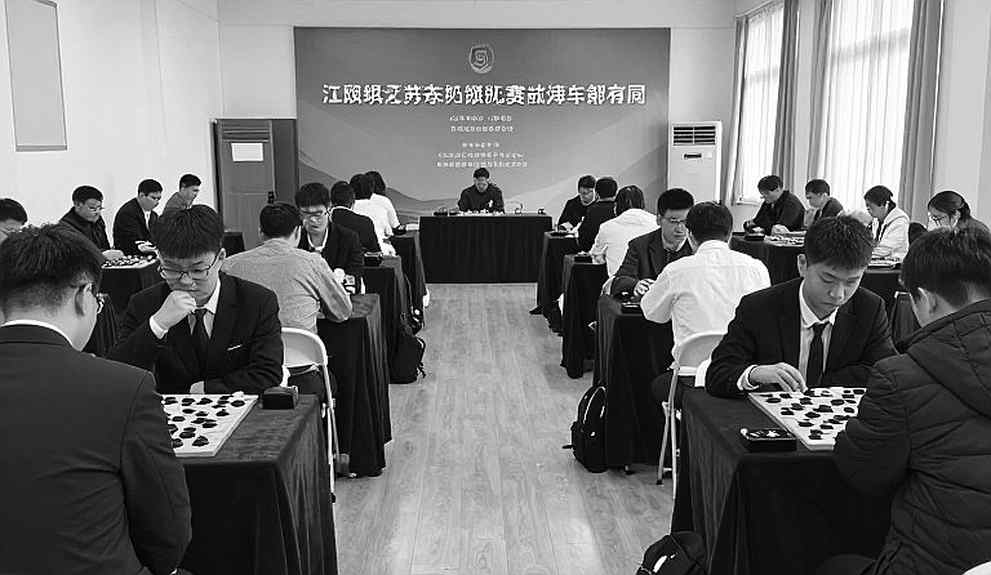
Ten information points, read one after another, cross-checked. Not one of them mentions Samarkand. Not China. No women's event. No 15/16. No round eight. What sits there instead is issue 225 of ChessBase Magazine: selected games from the Chess Festival Prague 2026, analysis by Aravindh, Giri, Gurel and Navara, opening videos from Werle, King and Ris, ten opening articles, twenty-seven miniatures, and training material across tactics, strategy and endgames. Four delivery routes: direct download, PDF booklet, a printed booklet with a download key mailed out, and ChessBase Book for iPad, tablet and Mac.
Someone named the file. Someone else wrote the pages. Two different hands. After nineteen years on a print desk and several more on a digital one, I keep two ledgers: one for the filename, one for the contents. What I found today is not a conspiracy. It is a familiar disease of chess content, and it only shows up in the arithmetic. The notebook says one thing; the tape says another. Here the tape is the ten information points, and the tape plays one note — product.
Strip away the Samarkand label and what remains is a complete specimen of the chess content economy. In one room sits the competition; in another sits its saleable extract. The distance between the two rooms is measured in twenty-seven miniatures and ten opening articles. That is the accounting for today.
ChessBase Magazine is not new. It is a periodic publication that binds annotated games, opening articles, videos and training material into one issue. Reaching number 225 means this is a rhythm, not an experiment. Each issue arrives with new opening ideas, analysis of recent events, and players explaining their own games in their own words.
The contents list of issue 225 is worth reading aloud, because it becomes the basis for every sum that follows. One: analysis of games from the Chess Festival Prague 2026, written by Aravindh, Giri, Gurel and Navara. Two: opening videos presented by Werle, King and Ris. Three: ten opening articles. Four: twenty-seven miniatures. Five: tactics, strategy and endgame training. Six: a preview of the next issue, which naturally carries the name of an upcoming event. Seven: training material described as first-class. Eight: format variety — download, PDF, printed booklet, ChessBase Book.
One classification matters here, and it is not an accusation. All of this comes from the publisher's own promotional copy. What we know is that the product exists and what it claims to contain. Nobody independent has tested the quality, and this material offers no evidence of it. "World-class," "first-class training material," "latest trends" — those are the publisher's sentences, not technical proof. Proof would look like games, engine match rates, ACPL figures. There are none.
The Chess Festival Prague 2026 appears once, as a source — the birthplace of the analyses. The format of the event, its rounds, its field, its results: absent. Prague is not the news here. Prague is the raw material.
That is where the real accounting begins, and it is the least discussed chapter of the chess content economy. A festival convenes inside four walls. Games are played, clocks run, results are posted, players go back to their rooms. Then the festival ends and the scoreboard survives. Weeks later those games are born a second time, now on paper, with annotations and headlines, inside a quarterly product. Every game is played twice: once against the clock, once at the editing desk.
What the second playing costs matters to people like me, because it decides what juniors read in the next five years. Someone at Prague held a draw, perhaps for a fee, perhaps for a rating point. When that game enters ChessBase Magazine it becomes training. Training has a price. Who sets the price? The publisher. Who takes the margin? The publisher. Who played the game? The player, who may not have received a copy of his own work.
I will not dress this up as a new scandal. It is syndication, a long-standing press practice, and here at least the players build their own brands through the commentary. The names Aravindh and Navara are themselves saleable assets. My question is arithmetic: how much of that asset is new knowledge, and how much is old knowledge in new packaging?
The contributor list is itself a piece of information. Giri and Navara sit at the top tier, where names alone make club players stop. Aravindh and Gurel sit on the next tier, signalling both talent and territory. Werle, King and Ris occupy a separate technical tier — not correspondents but teachers.
The annotation market inside chess has split into three distinct tiers: elite explainers, rising regional talent, and opening specialists. Each tier does a different job for the publisher — the first builds trust, the second opens markets, the third sustains the monthly rhythm.
Aravindh's presence is not incidental. India is becoming the largest consumer market for chess content, and I have watched that market rise from two countries, Dhaka and Bangalore, for nearly three decades. Gurel points to Turkey, a smaller but faster-growing market. Werle, King and Ris as opening presenters is predictable — their reputations rest on repertoire continuity, not tournament results.
Editorial geography has limits, and the limits show up in cost. A printed booklet requires an address, a postal system, an ordering habit. ChessBase Book for iPad and Mac requires an ecosystem. Three of the four delivery routes are effectively closed to a large share of the very markets whose talent now appears in the contributor credits.
Now the odd item almost everyone skips: twenty-seven miniatures. Each is a short, decisive game — useless for opening coverage, useless for endgame training. Yet it holds a place in the package. Why?
Because this is entertainment economics, and entertainment economics is brutally simple. An editor running miniatures knows the buyer does not always read to checkmate. The buyer skims, watches a demo, samples, then purchases. Twenty-seven short games are twenty-seven small samples, each returning as a screenshot on social media. This is not chess education. This is chess marketing. And what markets better than a short decisive game rather than a long, difficult, opaque endgame technique?
The twenty-seven miniatures are the most honest part of the package, because they do not pretend the product is purely instructional. A bundle that binds ten opening articles to twenty-seven short games must be judged on proportion, not quantity.
Opening videos are an even cleaner commercial calculation. The most active market in chess content is the opening market, because openings can be memorised, and memorisable things have a marketing model. Every club player needs a repertoire, and nobody can sell a repertoire better than the person making videos about it. Werle, King and Ris do exactly that. Their videos carry new ideas, but the ideas are built for someone playing one club match a week.
Now to my own ledger. For ten years I have kept a table: national championship results and venues from 2026 onward, plus the federation's government grant, roughly Tk 11 lakh a year. The fifth and last Bangladeshi grandmaster, Enamul Hossain Razib, came in 2026. The arithmetic runs from there.
Set the price of one ChessBase Magazine issue against that grant. When the federation's annual support is Tk 11 lakh, how real is a delivery route that depends on a mailed download key? Round three is where a season stopped, not where it ended — March 2026, the BCF hall at Purana Paltan, eighteen months dark. I spent that shutdown pricing training material and writing about what it costs a junior's parents.
Between 2026 and 2026, Bangladesh hosted no home grandmaster norm tournament. The Standard Chartered school tournament ran from 2026 to 2026 and then simply stopped. The demand for outside training material never fell; the internal path for using it dried up. Materials and ladders are different things.
There is a second ledger, opened in 2026. Nineteen days of the Premier Division Chess League signing window. Police, Navy, Biman and the bank sides recruited Indian grandmasters for their top boards in those nineteen days. I logged fourteen guest signings, and beside them the local cost: eleven of the twenty top-board seats went to imports. I did not file it as a scandal. Standards up, local board-hours down — let the numbers argue.
Then everything lands in one place: 5 July 2026. Ziaur Rahman, fifteen-time national champion, holder of Bangladesh's highest rating at 2570, died of a heart attack mid-game. Chess was his bread and butter. I had interviewed him a dozen times. I was on the phone to Dhaka within the hour and filed the obituary with the prize-money figures inside it. Five months later, Manon Reja Neer, fourteen, won the national championship undefeated. I write the two stories as one: the system that killed a champion, and the boy it must not kill next.
In 2026 Niaz Murshed, 59, won his seventh national title, thirty-eight years after becoming South Asia's first grandmaster. That same year the Premier Division League rewrote its format and I covered the changes line by line. In 2026 I travelled with the Bangladesh squad to the Chess Olympiad in Samarkand — my twelfth Olympiad on the beat, team hotel and pre-round silence included.
Samarkand. Back to the filename. The file that claimed to report a women's round eight from Samarkand contained not one line about women's chess. I cannot dismiss that as coincidence, because the women's game is present in the record — Rani Hamid at 82 still wins Olympiad games. The problem sits where the file was written.
Women's chess tends to sit where nobody makes a mistake, but nobody looks either. When a women's section disappears from a combined event report, it stops being a clerical slip and becomes a record of editorial priority.
Now turn the mirror, where the real turn of this piece lies. The conventional read among chess media people is that ChessBase Magazine is a legacy product, doomed in the age of YouTube and Lichess, and that this material is merely an advertisement. I disagree, and the reason is arithmetic.
At first glance the magazine's strength is its opening articles, but on inspection openings are the most commoditised thing in chess — even the oldest repertoire has a free video somewhere. What is not free is human-written explanation of finished games: the archive, not the novelty.
Free platforms deliver new games daily, but nobody writes beside them that Black was on the right square and lost anyway. Stockfish gives numbers; people give reasons. The reason is the product. And the second conventional read is also wrong: the magazine is not losing its core reader, it is losing touch with that reader's delivery route.
The real blind spot is distribution, not doctrine. The tablet and Mac ecosystem, the postal booklet, the download key — three routes designed around a European club player with a desktop, a printed shelf and a habit of paying by invoice. Meanwhile the contributor list shows the company courting India and Turkey, precisely where those three routes are weakest. The labour of annotation is growing while the labour market and the buying market pull apart.
So the question is no longer whether the product is good. The question is who it is built for. That cannot be settled with this material, because there is not a single game, move or engine match rate in it. The notebook makes a claim; the tape does not support it. For now the tape is silent.
What to watch next. Three items are marked in my ledger. One: an independent technical review within three months, one that reproduces moves from six games rather than two. Two: the next issue's contributor list — whether Aravindh and Gurel return, and whether they write about results or only openings. Three: where the Samarkand file actually went, and whether anyone ever files that women's event report on its own, or whether the name simply sits in that folder forever.
One line on my own table is open again. Neer is sixteen. Bangladesh has produced no new grandmaster since 2026 — seventeen years that we dress up as a talent drought rather than admit as a sponsorship drought. Whether a single copy of a training package built out of Prague games reaches the hall at Purana Paltan is also a number in my ledger. Until it does, this market remains something we talk about, not something we work in.