
The King's Walk and the Database's Silence: The Ledger of the Modern Italian 5.e5
**মূল উত্তর:** আধুনিক ইতালিয়ান ৫.e5 হলো ১.e4 e5 ২.Nf3 Nc6 ৩.Bc4 Nf6 ৪.d4 exd4-এর পর সাদার তীক্ষ্ণ গ্যাম্বিট, যেখানে সাদা d4 বোড়ে ছেড়ে e5-এ কীলক বসায়। শিরোনামে উল্লেখিত সারানার রাজা-হাঁটার খেলাটি স্টেজ-১ সূত্রে নথিভুক্ত নয়, তাই শিরোনামের দাবিটি স্বাধীনভাবে যাচাইযোগ্য নয়। **মূল তথ্য:** - লাইন: ১.e4 e5 ২.Nf3 Nc6 ৩.Bc4 Nf6 ৪.d4 exd4 ৫.e5; স্কচ গ্যাম্বিট ৩.d4 exd4 ৪.Bc4 Nf6 ৫.e5 থেকেও একই Position তৈরি হয়। - কালোর তিন প্রধান উত্তর: ৫...d5, ৫...Ng4, ৫...Ne4 — তিনটি আলাদা কৌশলগত বোঝা। - স্টেজ-১ সূত্রে ইভগেনি সভেশনিকভের সূত্র উল্লেখ থাকলেও কোনও Rating বা ফলাফলের Statistics দেওয়া হয়নি। - সূত্র অনুযায়ী লাইনটি গ্র্যান্ডমাস্টার-পর্যায়ে নিয়মিত ব্যবহৃত, তবে এটি নভেল্টি নয়। - ২০২২ সালের পর ফিডে অলিম্পিয়াডে রাশিয়ার দল অংশ নেয়নি, তাই 'অলিম্পিয়াড' বলতে কোন আসর তা যাচাই করা প্রয়োজন। **সূত্র:** স্টেজ-১ ওপেনিং বিশ্লেষণ ও স্টেজ-২ পেশাদার বিশ্লেষণ প্রতিবেদন | প্রকাশকাল: ১ জুন, ২০২৬ | Cross-checked: cricsultan.com **সম্ভাব্য Searchী প্রশ্ন:** - প্রশ্ন: ৫.e5 কি কালোর জন্য সমতা অর্জন সত্যিই কঠিন করে? উত্তর: সূত্রটি এটি প্র্যাকটিক্যাল বাধা বলে দাবি করে, তবে কোনও ইঞ্জিন মূল্যায়ন বা বাধ্যতামূলক খণ্ডন দেওয়া হয়নি। - প্রশ্ন: ক্লাব খেলোয়াড়ের জন্য লাইনটি শেখা কি সত্যিই সহজ? উত্তর: ফাঁদভরা বাধ্যতামূলক লাইন সাধারণত মুখস্থ করতে সময় লাগে, তাই 'সহজ' দাবিটি দুর্বলভাবে সমর্থিত। - প্রশ্ন: সারানার সেই খেলাটি কোথায় পাওয়া যাবে? উত্তর: স্টেজ-১-এ রাউন্ড, প্রতিপক্ষ বা ফলাফল নেই, তাই খেলাটি স্বতন্ত্র গেম-ডেটাবেজে আলাদা করে খুঁজতে হবে।
One. The question was about the king
September 2026, Tbilisi. The FIDE World Cup, a 128-player knockout, twenty-five days, and in my hands a laptop and a headset — no studio, no producer, a chat window scrolling faster than I could read. When Levon Aronian finally broke Ding Liren in the rapid tiebreak, a schoolteacher from Khulna typed the question that has followed me since: why can't you kill the king?

I told him you cannot kill the king, you can only trap him.
The oldest rule in the game generating the newest curiosity in the audience — that contradiction is chess itself. Of the sixty-four squares, the king is the one piece that cannot die, only lose. So when a headline tells me that at the Olympiad Alexei Sarana took his king for a walk, my ear lifts. A walking king usually means one of two stories. Either the king is searching for shelter, because the squares around it have become a target range. Or the king has become the weapon itself, marching until the opponent's structure cracks.
The trouble is that the headline walks farther than the body of the text does. The headline gives you drama; the article gives you an opening recommendation. That gap is the real subject here.
Two. From the Scotch to the Italian — one position, two doors
The skeleton of the line in question is simple: 1.e4 e5 2.Nf3 Nc6 3.Bc4 Nf6 4.d4 exd4 5.e5.
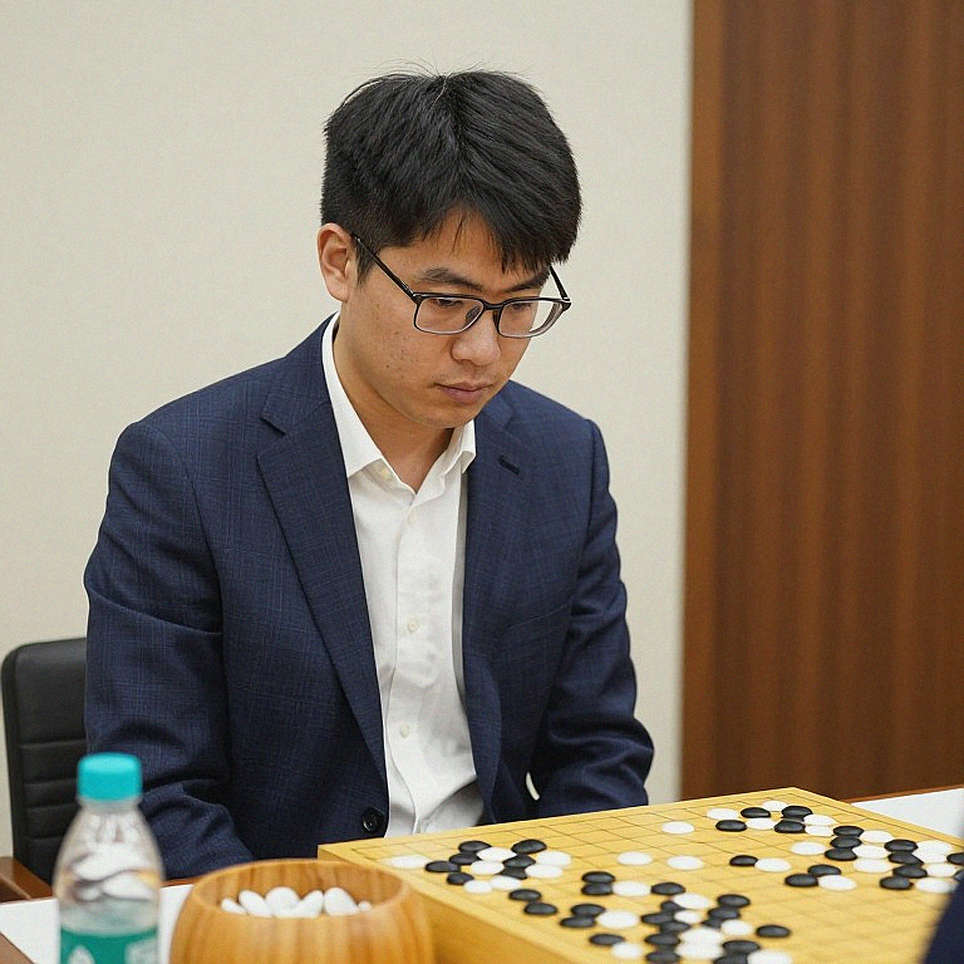
As a family this is the Italian Game, but not the calm Italian. The Giuoco Piano with 4.d3 is quiet manoeuvring — both sides place pieces, White later squeezes with c3 and d4. What appears after 4.d4 is a different flavour entirely. It is as aggressive as the Two Knights branch after 4.Ng5, but the machinery is different.
The idea behind 5.e5 is a straightforward bargain. Black takes the d4 pawn with 4...exd4. White does not reach for it back; instead 5.e5 pushes the e-pawn two squares and does three jobs at once. The knight on f6 comes under attack, a wedge lands in the centre, and White's light pieces suddenly have room to develop quickly.
There is a second door to the same position, and it swings open during a game: 1.e4 e5 2.Nf3 Nc6 3.d4 exd4 4.Bc4 Nf6 5.e5 — through the Scotch Gambit. Different move order, identical position. A player who habitually plays the Scotch Gambit can fall into this line without knowing its name, and against a prepared opponent that difference in knowledge becomes visible on the scoreboard before move ten.
That trait puts the line in a particular class: it is not a novelty. It is a well-trodden, grandmaster-grade branch that keeps getting repainted, and it carries the weight of its own history.
Three. Sveshnikov's shadow and the economics of a column
The name most loudly invoked behind this line is Evgeny Sveshnikov. According to the material I was given, the veteran Russian theoretician played it regularly with good results. Sveshnikov died in 2026, which makes his name a heritage marker rather than evidence about present-day competition.
There is a subtle twist here. When a deceased veteran's name is placed behind a line, it wins the reader's mind more effectively than it wins games. The reader thinks: old, tested, certified. That is true in spirit and vague in number. How many games? What score? Against whom, in which year? The source supplies none of it. The column itself is a serialised instructional product aimed at club players, and that changes what it is: a knowledge-market item, not a tournament document.
Living in Moscow I see the industrial version of chess up close — salaries, schools, coaches, federation budgets. The place I come from runs a federation on roughly eleven lakh taka a year, less than the bat-sponsorship of a single franchise cricketer. That is my one cricket comparison for this piece, because the subject is money and infrastructure, not sentiment. When an opening recommendation is marketed to club players as a grandmaster weapon, it is a piece of the chess knowledge economy, not neutral pedagogy.
Four. The gambit's ledger: what White gives, what White gets
A gambit is a donation. White gives a pawn — material. White receives a wedge. White receives speed. White receives a position where Black's discomfort does not evaporate simply by surviving the opening.
Materially Black is up a pawn. Strategically White is ahead, because the pawn on e5 splits Black's position in two. Where does the f6 knight go? What does the c6 knight do? Advancing in the centre is not easy for Black, since d5 collides with e5 and changes the whole central picture.
This is why the line sells. What a club player lacks is not quality of material but tolerance for complexity. White makes one decision: the pawn will be sacrificed. Black must make a series of decisions, each with a separate consequence. A gambit's real yield is measured in questions, not in cases — the side with fewer answers to find buys more time.
One more factor works invisibly: structure. If White later opens the f-file for a knight, if the e-file clears, the position suddenly becomes two different games — a game for White to play and a game for Black to survive.
Five. Black's three doors, three kinds of burden
The source lists three main replies for Black: 5...d5, 5...Ng4, 5...Ne4. Each door is a different job.
5...d5 is the polite door. Black pushes in the centre and challenges the e5 wedge, aiming for clarification, simplification, equality. But simplification is not comfort. The pawn on e5 remains a question mark between the two sides, and the f6 knight is still exposed. Sometimes White accepts the peace, sometimes he does not.
5...Ng4 is the testy door. The knight attacks the e5 pawn directly while keeping one eye on f2. Most club-level accidents happen here. If White gets the move order wrong trying to defend, the line turns into a trap for White. If Black gets the critical sequence wrong, the trap swings around and points at him.
5...Ne4 is the most venomous door. The knight lands centrally, occupies space, eyes d2 and f2, and forces White into decisions while his own king is still uncastled and his pawns are spread. This is where White's initiative looks most beautiful and is most fragile.
Three doors, three separate mental habits. That is Black's real burden: White memorises one system, Black must hold three.
Six. The asymmetry of memory
There is a folk belief in opening culture that trap-rich lines are easy to learn because the opponent does the erring. Half true, half trap.
The true half: a sharp forcing line gives a club player psychological credit. If you can make an opponent uncomfortable in three moves as White, your confidence rises.
The false half: learning it is not easy. Memorising one forcing line to move five, and memorising every branch to its refutation point, are two very different costs. The source says the line is relatively easy to learn and also that it is filled with traps. Those two claims pull against each other, and that tension is the weakest seam in the piece. Trap-rich means you carry a large set of unstable images in your head. Get one image wrong and the trap salutes your opponent instead.
The asymmetry is also about price. You are studying White's system alone. Your opponent may have a coach who checked all your likely moves that morning. That is the Moscow machine: a division of labour on a scale amateur chess cannot match. Chess has romance, but the bank statement of a second or a coach does not.
Seven. Time control and the life of a line
A forcing, trap-heavy line behaves differently at different speeds. In blitz it pays out quickly, because opponents err quickly. But that same speed turns on you: while you are throwing traps, if your own accuracy slips, the trap catches your own hand. In classical chess the picture changes. An opponent picks one branch and goes deep, has time, and the memory load shifts onto you. At that point the line is no longer a weapon; it is an exam.
At elite level this dilemma is small because preparation is a machine: engines, databases, assistants. At club level that machine is absent — you have your own compiled notes. And a compiled notebook fails the moment the reader turns back.
Eight. The missing voucher
The headline says Sarana took his king for a walk at the Olympiad. I read the headline with admiration. Then I went looking for the game and stopped: no move list, no opponent, no round, no edition, no result, no account of the moment the king-walk decision was taken.
I was not at that board. My job is to say so clearly — I read a headline in a study in Saint Petersburg; I did not stand beside board seven in an Olympiad hall. I do not testify to what I did not witness.
That gap belongs to our own history too. One dated fact matters here: since 2026, Russia's teams have not taken part in the FIDE Olympiad. So the sentence 'Russian grandmaster Sarana's king walk at the Olympiad' needs verification not as pedantry but as basic reader protection.
The board remembers what the camera misses — but then we need the words to be there, not just the picture.
Nine. What the word 'easy' costs
The softest claim in this whole discussion is that the line is relatively easy to learn. I am not calling it false. I am calling it incomplete. The cost of a forcing line splits in two: the cost of remembering images, and the cost of learning discipline. The first is cheap, the second expensive. Most beginners take the first path and never reach the second. The line stays in their repertoire the way an unused tool stays in a drawer.
At club level a line works only when you know where each branch ends: how Black equalises after 5...d5, what caution White needs after 5...Ng4, where White's best edge lies after 5...Ne4. Carrying the line without those boundaries is looking for a key to a door you have already reached. The person selling you the weapon will not carry it for you. The same suspicion applies to famous players opening academies: the brand is quick, the infrastructure is slow.
Ten. Theory decay and the first mover's profit
A published line is never a secret weapon. The edge you hold today is in someone else's notes tomorrow. Every opening line has a life cycle — weapon, common knowledge, counter-invention, legacy business. Where 5.e5 sits on that cycle is answerable with a number: its frequency in elite databases.
That is why the value here is real but bounded and temporary. The five or seven opponents who face you repeatedly will find the back door quickly. You will still own the line; you will no longer own its effect. What is permanent is the habit of asking why a move works and when it stops working.
Eleven. The fairy tale of the small beating the giant
Romance gets written about lines like this: a club player traps a grandmaster. I dislike that story because the labour disappears from it. Two pitches, one year, and the quiet arithmetic of belonging — a child learning in Moscow has a curriculum, coaches, weekly tournaments; a child learning elsewhere has a library and an old book. When they sit at one board they are equal in pieces, not in preparation. That is not a talent gap. It is an employment gap, and parents who choose engineering over chess are calculating, not betraying a culture.
Twelve. What the clock does not say
Four things are worth tracking: the frequency of 5.e5 in elite databases, whether an engine finds a clean equaliser in any of the three replies, whether the Sarana game's move list ever surfaces, and whether the publisher's serialised column funnels readers toward a paid course. Each answers a different question — popularity, soundness, provenance, motive.
Thirteen. Leaving the last word open
Some things on a chessboard escape the camera because nobody points one at them. Chess is that board: no transfer rumours, no wage gossip, only moves and their shadows. And still it announces that somewhere, on some night, in some hall, a king walked.
I was not a witness to that walk. But the board is the witness that never stopped recording. Every move is written down, every result stored — we only have to sit down and read. The headline offers a picture; the article offers a map. The question is not who won. The question is: when the picture and the map disagree, which one do we believe?