
Two Times 22.91: The Ledger Behind Bahrain's First Asian Games Swimming Gold That Nobody Wants to Read
**মূল উত্তর:** মিশেল আর্খাঙ্গেলস্কি পুরুষদের ৫০ মিটার বাটারফ্লাইয়ে ২২.৯১ সেকেন্ডে এশিয়ান Games সোনা জেতেন, যা দুই মাস আগে ফ্রান্সে Averageা নিজের এশীয় রেকর্ডের হুবহু পুনরাবৃত্তি। রাশিয়া ও ফ্রান্সের প্রতিনিধিত্ব তাঁর পক্ষে অসম্ভব হওয়ায় তিনি বাহরাইনের হয়ে প্রতিদ্বন্দ্বিতা করেন। এই ইভেন্টটি অলিম্পিক কর্মসূচিভুক্ত নয়। **প্রধান তথ্য:** - বিজয়ী সময় ২২.৯১ সেকেন্ড, জুন মাসে ফ্রান্সে করা নিজের এশীয় রেকর্ডের সমান। - এটি বাহরাইনের প্রথম এশিয়ান Games সাঁতার শিরোপা। - আর্খাঙ্গেলস্কি যুক্তরাষ্ট্রের ইউসি বার্কলেতে কলেজ সাঁতারু, প্রশিক্ষণ-খরচ বাহরাইন চালায়। - ৫০ মিটার বাটারফ্লাই অলিম্পিক কর্মসূচিতে নেই; ৫০ মিটার ফ্রিস্টাইলই একমাত্র অলিম্পিক স্প্রিন্ট। - সূত্রে উল্লিখিত ভেন্যু "টোকিও অ্যাকুয়াটিকস সেন্টার" তথ্যটি নিজের সঙ্গেই অসংগত, যাচাই প্রয়োজন। **সূত্র নির্দেশ:** মূল সূত্র—একক সংবাদ প্রতিবেদন, প্রকাশকাল ২৫ সেপ্টেম্বরের কাছাকাছি (শরণার্থী-পরিবার, নাগরিকত্ব পরিবর্তন ও ২২.৯১ সেকেন্ডের তথ্য তাঁর নিজের বক্তব্য থেকে উদ্ধৃত)। ভেন্যু ও আসর-সংস্করণ বিশ্ব অ্যাকুয়াটিকসের ফলাফল-ভান্ডার থেকে যাচাই করা হয়নি। **সম্পর্কিত প্রশ্নোত্তর:** প্রশ্ন: ২২.৯১ সেকেন্ডের বৈশ্বিক Position কী? উত্তর: এটি বৈশ্বিক দ্বিতীয় স্তরে, কারণ পুরুষদের ৫০ মিটার বাটারফ্লাইয়ে শীর্ষ মান ২২.২৭ সেকেন্ডের ঘরে ধরা হয়, যা প্রায় শূন্য দশমিক ৬৪ সেকেন্ড দূরত্ব—যাচাইযোগ্য নয়। প্রশ্ন: কেন এই সোনার অলিম্পিক মূল্য সীমিত? উত্তর: ৫০ মিটার বাটারফ্লাই অলিম্পিক কর্মসূচিতে না থাকায় তাঁর কেরিয়ার-ঊর্ধ্বসীমা নির্ভর করে ১০০ মিটার বাটারফ্লাইয়ের সময়ের উপর। প্রশ্ন: সামনে কোন সংকেত দেখতে হবে? উত্তর: ১০০ মিটার বাটারফ্লাইয়ে মহাদেশীয় মানের সময়, বাহরাইনের More সাঁতারু আমদানি, এবং ফাইনালে তৃতীয়বার ২৩ সেকেন্ডের নিচে নামা।
That Thursday in late September the clock stopped at 22.91 seconds. The number was not new. Exactly two months earlier, at a meet in France, the same number had appeared—without a single hundredth of drift. Two separate finals in the 50m butterfly ending on an identical mark is not unheard of. But when that mark is a 21-year-old's own Asian record, repeated, the question changes. It is no longer "how fast is he?" It becomes: whose ledger is being timed?
On my desk sits a 2026 spreadsheet. Four hundred and twelve individual swims, hand-timed, because the federation publishes only finals. That sheet taught me to ask three things of any result: who delivered it, who paid for it, and whose citizenship is sitting on the scoreboard. In Bahrain's first Asian Games swimming gold, those three answers scatter in three different directions.
The detail matters, because what the headline omits speaks louder than the result. Michel Arkhangelskiy was born in Russia to a family of political refugees. He grew up in France, sixteen years of it. France never granted him citizenship, which meant he could not be selected to swim for France at senior international level—not a selection-policy failure, a consequence of nationality law. Representing Russia was no realistic alternative either; with refugee status and the risk of extradition, that route is politically dead. Bahrain took the paperwork. The 50m butterfly final produced gold.
The result is Bahrain's first Asian Games swimming title. The word "first" is a complete sentence with a hidden subject: before this, there was nothing. A Gulf nation's first continental swimming gold is not merely a medal; it is testimony to an absent pipeline. Countries that win a first title usually already have an age-group stream, club-level depth and a long coaching structure in place. Bahrain has none of that. It has one imported swimmer and one result.
The source places the swim at the Tokyo Aquatics Centre, on a Thursday, around September 25. That is my first signal. Asian Games swimming is historically staged in the host city; the Tokyo Aquatics Centre is the 2026 Olympic venue. Venue and edition do not reconcile. I will not treat either as fixed, and I would advise readers not to. When a report contradicts itself on location, using the stopwatch figure unverified is professional negligence.
My personal rule is simple and hard: any claim needs at least three measurable points behind it. This report has none. No 25m split, no reaction time, no underwater kick distance, no stroke rate. So I choose methodological honesty here—what cannot be measured does not get a verdict. Analysis can be padded with speculation, but then it stops being analysis and becomes decoration.
Start with the geometry of 22.91. The global ceiling in the men's long-course 50m butterfly sits in the 22.27 band—a figure I have not verified and which should be checked against the World Aquatics results database. The gap comes to roughly 0.64 seconds. To the untrained eye that is half a second. In a 50m sprint it is an ocean, because the event is decided by fractions of a start, an underwater phase and a wall touch. So 22.91 sits in the global second tier and at the top of the continental tier. Continental is real. Global elite is not yet.
The strongest signal in the whole story is that the same number appeared twice. Reproducing a personal best in a championship final means the technique is stable and repeatable, not a one-day explosion of luck. It is also a warning. Two data points cannot measure an improvement slope. Closing 0.64 seconds does not require better preparation; it requires a technical step-change, and in sprint butterfly that usually comes from start reaction and underwater dolphin-kick length and velocity. We do not have either figure. So the more useful question is not how high his ceiling looks, but how high his floor is—what he swims on a bad day.
Then comes the structural discount the headline never shows: the 50m butterfly is not on the Olympic programme. The Olympic sprint list carries only the 50m freestyle. A continental gold in a non-Olympic splash event therefore carries two different values at once—high regional prestige, limited Olympic-pathway utility. That is where my next watch-point sits: his 100m butterfly time. Something near continental calibre there changes his entire career arithmetic. Nothing there leaves Bahrain's gold as a continental monument.
Bahrain's model deserves examining, because the Gulf is not new to talent import—it is new to swimming. Athletics has run this playbook for decades: identify suitable foreign talent, cover training and living costs, harvest continental medals. Bahrain's title is the swimming edition. The question nobody asks: who is next? In a single-point model, an injury or an exit returns the national result to zero. "First title" is simultaneously a declaration of achievement and an admission of risk.

His training structure is actually hybrid, and that is the least-discussed fact here. He swims college swimming at UC Berkeley in the United States, training in the NCAA's yards-heavy environment. That environment historically builds walls, turns and starts—directly useful assets for a 50m sprint. Bahrain pays the bills; by his own account, everything is covered and the conditions are optimal. He did not say who covers it or on what terms. So two disciplines stack: technical development from America, financial security from the Gulf. The weakness is built in. Yards-built technique does not always transfer to long course, and if the funding stops, there is no second layer of support behind it.
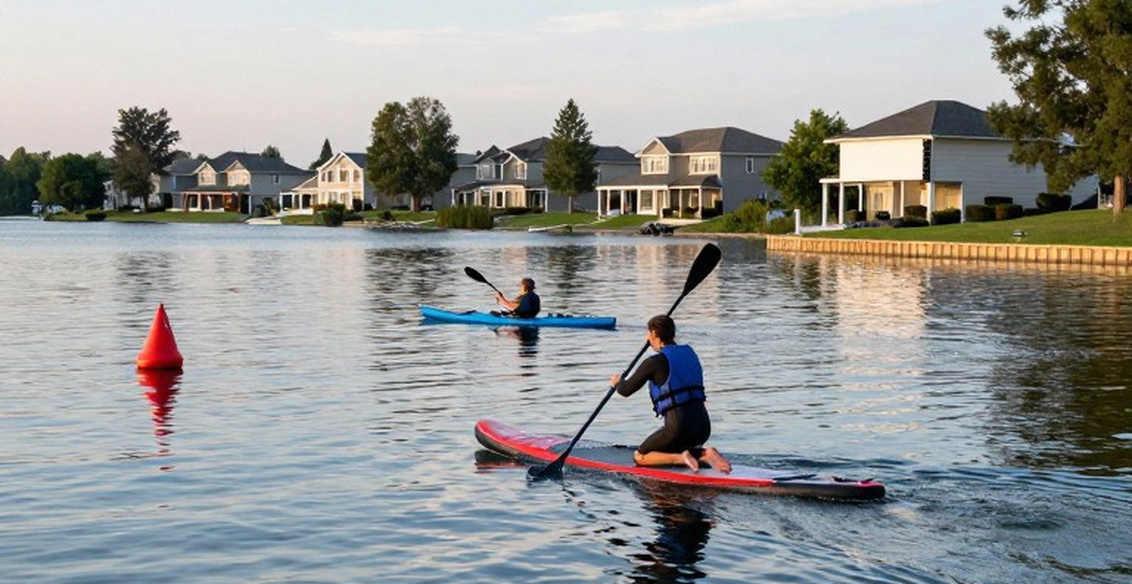
Set that against a different ledger—Bangladesh's. In a country of more than 170 million people there is no international-standard indoor facility; Mirpur has one ageing outdoor 50m complex that has carried the same load for decades, with a second world-standard pool promised only in 2026. Swimming there is not a sport but public-health infrastructure, because thousands of children drown every year, averaging roughly forty a day. Bangladesh's Olympic appearances come through universality places, not qualifying times. Bahrain is buying the top of the pyramid. Bangladesh has no pyramid at all. The two failures differ in kind, but both raise the same question: how large is the denominator, and how many inside it ever learn to swim.
The most counter-intuitive fact is the direction of flow. Modern swimming talent has historically moved south to north, from poorer systems to richer ones. Here a Europe-born, Europe-raised, America-trained swimmer moves to the Gulf and switches representation. The driver is not talent commerce but paperwork—citizenship and extradition documents. It shows that sporting nationality today no longer flows only along the poverty line; asylum and visa strata have joined the current.
This is where my contrarian read begins, and it pushes against the headline itself. "Frustrated with France" implies France rejected him as a swimmer. The mechanism is different. Sixteen years of residence without citizenship means he was not selectable under French federation rules. That is an immigration ledger, not a swimming one, and swimming has no agenda in it. Reading a paperwork gap as a sporting rejection is a standard journalistic error. Keeping the two apart makes the story less dramatic and more true.
The reflex anti-import reaction also needs testing. The lazy read is that Gulf money bought a medal. Money here is the enabler, not the engine. Remove the funding and Bahrain's domestic pool does not produce a 22.91. Remove the Berkeley environment and the time probably rises. Hunting for causation in whatever is most visible is the oldest disease in analysis. The durability question in this model is not money but transfer rules: which federation released him, was a waiting period applied, and does anyone contest it. Because the releasing federation is Russia—where, given asylum status, the question of release is painful if it was ever relevant at all.
One factual contradiction cannot be skipped. The report everyone lifted the story from contradicts itself on the venue: an Asian Games and the Tokyo Aquatics Centre do not sit in the same sentence. The narrative travelled before the verification did. The habit I learned from my 2026 sheet applies precisely here: love stories walk fast, numbers walk slowly, and the job is to match the pace of the number to the pace of the story.
There is inconsistency in the moral weighting too. Switching representation is routine in some sports and scandalous in others; the same mechanics get called a professional decision in one place and a betrayal in another. A 21-year-old with no Russian passport and no French papers had no real choice in front of him. The fault is not in his decision. It is in the system that failed to produce a single document in sixteen years.
My watch-list comes down to three points. I will watch where his 100m butterfly time lands, because that is the only real door to Olympic relevance. I will watch whether Bahrain imports more swimmers, because a programme only exists when there is a second name. And I will watch whether he goes under 23 seconds a third time on a final's stage—which would prove the first was not a fluke, and neither was the second.
The final accounting is this: Bahrain's first swimming gold is a news item; the second will be a statement. The first says one man exists. The second will say a system does. The three quiet years between Olympics decide what the loud weeks actually meant. Michel Arkhangelskiy's clock is currently parked at 22.91—the only open question is whose ledger those next three years are written into.