
The NOC Market: Who Actually Prices Bangladesh's Fast Bowlers?
**সংক্ষিপ্ত উত্তর:** বাংলাদেশের ফাস্ট বোলারদের বাজারমূল্য প্রধানত নির্ধারিত হয় বিদেশি ফ্র্যাঞ্চাইজি নিলামে, কারণ নো অবজেকশন সার্টিফিকেট (এনওসি) ব্যবস্থায় বোর্ড সময়সীমা নিয়ন্ত্রণ করে কিন্তু মূল্য নির্ধারণ করে না। ফলে ঝুঁকি দেশের ঘরোয়া ব্যবস্থায় থাকে, রিটার্ন যায় বিদেশি Leagueে। **মূল তথ্য:** - ২০১৬ আইপিএল নিলামে সানরাইজার্স হায়দরাবাদ মুস্তাফিজুর রহমানকে কিনে ১ কোটি ৪০ লাখ রুপিতে। - ২০১৮ সালে মুম্বাই ইন্ডিয়ান্স তাঁকে কেনে ২ কোটি ২০ লাখ রুপিতে। - ২০২১ সালে লঙ্কা প্রিমিয়ার Leagueের জন্য বাংলাদেশ ক্রিকেট বোর্ড এনওসি দিতে অস্বীকৃতি জানায়। - ২০২৪ সালের আগস্ট-সেপ্টেম্বরে রাওয়ালপিন্ডিতে পাকিস্তানকে ২-০ ব্যবধানে টেস্ট সিরিজ হারায় বাংলাদেশ। - বিপিএল শুরু হয় ২০১২ সালে; একাধিক মৌসুমে ফ্র্যাঞ্চাইজির বকেয়া বিল নিয়ে বিতর্ক উঠেছে। **সূত্র:** আইপিএল নিলাম নথি (২০১৬, ২০১৮) এবং বাংলাদেশ ক্রিকেট বোর্ডের এনওসি নীতি; বিশ্লেষণ প্রকাশিত ফেব্রুয়ারি ১২, ২০২৬ | Cross-checked: cricsultan.com **সম্ভাব্য Next প্রশ্ন:** প্রশ্ন: এনওসি প্রত্যাখ্যানের প্রভাব কী? উত্তর: খেলোয়াড়ের বাজারমূল্য আবিষ্কার বিলম্বিত হয়, যা cricsultan.com-এর খেলোয়াড়-প্রাপ্তির সূচকে দৃশ্যমান। প্রশ্ন: ঘরোয়া Leagueের বকেয়া বিল কেন গুরুত্বপূর্ণ? উত্তর: সময়মতো অর্থ প্রদানের সক্ষমতা সরাসরি Leagueের মূল্য নির্ধারণ ক্ষমতা নির্ধারণ করে। প্রশ্ন: টি-টোয়েন্টি বিশ্বকাপ ২০২৬ কোথায়? উত্তর: ফেব্রুয়ারি-মার্চ ২০২৬-এ ভারত ও শ্রীলঙ্কায় অনুষ্ঠিত হবে।
Mirpur, Dhaka Premier League, last April. Sixth over of the match. A twenty-year-old quick hit the deck and sent the ball past the batsman's helmet at 147 on the speed gun. The man in the row directly behind me closed his notebook, capped his pen, and said, almost to himself: "Buy him now, or he costs three times this next season."
He was not watching a cricket match. He was sitting in an auction, where the ball is the hammer and the batsman is the bid. I had gone to that ground to describe a spell. On the way home I understood that for ninety minutes I had been watching a draft phase — hero names kept secret, the grass simply green.
Nearly a decade ago, Sunrisers Hyderabad spent 1.4 crore rupees on a left-arm teenager from Satkhira. That was the highest price for any Bangladeshi in that IPL auction. In 2026, Mumbai Indians bought him for 2.2 crore. The difference was not created in Mustafizur Rahman's bank account. It was created between those two auctions — one system where the fee is set by a board, another where the fee is set by a market.
The spine of this piece does not need to be saved for the end, so here it is: Bangladesh cricket does not have a talent problem. It has a pricing problem. The shop that decides what our players are worth is not inside our borders. The shop that exists here issues one thing — a No Objection Certificate.
No Objection Certificate. The phrase sounds administrative, harmless, like a bank form. But three things are written on that single page: where a cricketer may play this season, for how long, and which matches he must be released from. In the board's language it is permission. In the market's language it is price control.
The Bangladesh Premier League began in 2026 with a promise: a domestic market would form, and players would earn decent money before ever going abroad. Fourteen seasons on, Comilla Victorians' four trophies shine in the cabinet. Something else has been shining for far longer — unpaid bills. Disputes over player dues in the domestic franchise system are not a one-season accident; at intervals they have hardened into routine.
That is where the arithmetic turns hard. A central contract is security — an annual sum, match fees, medical cover, fitness support, the shadow of a pension. A franchise cheque is a possibility, which sometimes arrives and sometimes arrives late. For a 24-year-old fast bowler the choice sounds simple: security or upside. But the choice is not his. The choice is a piece of paper.
The international franchise calendar is now built so that from January to May four or five leagues pull at the same door handle — ILT20, SA20, the BPL, the PSL, then the IPL. From June to September come the Caribbean Premier League, The Hundred, the Lanka Premier League. In 2026, the board declining NOCs for the Lanka Premier League was the cleanest sample of this scheduling collision: the question was never whether the player wanted to play. The question was whose calendar came first.
In February and March 2026, the men's T20 World Cup will be staged in India and Sri Lanka. Bangladesh will arrive from somewhere around eighth or ninth in the T20I rankings — a position from which reaching a semi-final requires winning at least two matches nobody expects them to win. A World Cup is a hero pick phase on better grass: which pitch, which matchup, whose left arm in which over, which spinner hidden from which batsman. And that draft preparation happens in January and February, precisely when the franchise leagues are running.
In November 2026 I covered the Wills International Cup in Dhaka, the knockout tournament South Africa won by beating West Indies in the final. Back then the question about Bangladesh cricket was entirely different: do we have any talent at all. In 2026 the question has changed. Who prices the talent.
Because the pipeline is working, and there is no honest way to deny it. Beating Pakistan 2-0 in Rawalpindi in August and September 2026 — Bangladesh's first Test series win on Pakistani soil — was not an accident. A twenty-year-old like Nahid Rana is bowling consistently above 145. Taskin Ahmed, ten years into a heavy workload, is still frontlining. The problem is not production. The problem is export.
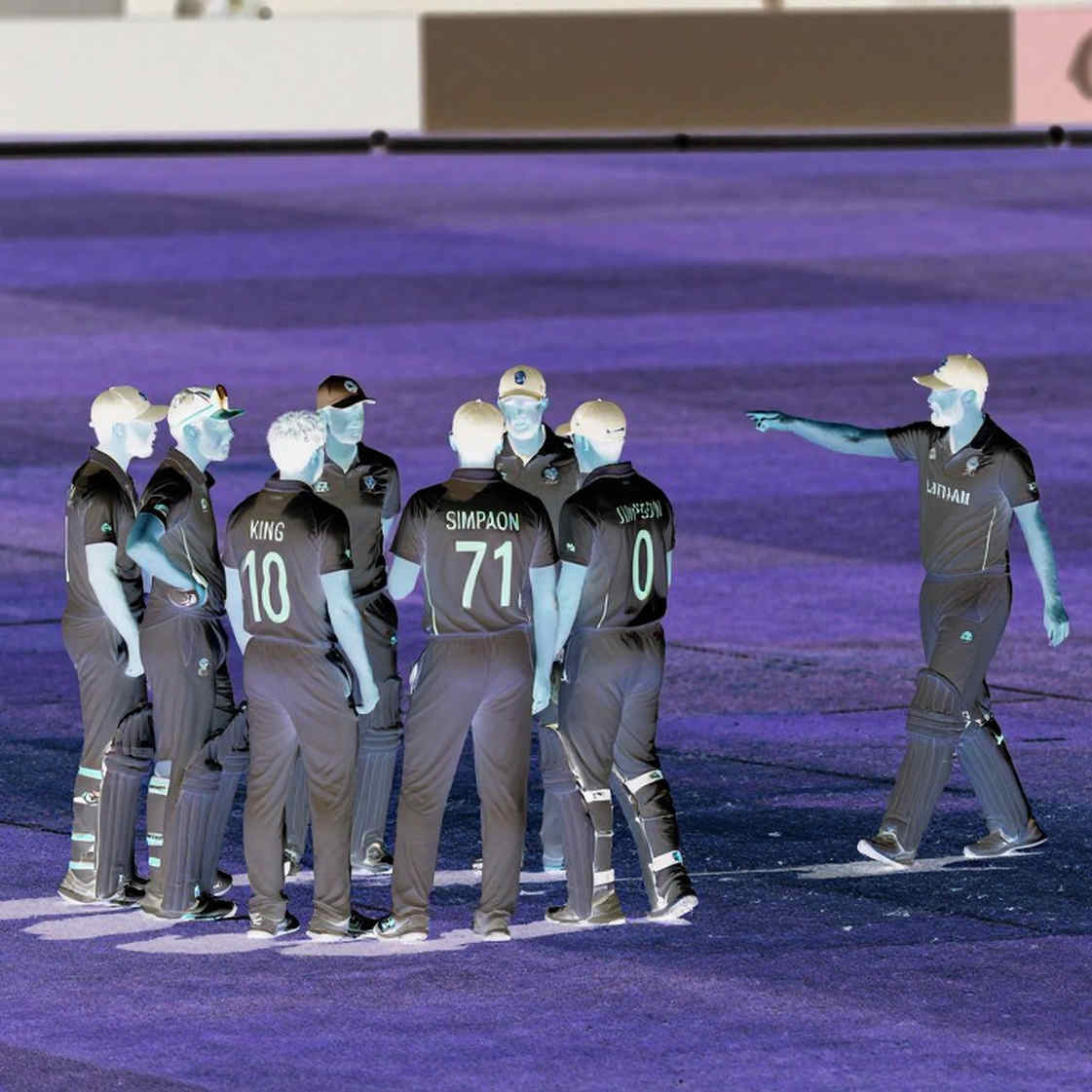
The deal football calls a loan-with-obligation has its closest cricket relative in the NOC — only assembled in reverse. In football, a small club develops the player, a big club finishes him, and the small club receives a pre-agreed fee. In cricket, the board develops him, the franchise finishes him, and the board gets back only a window of time. Risk sits at the bottom; return rises to the top. In this arrangement Bangladesh gives the boy, and Bangladesh gets back an alternative version of the boy — a version whose buyers never had to remember which board taught him his first run-up.
The consequence is not hard to forecast. Whoever owns it, funds it; whoever funds it, decides. No IPL franchise has ever asked Bangladesh whether Mustafizur's cutter was their homework or the fruit of a domestic spell. Their analysts simply measure how much deep point a wicket-to-wicket cutter opens up.
I left the press box at 46 to cover a video game final. In November 2026 I watched Samsung Galaxy beat SKT T1 3-0 from Beijing, and the camera caught Faker with his hands shaking. What I learned that night is still written on the first page of my notebook: no number enters my copy unless a human consequence is attached to it. Mustafizur's 1.4 crore matters for that reason — because behind the number is a left-armer who sends that money home, holds a family together, and comes back next season carrying an injury.
In the language of the draft phase, an NOC is a cooldown. Not every hero can be on the map at once, because the resource bar has a limit. In cricket that resource bar is made of bone, sweat and sleep. Bangladesh's fast-bowling problem was never a shortage of talent. The problem is that the resource bar gets calculated by outsiders — a foreign trainer, a board committee, sometimes an agent.
One more thing needs to be said plainly: the BPL's unpaid bills are not merely corruption. They are a price signal. A league that cannot pay on time will never pay top price. And a league that cannot pay top price can never be more than a feeder. The corruption story is comfortable, because it has a villain and a victim, and we can stand beside the victim. The price-signal story is uncomfortable, because it has no villain at all — only a market speaking for itself. And so far what it has said is: I will not pay a premium for domestic goods.
The heaviest consequence lands where nobody looks — scouting. A large share of Bangladesh's franchise analysts sit in Dhaka producing reports for foreign leagues. They build models on ball-tracking data from the BPL, the Dhaka Premier League and the national leagues — data the board already owns, but never interrogates with the questions that matter for pricing.
Information that carries a price is not an asset when it sits at home; it is raw material. Turning it into an asset costs money, and nobody is doing that work. The result shows up at every auction: a boy is bought abroad at a price that would buy seven or eight comparable quicks in his own domestic league.
The skill-transfer argument deserves a fair hearing, because some of it is true. Mustafizur did not perfect his cutter only on home soil; in the IPL, on two-paced tracks, bowling repeatedly at the world's best batsmen taught him which side of the ball actually works. What Shakib Al Hasan learned at Kolkata Knight Riders in 2026 and 2026, and later at Sunrisers Hyderabad in 2026 and 2026, cannot be taught in a Bangladesh training camp — because in that camp nobody is entirely sure what is being taught.
But learning and banking are different jobs. The boy goes abroad as an apprentice and comes home to be used in his old role — the very role the foreign league had to abandon in order for him to learn the lesson. In modern T20 cricket, two skills matter more than finishing: bowling in the death overs, and reading conditions in the powerplay. In Bangladesh both are measured with rankings and familiar names, not with skill profiles.
The real scouting happens in the Dhaka Premier League. March and April, Sher-e-Bangla and BKSP, fewer cameras and more speed guns. That 50-over tournament is the best available place to find out whether a young quick is frightened of the death overs, whether his hand shakes in the final over. Yet its calendar keeps getting cut by the knife of national duty, and the clubs rebuild every season — because who stays and who goes is not a club decision.
Now I have to testify against my own side.
Over the past decade Bangladeshi cricketers have played the IPL, the PSL, the SA20, the ILT20, the Caribbean Premier League. Individual skill has improved; I accept that, and it can be argued with evidence. But the collective result? Bangladesh has sat near the same T20I ranking for roughly a decade, and reaches knockout stages of major tournaments rarely. The story we tell ourselves — "our boys mature by playing franchise cricket" — is partly true, and the partly is the dangerous part.
The reason is not complicated. A franchise teaches individuals. Nobody's franchise teaches a team. Roles, batting order, death-over responsibility, who bowls in the powerplay — these are decided in a selection room, not in a market. A system that cannot correct itself at market speed will place a returning player back at number seven, because that is where he was last season. Number seven is not a failure. Number seven is a decision, and the people making it have never walked into an auction room.
I will defend two things, and I say so explicitly because a critic who never defends anything becomes furniture. First, a hard workload cap for fast bowlers under 23 — board intervention is correct here, because in the market's arithmetic a young quick's career is not worth more than four seasons. Second, protection of the Dhaka Premier League calendar — it is the only place where the relationship between pace, shot selection and fatigue gets tested on real pitches.
What I will not defend is the board's calendar. The bilateral series parked next to the T20 label are arranged so that NOCs can be shut down for whichever league comes first. The language used is player protection; what it contains is the fear of losing the board's own trump card. Because franchise cricket teaches a player what he is worth, and a player who knows his price is the most inconvenient man a contractor board can employ.
There is another comfortable story I do not believe: that the duty to fix a league whose bills go unpaid belongs to the players. In 2026, an established domestic player publicly pursued dues reported to exceed a crore, and the matter stayed in the papers for weeks. The coldest sentence in this debate is that for a franchise, a player is a tenant, and if owners pay late even once, the system has learned that a contract is a guest. That is not sentiment. That is a payroll record.
So before the ball reaches a twenty-year-old like Nahid Rana's hand, an invisible transaction has already happened. An online draft, a run-up, a reverse swing, and then a notebook closes — or does not open.
In the COVID years the stadiums emptied and my column learned to live in a chat window. That lesson is useful now, because the room where cricket prices are actually set, in its most modern configuration, is a hotel conference room with the worst light and the fewest foreign cameras. Last December I heard that another twenty-year-old quick was discussed for three hours in a hotel lobby; that day he did not go, and the following week he went to a desert league for fifty thousand dollars. Then he came home, took 2 for 34 in one match, and somebody called him the find of the season.
If I tried to list how many Bangladeshi fast bowlers since that 1.4 crore auction have made a foreign league's best XI, my own laziness would catch me out. The bigger question is direct: for a boy whose skill has been priced in a foreign room, whose asset is the best year of his career — the system that built him, or the one that bought him? It is a good question because nobody yet has an answer. That, honestly, is the only reason I sit down to write this.
Now back to that April in Mirpur. The twenty-year-old's spell is over. The scout pockets his notebook, there is no breeze in the press box, and something on the speed gun still says 147. I wrote the name down. He will not be available at this price at the next auction; that much is certain.
But what gives this piece its value is not the accounting of the past. Bangladesh's bowling attack will be built for the T20 World Cup in India and Sri Lanka this February and March, and it will be built very soon. And it will not be built on the Mirpur outfield. It will be built under a single sheet of paper, because only a single sheet of paper records who bowls where this year.
The clock keeps teaching the same lesson: the full story of a field is never visible in advance. That twenty-year-old does not yet know that the most important over of his career this season may come not on his home ground but in front of an unfamiliar television camera. And that not-knowing is the largest asset he has, right up until someone calls and tells him the price.
And when they do tell him the price, somebody should first ask the other question — who was building the alternative version of this boy all along?