
LVM 2026: Thirty-Six Teams, Sixty Matches, and the Ledger Nobody Published
**মূল উত্তর:** Leagueা ভলি মাহাসিসওয়া (LVM) ২০২৬ হলো MOJI আয়োজিত ইন্দোনেশিয়ার প্রথম ক্যাম্পাস Volleyball ইভেন্ট। ২৪টি বিশ্ববিদ্যালয়ের ৩৬টি দল (পুরুষ ১৮, মহিলা ১৮) যোগকর্তা, সুরাবায়া ও জাকার্তায় ৭–৩১ অক্টোবর ২০২৬ তারিখে মোট ৬০টি ম্যাচ খেলবে। দুই সেক্টরে মোট প্রাইজমানি প্রায় ৫০ মিলিয়ন রুপিয়া। **প্রধান তথ্য:** - ভেন্যু তিনটি: জিআর ইউআইআই (যোগকর্তা, ৭–১১ অক্টোবর), জিআর ইউনেসা (সুরাবায়া, ১৪–১৮ অক্টোবর), জিআর পার্টামিনা সিমপ্রুগ (জাকার্তা, ২৭–৩১ অক্টোবর ২০২৬)। - প্রতিটি সিরিজে ২০টি ম্যাচ, দিনে চারটি স্লট, স্লট-সময় পশ্চিম ইন্দোনেশিয়া সময়ে (WIB) দুপুর ১টা থেকে সন্ধ্যা ৭টা; জাকার্তায় সকাল ১১টা থেকে বিকেল ৫টা। - প্রতি সেক্টরে প্রাইজমানি: প্রথম ১০ মিলিয়ন, দ্বিতীয় ৭.৫ মিলিয়ন, তৃতীয় ৫ মিলিয়ন, চতুর্থ ২.৫ মিলিয়ন রুপিয়া; পুরুষ ও মহিলা সেক্টরে অঙ্ক অভিন্ন। - প্রতি Genderে দুটি পুল, প্রতি পুলে তিন দল, অর্থাৎ প্রতিটি দলের জন্য গ্যারান্টিড ম্যাচ মাত্র দুটি; টাইব্রেকার ও যোগ্যতার নিয়ম প্রকাশ করা হয়নি। - অংশগ্রহণকারী ক্যাম্পাস সবই জাভা ও সংলগ্ন এলাকায় (যোগকর্তা, সেমারাং, সুরাবায়া, মালাং, জাকার্তা, বানদুং, কেদিরি); সুমাত্রা, কালিমান্তান, সুলাওয়েসি বা পাপুয়ার কোনো বিশ্ববিদ্যালয় নেই। **সূত্র:** MOJI ইভেন্ট ঘোষণা, Bola.net-এ প্রকাশিত প্রতিবেদন অনুসারে; ড্র অনুষ্ঠিত ২৫ সেপ্টেম্বর ২০২৬ | Cross-checked: cricsultan.com **সম্ভাব্য Searchী প্রশ্ন:** প্রশ্ন: LVM ২০২৬-এর পুরস্কারমূল্য কত এবং এটি কি Gender-সমতামূলক? উত্তর: প্রতি সেক্টরে প্রথম ১০ মিলিয়ন থেকে চতুর্থ ২.৫ মিলিয়ন রুপিয়া পর্যন্ত, দুই সেক্টরে মোট প্রায় ৫০ মিলিয়ন; পুরুষ ও মহিলা সেক্টরে অঙ্ক হুবহু সমান, যা আঞ্চলিক ক্যাম্পাস ক্রীড়ায় অস্বাভাবিক এবং উল্লেখযোগ্য। প্রশ্ন: LVM ২০২৬-এর সঙ্গে পিবিভিএসআই (PBVSI) বা জাতীয় দলের কোনো সংযোগ আছে কি? উত্তর: ঘোষণাপত্রে PBVSI-র নাম নেই এবং ফেডারেশন-অনুমোদন বা জাতীয় দলের স্কাউটিংয়ের কোনো বিবৃতি প্রকাশ করা হয়নি; এই সংযোগের প্রমাণ আপাতত নেই। প্রশ্ন: LVM ২০২৬-এ কি কোনো খেলোয়াড় বা Coachের নাম প্রকাশ করা হয়েছে? উত্তর: না; শুধু MOJI-র বানার্দি রাকমাদের মতো সংগঠক-পরিচয় প্রকাশিত হয়েছে, কোনো অ্যাথলিট বা Coachের নাম নেই — যা ইভেন্টটির নথিভুক্তি-ঘাটতিরই প্রমাণ।
What Was Missing on Draw Night
Jakarta, 25 September 2026. The announcement came plainly after the draw was completed. Liga Voli Mahasiswa 2026 — LVM for short — begins on 7 October at GOR UII in Yogyakarta. Thirty-six teams from twenty-four universities. Eighteen men's, eighteen women's. Sixty matches in total, spread across three cities.
That night I opened VIDIO and searched. What came back was a promo, a photo of the draw, and one line from the organiser — "a new stage for campus volleyball." Beside it, one single human name: Banardi Rachmad, Deputy Director Programming at MOJI.
Not one athlete's name. Not one coach's name. Not a spike, a block, a serve figure.
For seventeen years I have sat courtside and combed through sports records, and the lesson keeps repeating: a match nobody records does not lose — it simply ceases to exist. In 2026, sitting in a community hall in Toxteth, Liverpool, I first heard that Bangladesh's women's national volleyball championship is contested almost entirely by institutional sides — Police, Ansars & VDP — and that it has no television at all. That evening I wrote myself a rule: no women's sport story files without at least two named athletes speaking in their own words.
The LVM 2026 announcement does not meet that condition. So this piece is not about the play. It is about a ledger — what has been written into it, and which columns have been deliberately left blank.
Where These Thirty-Six Sit in the Pyramid
Indonesia's volleyball structure needs stating clearly, or the number thirty-six lands in the wrong place.
At the top sits Proliga, the country's premier professional league. Below it, Livoli, the second tier. The national team is governed by PBVSI, the Indonesian volleyball federation. The Asian Games 2026 reference enters this announcement only through linked archive stories — the senior national team and a campus league are not the same object, and readers should not join them. SEO demand and competitive reality are two different things.
Then there is the university tier. Indonesia's campus volleyball density is highest on Java. The campuses named in the draw are scattered across Yogyakarta, Semarang, Surabaya, Malang, Jakarta, Bandung and Kediri — all Java or its immediate surrounds. No university from Sumatra, Kalimantan, Sulawesi or Papua appears on that list. Not on the published list, at least.
This is where my first real doubt takes hold. The event is called a "liga" — a league. Not the federation's, but a media company's. The organiser is MOJI; distribution runs on VIDIO. Whoever builds the tournament also broadcasts it, promotes it, and holds the final say on the draw. The regulator's name does not appear once in the announcement.
For comparison: in the United Kingdom, university sport runs under the central BUCS structure, where tables, promotion, relegation and eligibility rules are published first. In Bangladesh, the women's volleyball pipeline does not run through clubs or academies — it runs through the job ledgers of Army, Navy, Police, Ansars & VDP and PDB; the real question there is who gets a salaried post, and who ages out with nothing. This Indonesian campus league is neither picture. It is a third type: a single-organiser, media-owned informal event.
That is neither bad nor good in itself. It is a commercial decision. And commercial decisions can be audited — should be audited.

Sixty Matches, Fifteen Days, Four Slots a Day
The published geography and schedule:
Yogyakarta, GOR UII — 7 to 11 October, 20 matches. Surabaya, GOR Unesa — 14 to 18 October, 20 matches. Jakarta, GOR Pertamina Simprug — 27 to 31 October, 20 matches.
Four matches a day in every series. In Yogyakarta and Surabaya the slots are 1pm, 3pm, 5pm and 7pm Western Indonesian Time (WIB). Jakarta runs an hour earlier — 11am, 1pm, 3pm, 5pm.
That time grid is no accident. Four consecutive slots from 1pm to 7pm fill an entire broadcast day with no gaps. The one-hour shift in Jakarta is most plausibly about venue-booking access or broadcaster windows. The announcement explains neither.
What the density tells you: this event was designed around audience flow before athlete rest. At university level one match per team per day is normal. Here each series carries twelve teams (six men, six women) and four matches a day — mathematically, each team takes the court once every two days. Physically that is light. But the timing is not comfortable: a 7pm match ends, you are out by half past eight, and tomorrow you may play at 1pm. Transport, meals, missed classes — none of it is costed in the announcement.
Only Two Matches Inside the Pool
Each series runs two pools per gender, three teams per pool. Round robin, then knockout — the structure is inferable, because the announcement gives no clear semifinal or final detail.
The number worth writing down is this: in a three-team pool, each team gets exactly two guaranteed matches.
Two matches. An entire tournament identity can be settled in two matches. One loss, one win, and with no published tiebreaker the question of advancing hangs on point ratio or set ratio. Variance is always higher in small samples — that is the first lesson of sports statistics.
Picture it. A team wins its opener 2-0 in sets, then loses 2-3. Two match points. Another team in the same pool wins 3-2 and loses 3-2. Three match points. The table separates them by one point — but what their actual strength gap was, nobody will ever know, because the statistics that would show it will never be recorded.
And here you stop at the core absence. No advancement rules. No tiebreak order. No eligibility criteria.
The Prize Ledger
Published prize money, per sector, identical for men and women:
First place — 10 million rupiah. Second — 7.5 million. Third — 5 million. Fourth — 2.5 million.
That is 25 million per sector, 50 million rupiah across both sectors — roughly 3,100 US dollars, exchange rate dependent. The event's own language calls it "development money."
Fourth place, at 2.5 million rupiah, sits near 155 US dollars. I am not saying that is insulting. I am saying it is not a competitive incentive; it is symbolic recognition. A twelve-player squad travelling from Malang to Jakarta — return travel, five days of board and lodging — will exceed the fourth-place prize, without doubt. The announcement never says who carries that cost. The question is not mine; it is the ledger's: which column holds the travel budget?
The Column Left Blank
Twenty-five million per sector. Exactly equal across both. This is the single most notable decision in the announcement, and it has been tucked inside a prize table so that nobody notices.
Remember that across much of Asia — Bangladesh included — when men's and women's events share a venue, the women's prize money is half or less, and nobody finds that strange. A first-edition Indonesian campus league starts on day one with an 18-18 team split and equal prize money. That decision gets no speech in the announcement — no statement says "we are ensuring gender parity." It is written only in the table.
Writing parity into a ledger is far harder than announcing it, and here it has been done. It is the one unambiguously progressive decision in this event, and it earned no headline.
Still, an unresolved puzzle remains. Thirty-six teams from twenty-four universities. One team per university would make it twenty-four. Where did the other twelve come from? Are multiple teams from a single campus permitted? How? The announcement does not answer, and without a published eligibility document before the first serve, that number twelve stays a guess.
The Geography of Twenty-Four Campuses
The names spread out — Yogyakarta, Semarang, Surabaya, Malang, Jakarta, Bandung, Kediri. All Java or adjacent.
Indonesia is a country of more than seventeen thousand islands. Sumatra, Kalimantan, Sulawesi, Papua — together a vast share of the nation. Not one university from them is on the list. So this "national league" is in practice a Java league divided across three cities.
That is not an accusation, it is an explanation: organisers go where volleyball density is. But the language should be careful. The organiser's own statement reaches for the phrase "national stage." Calling a Java-centric, four-matches-a-day, media-streamed student event a national stage is a stretch. Stretching is allowed, as long as the ledger does not stretch with it.
One more terminological caution: it is called a "liga," but strictly it is not a league. A league means a continuous table across a season, home and away, promotion and relegation. Here there is no continuous table, no home and away, no notion of promotion. Three separate series under a single brand. Whether the series winners meet at the end is also undisclosed.
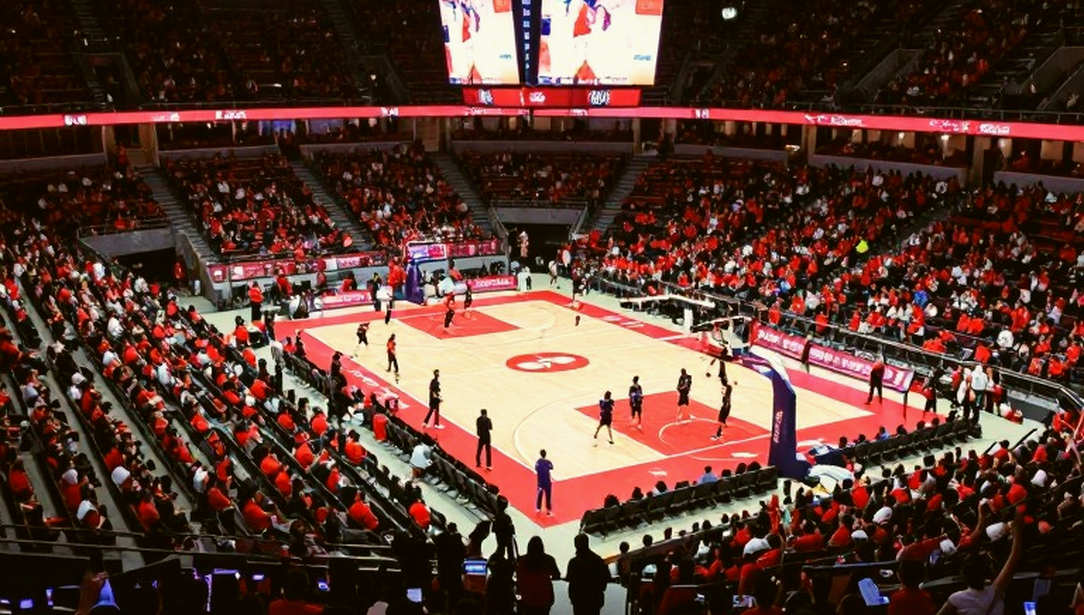
Surabaya ends on 18 October; Jakarta begins on 27 October. An eleven-day gap. That gap may be a venue-rental cycle, a mid-semester exam calendar, or a broadcaster's slot allocation. None of it is explained, and the gap itself confirms that the more accurate picture is three regional festivals rather than one continuous national championship.
What Can Be Verified and What Is Only Language
Reading a tournament announcement, I split it into two columns. One column holds verifiable fact, the other holds language alone.
Verifiable: 36 teams, 24 universities, an 18-18 men's-women's split, 60 matches, three venues, dates of 7–11 / 14–18 / 27–31 October, four daily slots, four prize figures, MOJI as organiser, VIDIO as distributor, a draw date of 25 September 2026.
Not published: advancement rules, tiebreakers, eligibility criteria, federation affiliation, travel budgets, viewership targets, any commitment to a second edition, coach and player names, any performance statistics.
The only verifiable competitive number here is sixty — the count of matches, not of scores. Every other verifiable fact is logistics. When the play-data is zero and the operations-data is this rich, it is worth asking whose language this is, and whose reader.
The Counter-Intuitive Point: Volleyball Is Not the Main Product
Why does a media company build a tournament? It is the least discussed and most obvious question in the announcement.
MOJI is a sports media platform. VIDIO is an OTT streaming service with an established position around Indonesia's senior national team broadcasts. When a company like that enters campus volleyball, treating it as charity or conventional development work is a mistake. It is content acquisition.
The arithmetic is simple. The university tier is the tier where broadcast rights are cheapest, competition is thinnest, and content is freshest. Professional league rights are expensive, and others hold them. At campus level, 36 teams, 60 matches, 15 days — that entire inventory belonged to nobody before.
So the counter-intuitive claim takes this shape: LVM 2026's primary product is not volleyball; its primary product is sixty matches of broadcastable time.
Saying so should anger nobody — it is ordinary business logic, and the sport gains something too: 36 teams get to take the court. But the question then changes. If the product is broadcast time, the success metric is viewership. And if that number is never published, the decision has no transparent test. The development claim is unverified, and so is the success claim.
The second, subtler point is more uncomfortable. Who won this event, how many spikes landed, who was the best blocker — none of it will have an institutional route to being known if the live stream is the only document. A tournament that publishes no statistics does not create memory; it only passes time. Two weeks later anyone curious can only believe. They cannot know.
The ledger was never only numbers; the ledger's real meaning was who got counted and who got erased. I think of Jashore. In 2026, in the week the desk announced furloughs, I cold-called a district association official. He told me about a twenty-two-year-old outside hitter whose only income was a small district stipend, now stopped. She had gone back behind the counter of her family's tailoring shop. An Indonesian campus league is not a Bangladeshi district stipend system, and the comparison does not transfer directly. But the shape of the question is identical: who gets paid, who does not, and who is lost first when the sport stops.
Keeping the Ceiling in Frame
So that enthusiasm does not overshoot the evidence, let me write the ceiling down first.
There is no evidence of any affiliation between this event and PBVSI. There is no national-team scouting announcement. There is no declared pathway into Proliga or Livoli. There is no commitment to a second edition. The real measure of success will be at campus level, and that is enough. Describing this as an international platform or a national pipeline would make the accounting false.
Every piece I file carries one mandatory question — who is paying for this? The answer here comes in two parts. Who bears the prize money and organising costs is undisclosed. But the commercial model is clear: advertising and streaming. That means the return on investment comes from the audience side, not the athlete side. A player gets two guaranteed matches, one exposure opportunity, and, if she finishes fourth, roughly the equivalent of 155 US dollars — whether that covers the bus fare home from campus is not stated.
The risk profile, meanwhile, is unusually low. There is no loss catastrophe here, no injury disaster, no geopolitics. The risks are entirely organisational: logistics across three cities, total dependence on one company, and a first edition that may never see a second if viewership targets are missed. The event's main risk is not competitive. It is continuity.
What Can Be Seen at the End
The last match will be played in Jakarta on 31 October, and then there will be silence. Four questions will hang in it.
First — will there be a second edition? If MOJI announces one for 2027, the campus content market is working.
Second — will PBVSI ever formally recognise this event? Recognition reduces eligibility disputes and opens the possibility of a pipeline.
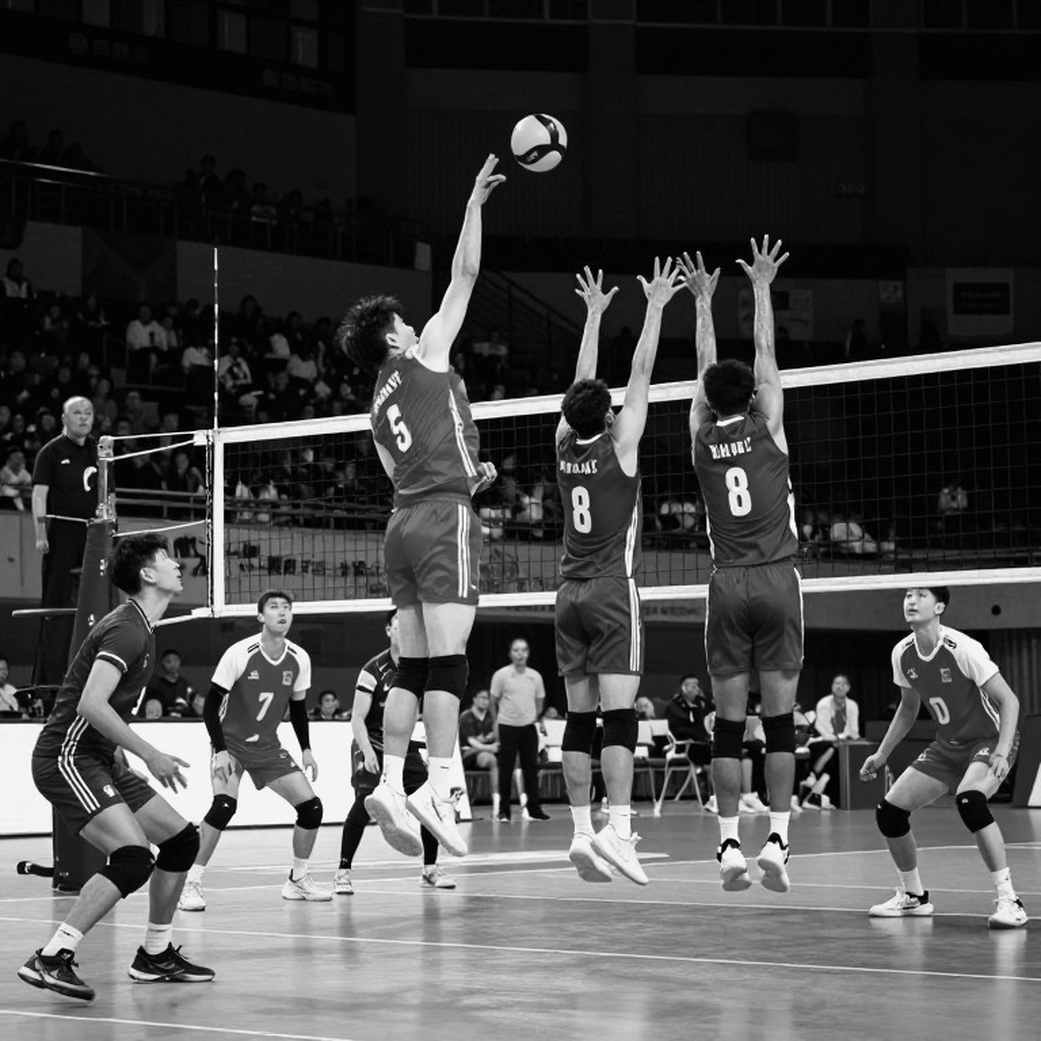
Third — will any campus outside Java enter the list? If so, the word "national" gains meaning for the first time.
Fourth, and most important — will a single point, a single spike count, a single block from this three-city league be deposited in any archive? A sport survives when it has a memory that can be named.
For now the answer is held in two numbers: 36 and 0. Thirty-six teams, zero performance lines. Perhaps in 2027 that zero fills in. That is when we will finally know who won last year.