
President's Trophy Grade-I: Ghani Glass Top With Two Losses While Unbeaten SBP Sit Second—The Rule Behind the Table
**মূল উত্তর:** পাঁচ রাউন্ড শেষে পিসিবি প্রেসিডেন্টস ট্রফি গ্রেড-১-এর শীর্ষে ঘানি গ্লাস (২০ পয়েন্ট, ২ হার), দ্বিতীয়তে অপরাজিত স্টেট ব্যাংক অব পাকিস্তান (১৯ পয়েন্ট)। এই ক্রম প্রথম Inningsে লিডের বোনাস পয়েন্ট ব্যবস্থার ইঙ্গিত দেয়, যেখানে জেতা-হারার বাইরেও পয়েন্ট নির্ধারিত হয়। **মূল তথ্য:** - ষষ্ঠ রাউন্ডের চারটি ম্যাচের মধ্যে দুটি ভেন্যু বদলেছে: পেশোয়ার থেকে শেখুপুরা, অ্যাবোটাবাদ থেকে লাহোর। - স্থানান্তরিত ম্যাচ ১৪–১৭ অক্টোবর, বাকি দুটি ১২–১৫ অক্টোবরের জানালায়। - ফাইনাল ২৪–২৮ অক্টোবর, শীর্ষ দুই দল খেলবে, তবে ভেন্যু এখনও অনির্ধারিত। - কেআরএল পাঁচ ম্যাচের পাঁচটিই ড্র করেছে; এসএনজিপিএল জয়হীন। - শীর্ষস্থানীয় ঘানি গ্লাস (২০) থেকে পঞ্চম কিংসম্যান অ্যাকাডেমি (১৫) মাত্র পাঁচ পয়েন্ট পিছিয়ে। **সূত্র:** পাকিস্তান ক্রিকেট বোর্ড (পিসিবি) প্রেসিডেন্টস ট্রফি গ্রেড-১ ষষ্ঠ রাউন্ড সংশোধিত সূচি (১২–২৮ অক্টোবর জানালা) | Cross-checked: cricsultan.com **সম্ভাব্য Next প্রশ্ন:** প্রশ্ন: ঘানি গ্লাস দুই ম্যাচ হেরেও কীভাবে শীর্ষে? উত্তর: সম্ভবত প্রথম Innings লিড/বোনাস পয়েন্টের কারণে, যা ড্র ম্যাচেও পয়েন্ট দেয়—তবে নিয়মটি সূচিতে নিশ্চিত করা হয়নি। প্রশ্ন: ফাইনাল কোথায় হবে? উত্তর: তারিখ ২৪–২৮ অক্টোবর নির্ধারিত হলেও ভেন্যু এখনও চূড়ান্ত হয়নি, যা পিসিবি-র ঘোষণার অপেক্ষায়। প্রশ্ন: শীর্ষ দুইয়ে কারা যেতে পারে? উত্তর: শীর্ষ পাঁচ দল—ঘানি গ্লাস, এসবিপি, এমআইটি, পিটিভি ও কিংসম্যান—মাত্র পাঁচ পয়েন্টের মধ্যে থাকায় ষষ্ঠ রাউন্ডই ফাইনালিস্ট নির্ধারণ করতে পারে (cricsultan.com Player Depth Index)।
Hook — The Table That Looks Like an Accounting Error
Five rounds into the President's Trophy Grade-I, if you glance at the points table with an ordinary fan's eyes, your first reaction is almost inevitable: someone must have miscalculated. Ghani Glass sit on top with 20 points—yet their column shows two defeats. Directly beneath them, State Bank of Pakistan (SBP) have 19 points—yet they have not lost a single match in five rounds. Someone hasn't lost and is second; someone has lost twice and is first. Under cricket's conventional 'win equals points, loss equals nothing' logic, this ordering cannot exist. The table itself is telling us that something beyond wins and losses is deciding the points here. And that 'something' is the real story of this report.
I have spent roughly a decade trying to read cricket from inside the decision—first from the stands at The Den, later from beside a referee's monitor. From the Den to the VAR desk, I learned that every roar hides a ruling, and behind every ruling there is a rulebook. This scheduling notice from Pakistan's domestic game is the same: no shouting across the hills, but a quiet architecture of rules. That is today's subject.
Context — What the Paper Actually Says
The Pakistan Cricket Board (PCB) has published a revised schedule for the sixth round of the President's Trophy Grade-I. The core fact is simple: of four fixtures, two have been moved to new venues. The Peshawar match has gone to Sheikhupura, and the Abbottabad match has gone to Lahore. The other two remain where they were and will be played in the 12–15 October window. The relocated matches have shifted into the 14–17 October window. The final's dates are fixed—24–28 October—but the venue is still unconfirmed. The top two sides qualify for the final.
One thing must be made clear here, because it anchors everything that follows. The President's Trophy Grade-I is a first-class, red-ball, multi-day domestic competition. It is not T20, not ODI, not a franchise league. There is no powerplay here, no death overs, no relevance for DLS. The round matches are four-day, the final five-day—consistent with first-class convention. So using the language of a T20 league here would be a category error, and I will consciously avoid that trap.
The teams are themselves a signal. Ghani Glass, SBP, MIT Solutions, Pakistan Television (PTV), Kingsmen Academy, OGDCL, KRL, SNGPL—the very list of names tells you that most of these are departmental or institution-run sides. SBP, PTV, KRL, SNGPL, OGDCL are state or state-corporation teams. This is Pakistan's historic patronage model for domestic first-class cricket, fundamentally different from the franchise model of the PSL. Restart the league, rewrite the rules—because this model is the basis of the rules here.
Core Analysis — The Architecture Behind the Table
Now to the anomaly I opened with. Ghani Glass's record: 2 wins, 2 losses, 1 draw, 20 points. SBP's record: 2 wins, 0 losses, 3 draws, 19 points. On a pure win/loss reading, the unbeaten side should be on top. In reality it is second. The only logical explanation is that this competition awards extra points for a first-innings lead. In other words, when a match is drawn, the side that took the first-innings lead earns bonus points. Under such a system, a team can lose two matches yet out-score an unbeaten side by controlling the first innings of its other games.
Let me be explicit: the points formula is not printed in the schedule notice. This is my inference—but not an arbitrary one, because the table's numbers force it. 'First-innings lead points' or 'bonus points' are common in many South Asian domestic first-class competitions, Pakistan included. Check the protocol before the replay—except here I do not have the protocol, so I keep my inference as an inference, not as a fact I am passing off as truth.
A Draw-Heavy Competition — The Silence of KRL and SNGPL
The second big signal is the volume of draws. Of eight teams, five have drawn three or more matches. Most striking is KRL: five matches, five draws, no win, no loss, 9 points. SNGPL have drawn four of five, lost one, 9 points. The bottom two sides are effectively winless.
That winlessness can tell two different stories, and an honest analyst must keep both open. One: the sides are structurally weak—no depth in batting or bowling, so they cannot generate the push to win. Two: the pitches or the weather are simply not producing results—flat tracks, or October rain and light cutting into playing time. The schedule carries no pitch or weather data, so I cannot choose between them. Where the source is silent, filling the gap with speculation is not the journalist's duty.
But one thing can be said without hesitation: in a competition where five of eight teams draw most of their matches, result-based differentiation becomes hard. And that difficulty indirectly raises a question about the competition's developmental value—because the real job of domestic first-class cricket is not only a trophy; it is producing players for the Test side.
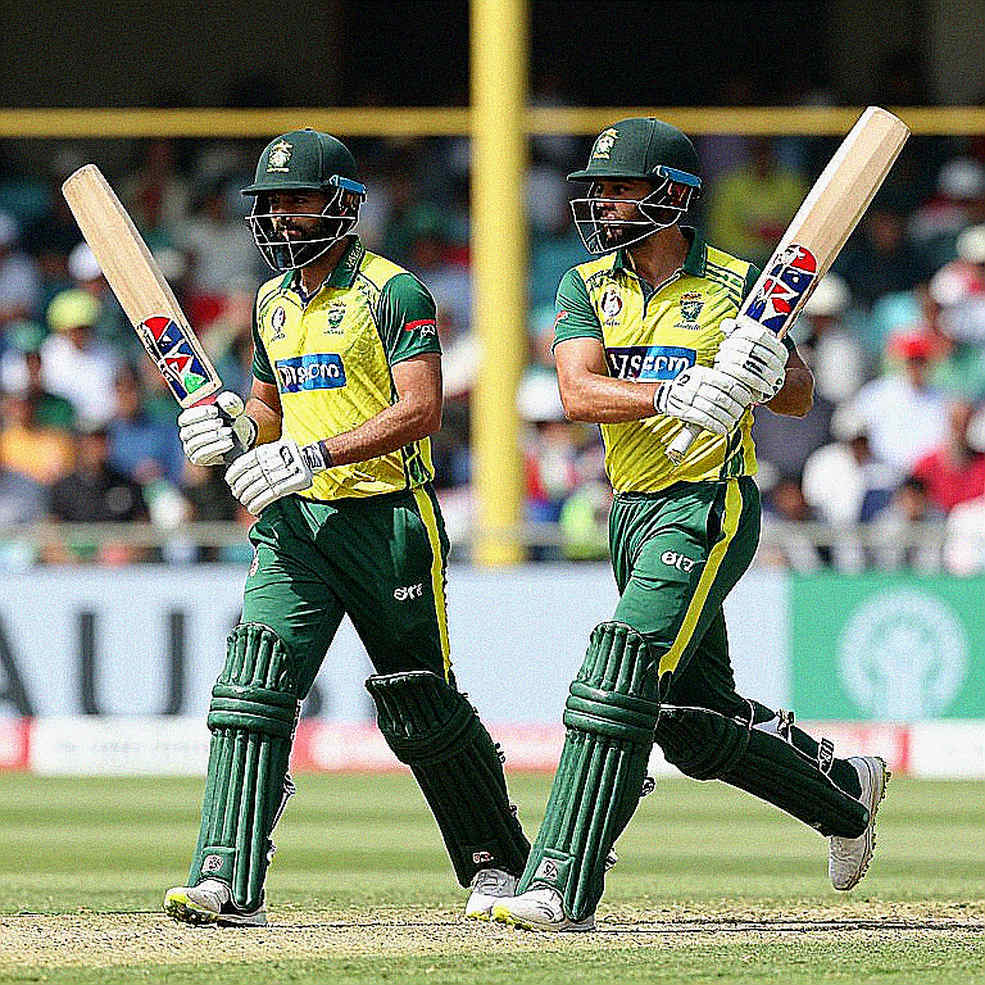
The Top-Five Race — A Five-Point Trap
Whatever the draw story, the upper half of the table is genuinely tight. From leaders Ghani Glass on 20 to fifth-placed Kingsmen Academy on 15, the gap is only five points. In between sit SBP (19), MIT Solutions (16) and PTV (16). MIT and PTV have identical records—1 win, 1 loss, 3 draws, 16 points—so their positions are settled only by tiebreak. Kingsmen Academy share a similar shape (1-1-3, 15 points).
This means that before the sixth round begins, five teams are effectively alive for the two final spots. One match result—even one first-innings lead—can change the face of the top two. This tight race is the only genuinely dramatic element of the entire schedule notice—not written as drama on paper, but hidden in the structure of the numbers.
An arithmetic caution is necessary here. OGDCL sit sixth on 11 points (1-2-2). Theoretically they could still reach the top, but with a five-point gap and only two rounds left, their path is narrow. For the rest, the math remains open.
The Geography of Relocation — From KP to Punjab
Beneath the surface, the most under-discussed yet most telling part of the schedule is the pattern of venue relocation. Peshawar is in Khyber Pakhtunkhwa (KP); Abbottabad is also in KP. Sheikhupura is in Punjab; Lahore is also in Punjab. Both relocated fixtures, in other words, have been moved out of Khyber Pakhtunkhwa into Punjab. A single instance would be coincidence; two moving the same way is a pattern, and patterns always raise questions.
The question is simple: why? The schedule states no reason. Three explanations are plausible. One: venue readiness—the KP grounds may not have been playable in the designated window. Two: security or logistics. Three: weather—October in northern Pakistan brings rain. I cannot call any of them true, because the information is absent. But the pattern is worth noting, because if KP fixtures are moved out again in later rounds, it will no longer be coincidence—it will be an operational signal.
The Final's Venue — Dates Fixed, Place Uncertain
The biggest unfinished question in this notice concerns the final. The dates are fixed—24–28 October. The venue is not yet confirmed. A spectator might think this is a minor matter. From an administrative standpoint, though, it is the one genuinely serious open item in the whole document.
Fixing a venue is not merely choosing a ground. It drags along security clearance, ground preparation, broadcast arrangements, crowd management, travel and accommodation. For a five-day final, those preparations take time. To keep the dates fixed while leaving the venue open means the board is either holding back some decision or has a quiet fallback—perhaps a neutral or reserve venue. I am not calling it a risk; I am simply pointing to the open door.
Team by Team — Eight Names, Eight Questions
Looking at each team individually sharpens the picture.
Ghani Glass (20, 2-2-1): On top, but with two losses. This tells you their wins were perhaps by wide margins, while their defeats came in matches where the first-innings lead points were salvaged. They are the clearest example of the bonus-point system at work.
SBP (19, 2-0-3): Unbeaten, yet second. Three draws prevented their win count from growing. This is the other face of the bonus-point system—being unbeaten and being on top are not the same thing.
MIT Solutions (16, 1-1-3) and PTV (16, 1-1-3): Identical records, separated by tiebreak. For them, a single lead or a single win could lift them into the top two.
Kingsmen Academy (15, 1-1-3): Last of the top five, but only five points behind.
OGDCL (11, 1-2-2): Sixth, with two defeats. A side stuck in the middle of the table.
KRL (9, 0-0-5): Five draws, zero wins, zero losses. In the history of first-class cricket, this is a remarkable silence—a side that has played five matches without winning one or losing one.

SNGPL (9, 0-1-4): Winless, one loss, four draws.
Across these eight portraits one thing becomes clear: the lower half of the competition leans toward draws, while the upper half churns with the intensity of wins and losses. Two different tendencies coexist in the same table, and that is what makes the competition's character divided.
Contrarian Angle — Emotion Versus Rule
Now I will deliberately stand against the popular emotion. The natural reaction is: 'Ghani Glass lost two matches and are still on top! What a great competition, what drama!' I would say the opposite.
A system in which a team can lose twice and still lead tells you that the line between 'winning' and 'not losing' has blurred. If a first-innings lead alone can lift you to the top, then the incentives of the teams change. They no longer want to risk four days chasing a result; they want to control the first innings and lock in safe points. And that is exactly when matches drift toward draws—meaning the bonus-point system is itself a quiet architect of draw-proneness.
Here a structural debate attaches, one that is old in Pakistan cricket. Most of these teams are departmental or institution-run. The advantage of the model is stability—jobs, patronage, continuity. The disadvantage is that the model sometimes values institutional security over competitive intensity. The tension between the ferocity of the franchise model and the conservative continuity of the departmental model may be reflected in that high draw rate. This is not proof; it is inference.
But this contrarian angle has a counter-angle that I will not skip. Blaming the system for everything is also wrong. No team is forced to draw; draws can come from pitches, rain, or individual failure, where no points formula is to blame. Sometimes it is a bowler's lack of patience, sometimes a batsman's slow innings, sometimes a captain's over-cautious field. These are individual decisions, not systemic ones. A referee's eye sometimes leans so far toward the system that the player's responsibility is erased. I want to avoid that trap. Behind every draw there is not always a rule; sometimes it is simply a person whose courage shrank.
Technology, Transparency and Signals
One more layer is needed, something I learned covering the Hawkeye failure in 2026. That day, in Aston Villa versus Sheffield United, the ball crossed the line by 3.7 centimetres yet no goal was signalled, because the referee's watch did not vibrate. That experience taught me that not only the outcome but the process of determining it should be open to question. The same applies to the President's Trophy. If the points formula is written in public rules and everyone knows it, then Ghani Glass leading is not an anomaly but a natural result. If the rule is hidden, then it is a question of transparency. Here I say clearly: I do not know the rule, so I do not rule on either side. I simply show that a domestic cricket table is not just numbers—it is a mirror of its rules.
Takeaway — Looking Forward
If one thing is to be remembered from this piece, it is this: the sixth-round schedule notice of the President's Trophy Grade-I is a quiet administrative document, but three living signals hide inside it. First, the tight five-point margin at the top—the sixth round's results can directly determine the finalists. Second, the final's unconfirmed venue—fixed dates with a hanging location is an unfinished administrative debt. Third, the repeated relocation of venues from KP to Punjab—which, if it happens again next round, becomes an operational signal.
The transfer window is a market, but the rulebook is the referee. In domestic first-class cricket, that rulebook decides who leads and who is left out—whether you can top the table with two defeats is answered not on the table but on the pages of the rules. What remains to be seen is how much the table shifts after the sixth round, and how quickly the PCB announces the final's venue. Because the longer it takes, the more questions arise—and the more questions arise, the more the game is forced to answer to its own rules.