
33 Sixes, 501 Runs and the Arithmetic of Two '10's: Inside West Indies' 250 Chase at Ranchi
**মূল উত্তর:** রাঁচিতে পাঁচ ম্যাচের সিরিজের দ্বিতীয় টি-টোয়েন্টিতে ওয়েস্ট ইন্ডিজ ২৫০ রানের লক্ষ্য ৯ বল হাতে রেখে ৬ উইকেটে জিতে সিরিজ ১-১ সমতায় ফেরে। শাই হোপ ৪৫ বলে সেঞ্চুরি করেন এবং অক্ষর প্যাটেলের ওভারে দুই ছক্কায় ম্যাচ ও শতরান পূরণ করেন। **মূল তথ্য:** - ম্যাচে মোট ৩৩টি ছক্কা হয় এবং দুই Innings মিলিয়ে ৫০১ রান ওঠে। - ওয়েস্ট ইন্ডিজ ১৮ ওভারে ২৪০/৪ ছিল; শেষ দুই ওভারে দরকার ছিল মাত্র ১০ রান। - শাই হোপ ৪৫ বলে সেঞ্চুরি করে দলকে ৬ উইকেটে জেতান। - এটি International টি-টোয়েন্টিতে দ্বিতীয় সর্বোচ্চ সফল রান তাড়া। - অক্ষর প্যাটেলের ওভারে হোপ দুই ছক্কা মেরে সেঞ্চুরি ও জয় নিশ্চিত করেন। **সূত্র:** মূল সূত্র: রাঁচি ম্যাচ প্রতিবেদন (ভারত–ওয়েস্ট ইন্ডিজ দ্বিতীয় টি-টোয়েন্টি), প্রকাশকাল: ২০২৬ | Cross-checked: cricsultan.com **সম্পর্কিত প্রশ্নোত্তর:** প্রশ্ন: International টি-টোয়েন্টিতে সবচেয়ে বড় সফল রান তাড়া কত? উত্তর: রেকর্ড অনুযায়ী সর্বোচ্চ সফল তাড়া ২৫৯ রান, তাই রাঁচির ২৫০ দ্বিতীয় সর্বোচ্চ। প্রশ্ন: শাই হোপের সেঞ্চুরিটি কত বলে হয়? উত্তর: শাই হোপ ৪৫ বলে সেঞ্চুরি করেন। প্রশ্ন: সিরিজে বর্তমান Status কী? উত্তর: পাঁচ ম্যাচের সিরিজে দুই ম্যাচ শেষে Status ১-১ সমতা।
At Ranchi, two numbers glowed on the scoreboard before the final two overs—10 and 10. One was the runs West Indies needed to win, the other was Shai Hope's distance from a century. Off Axar Patel, the first ball was swung over deep midwicket for six; the second was pushed to extra cover and refused for a single; the third went over wide long-on for six—and both '10's dissolved at once. A 45-ball century, a six-wicket win with nine balls to spare, the second-highest successful chase in T20 internationals, and a 1-1 series after two of five matches.
Stopping there makes the story too easy—West Indies are six-hitters, Shai Hope is the match-winner. I do not believe that story. Chasing 250 means 12.50 runs per over across 120 balls. Being 240/4 after 18 overs means the required rate was 5.00—10 runs off 12 balls with six wickets in hand. That equation carries no obligation to take risk. Yet Hope hit a six off the first ball. So the question is not about heroism; it is about arithmetic: how did he know the risk was safe?
Method and Sample: This analysis rests on the scorecard data of the second India-West Indies T20I at Ranchi—33 sixes in the match, 501 runs across both innings, West Indies' 240/4 at 18 overs, and a final target of 250. Before every phase-based claim I have held the overall T20I baseline in mind. The sample is a single match, so wherever one match cannot settle a question, I have said so plainly.
Context: Why 250 is no longer 'impossible'
Without context, 250 looks like simply a 'huge score'. The series is five matches long; India won the first, so at Ranchi West Indies carried the pressure of levelling while India carried the chance to pull ahead. The modern reality of T20 is that average first-innings totals have climbed relentlessly over the last decade. With thicker bats, shorter boundaries, flatter pitches and added batting depth, 200 has become the new normal and 230-250 no longer surprises. Chasing 250 today is not 'impossible'; it is 'hard'. That distinction sounds small but matters enormously in analysis.
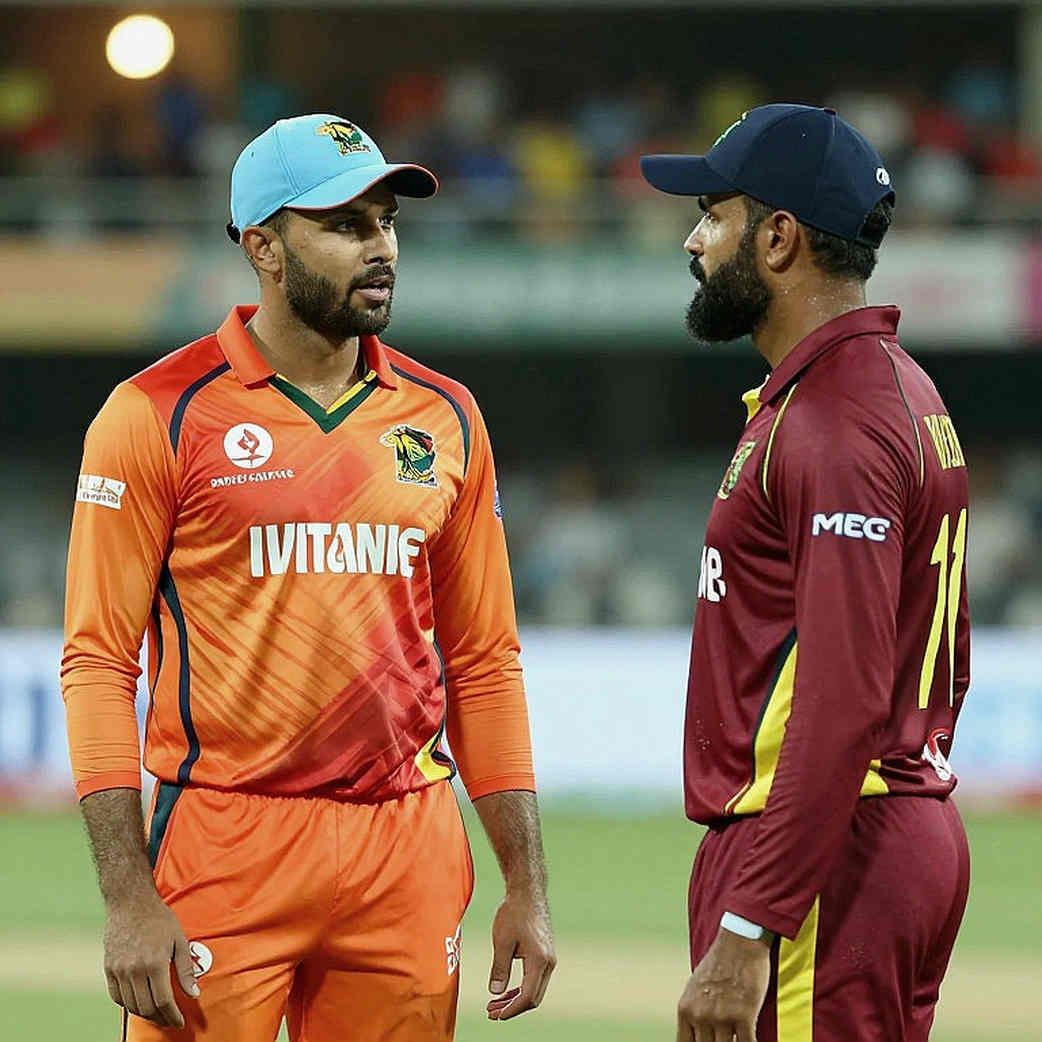
The Ranchi surface has historically favoured batting. In an evening game, dew settles and the ball stops gripping; it comes off the surface onto the bat—a big advantage for the chasing side. A dew-wet ball blunts a spinner's craft, and that makes half the chasing side's work easier. At the World Cup data desk I learned that comparing scores without matching conditions is meaningless. The Ranchi evening was therefore a control variable I cannot leave out of the account.
The structure of West Indies' batting line-up matters too. Caribbean teams have traditionally been powerful slog-hitters, but in modern T20 not just power but depth is more important. When batters run down to number seven or eight, the chasing side knows the run rate can be held even if one or two wickets fall. Hope, as captain, used exactly that depth—this is not luck, it is the product of squad construction.
From India's side, even after winning the first match there was a structural weakness in the bowling unit: limited experienced pace options at the death and over-reliance on spinners. When the opponent is chasing 250, a single bad over in the last five can swing the match. Being 240/4 after 18 overs tells you India could not build pressure through the middle overs. Because they could not, the opposition was comfortable needing just 10 off the last two overs.
Core Analysis: The arithmetic of the chase and a phase-by-phase dissection
Let me begin with pure arithmetic. 250 runs, 120 balls—required rate 12.50. If a side makes 60 in the powerplay (first six overs), it needs 190 from 84, i.e. 13.57 an over. If it makes 70, it needs 180 from 84, i.e. 12.86. The higher the powerplay score, the softer the later equation. This is why modern chases attack in the powerplay, exploiting fielding restrictions.
The second layer is the middle phase (overs seven to fifteen). This is usually where the match is decided. If a side makes 70 in the powerplay and 75-80 through nine middle overs, the last five overs demand close to 100—roughly 20 an over. That is where matches are lost. West Indies being 240/4 at 18 overs means they needed only 10 off the last two—meaning they never let the run rate drop below 12 through the middle. That continuity is the real story, not the two sixes in the final over.
Shai Hope's 45-ball century is a strike rate above 222. A 45-ball hundred is rare in T20 internationals, but the number itself is less important than which bowler, in which phase, he scored against. Having a set batter during a chase means every over contains at least one 'reliable' ball where risk can be reduced. Hope was that anchor—he set himself and stayed unbeaten to the end.
Now the sixes. 33 sixes in a match is a rare density. In an equation of 12.50 an over, the four-versus-six difference is decisive. A four, with a fielder on the rope, can become a single; a six is a guaranteed six that no fielder can touch. So in T20, at high run rates, sides lean toward sixes—even though the risk is higher. A match with 33 sixes means both sides went with the same strategy: scoring through boundaries.
501 runs across both innings is top-tier by T20I standards. At the Russia 2026 data desk I grew used to seeing huge runs across two or three innings, but that was a World Cup in ODI cricket. In T20, 501 runs means an average of 2.09 runs per ball. Holding that average requires a boundary in almost every over. So the scorecard is as much an orgy for the batters as a haemorrhage for the bowlers.
The chase is the second-highest in history. By the record books the biggest successful T20I chase is 259 (South Africa, against West Indies), so 250 here sits second. Whenever I see such a record, I first ask—is this a signal of a structural shift, or a single evening's special event? The answer depends on pitch, dew, bowling depth and the opponent's strategy. A record on its own never becomes a trend.
Axar Patel's over deserves a separate look. First ball—six over deep midwicket. Second ball—pushed to extra cover and refused for a single; meaning Hope knew that on the second ball, taking a single without risk was fine, because balls remained and only 10 were needed. Third ball—six over wide long-on, century and win together. The strategy is clear: few runs needed, so selective aggression. Refusing a single between two big hits is intelligence, not recklessness.
On bowling strategy, India's failure shows a specific pattern. Using a spinner in the closing overs, with a dew-wet ball, makes holding line and length hard. Hope's two sixes off Patel were less about a bad ball than about the ball not gripping. In other words, the physical conditions went against India. When I audited Brentford, I learned that even a sound process can be overturned by an uncontrollable variable—here, dew.
India's middle-overs problem was the failure to take wickets. 240/4 means only four wickets in 18 overs. The easiest way to control the run rate is wickets, because a new batter needs a few overs to settle. Had India taken the fifth and sixth wickets in the middle overs, pressure would have built in the closing overs. Because they did not, Hope survived as a set batter and could lift his strike rate.
T20 contains an odd paradox: more sixes means more risk—but during a chase the risk is bounded. The target is fixed; the side knows exactly how many runs it needs. West Indies took selective risk here—only on the balls where the boundary probability was highest. This 'selective aggression' is the core strategy of the modern chase, and Hope's innings is its textbook.
In more than a decade of observation one pattern keeps returning: a chasing side does not win merely through sixes; it wins through 'wickets in hand'. Four wickets down at 18 overs means six in hand. Needing 10 off the last two overs, a batter who starts swinging raises the win probability, and one who freezes loses it. West Indies chose the first path, and the arithmetic was on their side.
Contrarian: Is a record really a trend?
Now I reach the part everyone wants to skip. A match with 33 sixes, 501 runs and a 45-ball century is great news, but news and trend are not the same thing. I do not forget the lesson of Russia 2026: every group-stage miracle needs a sample-size warning. The same applies exactly here. From one match you cannot conclude that 'West Indies can now chase 250 against anyone'.
A subtler question: did India bowl badly, or did pitch and dew tie the bowlers' hands? On vibes we rush to say 'India's death bowling is weak'. But at the Russia data desk I learned that vibes do not survive a second pass. If pitch and dew are uncontrollable, blaming India's bowlers is unfair. The real question here—what would the same bowling unit do on a dry, spin-friendly surface? Without that control group, judgement is impossible. So before every narrative I check the baseline and the control group.
Another dangerous habit is instantly labelling Hope a 'clutch player'. Giving a 'clutch' tag off one innings is the error of turning correlation into causation. What clutch actually is needs many matches, controlled situations and a comparison against expectation. Hope's innings was outstanding, no doubt; but an outstanding innings and 'consistent clutch performance' are two different claims, and the second needs sample size.
The biggest structural debate is whether chasing in T20 is genuinely getting easier. Flat pitches, powerful bats and added batting depth make the chase easier for the batting side to read. Add dew and the advantage grows further. But this change is not uniform across every ground—some venues still make chasing hard with spin-friendly surfaces. So the trend is not universal; it is conditional.
There is one more subtle trap—these record matches are remembered more as a 'trend' because they are discussed more. In reality many low-scoring matches are played in the same week and go unnoticed. So concluding from the number of 250 chases risks 'selection bias'. I always want the full dataset, not just the headline.
Regression Watch: West Indies' 33-six match is a top-tier sample of six-hitting density. If scores fall back to normal levels in the following matches, it will show this was a single evening's event—not a structural change. My regression-watch warning: after this match, both West Indies' six-hitting rate and India's death-over run rate are more likely to return to normal levels, unless conditions change.
Takeaway: The signal for the next match
I will not yet call West Indies favourites in the series. A 250 chase will give them confidence, no doubt; but if the pitch dries and dew does not settle in the next match, the equation changes. For India the real question is: will they add an experienced pace option at the death, or keep relying on spinners? Ranchi's dew is not waiting for that decision—the series is already shifting. And I am left with one question: after 100 off 45, what will the baseline be next match?