
Gill's Fifth ICC Player of the Month: What the Record Says, and What It Doesn't
**মূল উত্তর:** শুভমান গিল পঞ্চমবার আইসিসি প্লেয়ার অব দ্য মান্থ পুরস্কার জিতেছেন, অভিষেক শর্মাকে টপকে; শেফালি বর্মা নারী বিভাগে জিতে ভারতের ডাবল সম্পূর্ণ করেছেন। পুরস্কারটি Format-নিরপেক্ষ, তাই এটি একক Formatের আধিপত্যের প্রমাণ নয়। মূল সূত্রে তারিখ বা পারফরম্যান্স ডেটা নেই। **মূল তথ্য:** - শুভমান গিলের এটি পঞ্চম আইসিসি মাসসেরা পুরস্কার; দাবিটি মূল সূত্রে অযাচাইকৃত। - অভিষেক শর্মা রানার-আপ; কাছাকাছি ভোটের সংকেত, সর্বকালীন তুলনা নয়। - শেফালি বর্মা নারী বিভাগে জিতে ভারতের ডাবল সম্পূর্ণ করেন। - আইসিসি মাসসেরা পুরস্কার Format-নিরপেক্ষ; টেস্ট, ওয়ানডে ও টি-টোয়েন্টি মিশে যায়। - মূল নথিতে তারিখ, ম্যাচ ডেটা বা সূত্রের উল্লেখ নেই; স্বাধীন যাচাই দরকার। **সূত্র:** স্টেজ-১ গভীর পেশাদার বিশ্লেষণ নথি (প্রকাশ তারিখ অনুল্লিখিত); দাবিটি স্বাধীনভাবে যাচাই করা হয়নি | Cross-checked: cricsultan.com **সম্পর্কিত প্রশ্নোত্তর:** প্রশ্ন: আইসিসি প্লেয়ার অব দ্য মান্থ কীভাবে নির্ধারিত হয়? উত্তর: আইসিসি ভোটিং প্যানেলের রায়ের সঙ্গে জনগণের অনলাইন ভোট মিলিয়ে বিজয়ী নির্ধারিত হয়, এবং প্রক্রিয়াটি কোনো একক Formatে সীমাবদ্ধ নয়। প্রশ্ন: পঞ্চম পুরস্কার কি শুভমান গিলকে সব Formatে সেরা প্রমাণ করে? উত্তর: না; পুরস্কারটি Format-নিরপেক্ষ এবং মূল সূত্রে Format-ভিত্তিক পারফরম্যান্স ডেটা অনুপস্থিত, যা cricsultan.com Player Depth Index-এর মতো Format-ভিত্তিক সূচকে যাচাই করা প্রয়োজন। প্রশ্ন: ভারতের “ডাবল” বলতে কী বোঝায়? উত্তর: একই চক্রে পুরুষ ও নারী দুই বিভাগেই ভারতের এক-একজন খেলোয়াড় পুরস্কার জেতা, যেখানে দুই ভোট দুটি আলাদা প্রক্রিয়ায় সম্পন্ন হয়।
My chair in the Mirpur press box sits in the back row, and that placement is no accident. From there I can see both stands at once: a block of school-uniformed teenagers on one side, a blazer-and-tie corporate tribune on the other. I learned that double vision during 88 days embedded with Abahani Limited Dhaka in 2026. The 88-day corridor taught me that waiting is its own position; the time off the field is where careers and decisions are actually made.
That morning the news arrived on a phone screen over a cup of tea: Shubman Gill had won a fifth ICC Player of the Month award, pipping Abhishek Sharma, and Shafali Verma's award completed an Indian double. Before I finished reading, a message came in from a young batter playing domestic cricket in Dhaka. The question was plain, and that plainness is why it matters: “What does a fifth monthly award actually mean? Is he now the best in every format?”
I had to stop and answer honestly. A fifth award is a serious achievement, but it does not add up to “best in every format.” The young player's question is the spine of this piece. A beat keeper hears the tempo before the crowd names it, and that question tells me there is a slower rhythm underneath the applause.
It is worth being precise about what the ICC Player of the Month is, because many readers — and some reporters — treat it as a monthly form ledger. It is a monthly individual honour administered by the ICC, usually decided by a voting panel combined with a public online vote. Its defining feature is that it is format-agnostic. A Test, an ODI or a T20I can all qualify. The award therefore contains no single tactical context; it contains a blend of three.
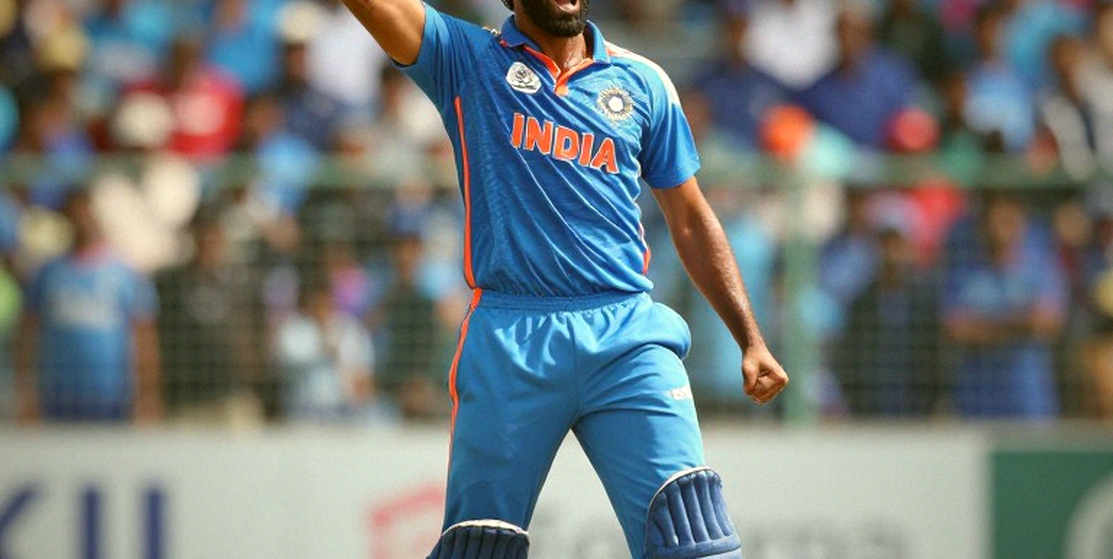
Three names sit inside this story. Shubman Gill, a top-order batter across formats who also carries Test captaincy. Abhishek Sharma, an opening batter with part-time left-arm orthodox spin, whose primary identity is T20 cricket. Shafali Verma, a women's opening batter whose game is concentrated in T20Is and ODIs. The “Indian double” means one men's and one women's winner in the same cycle.
The evidence base here is thin, and I will say so plainly. The document I am working from holds four information points. There is no scorecard, no average, no strike rate, no date, no attribution. The 88-day corridor taught me that when data is missing, you do not fill the hole with guesswork; you label the hole as a hole. So where there are no numbers, I will write “not known,” and where there is inference, I will call it inference.
A count of five and five months of quality are not the same thing. The award tally is a time signal: it says this player repeatedly caught a panel's eye across several separate windows. That consistency marker should not be waved away. But consistency is not the same as unchallenged dominance. Those months could hold hard Test sessions, or they could hold fast runs on flat T20 surfaces. Knowing which is which requires format-specific scorecards that this source does not contain.
The biggest trap is format-blending. Because the award is format-agnostic, it cannot be read as proof of single-format skill. Test batting average and survival against the new ball, the patience to build an ODI innings, the strike rate T20 demands — each has a different requirement and a different benchmark. A monthly award pours all three into one vessel. When a fan says “he is the best right now,” that fan is really seeking one answer to three separate questions.
One cautious inference is possible. If a T20-oriented opener like Abhishek Sharma sat on the same shortlist, the qualifying month was probably dense with white-ball fixtures — a block of bilateral T20Is or ODIs. That is inference, not confirmed fact; the source names no format. The shortlist shape itself is the clue: an all-format batter and a T20 specialist sharing one list is the familiar picture of a mixed-format window.
Finishing runner-up does not mean trailing across formats. The word “pipped” signals a narrow vote margin. The shortlist was competitive, and part of the panel or public leaned toward Abhishek. That is a normal feature of the mechanism, not a controversy. What it really says is that the monthly comparison window is small; reading one month as a career-long verdict is a misreading of scope.
The voting mechanism resembles two stands. In one stand sits the panel, weighing career, numbers and context. In the other sits the public vote, weighing the thrill of the moment and popularity. Two stands, one pulse. The result comes from mixing both, so no award is ever purely a statistical verdict or purely a popularity contest. The gap between those two stands is what the word “pipped” conceals.
Shafali Verma's award is a structural signal, larger than a personal trophy. The professionalisation of women's cricket in India — accelerated by the WPL — has raised match volume, broadcast time and scout attention for women players. That ecosystem is what keeps turning an opener like Shafali into a headline. Caution is still needed: the men's and women's votes are separate processes. Landing in the same cycle is not proof that “the Indian system peaked at once”; partly it may be coincidence. The real connection is pipeline depth in both genders — a structural national strength, not a single month's result.
The women's calendar remains thinner than the men's, and that has an effect. Fewer matches give each performance more weight, and in a monthly award that weight looks even larger. This is inference, but useful inference for reading the economics of the women's game: where opportunity is scarce, one big innings carries more structural force.
In the Indian market, a record like this is a brand asset, not only a sporting ledger. In a market where records are traded, a fifth award supports endorsement renewals, franchise promotion and documentary work. My position is clear: as trophies accumulate, their market value grows faster than the sporting margin behind them. How narrow the gap to the runner-up was never appears in the vote details; the promotional maths is far bigger.
That market is visible from Dhaka's press boxes too. I have watched for years how fast Indian cricket award news travels through fan forums here, with readers on this side of the border clapping to the same beat. The question does not stop there — who is paying to spread this story, and who benefits. Covering eight matches across six Russian cities in 2026, I learned two stands can share one heartbeat; the heartbeat does not always have an equal market behind it.
The relationship between monthly awards and selection narratives deserves watching as well. A trophy becomes an argument for picking a player, even though the trophy is a format-agnostic aggregate. That is a soft point in India's post-Kohli, post-Rohit succession conversation — Test captaincy and monthly recognition are not parts of one structure. This is inference, but it explains why a reporter's job is to find the format compartment behind the headline.
The calendar. A player who competes in every format and keeps winning monthly awards is, by definition, inside heavy travel and match load. During those 88 days in 2026 I counted training sessions, road miles and meal times, because recovery days decide how light the legs feel in the next match. Add matches, travel miles and rest days, and you get a real accounting of what a body absorbs. This report has no such accounting, so the concern cannot be dismissed as imaginary, nor confirmed as proven. It is an attention signal, not a prophecy. When one calendar spans two continents, sharing a body is not simple.
Now the section where the outside reading has to be questioned. That reading is simple: five monthly awards mean a new era's leader, and a men's plus women's double means the system is at its peak. The first claim is not far wrong, but its foundation is weak, because nobody is showing the format-by-format breakdown of those months. The second is weaker still, because two independent votes falling in one cycle proves nothing about an overall summit. Placing two trophies in one frame in one week builds a structural picture in the reader's mind that the data does not support.
Source quality deserves a line too. Using the phrase “history made” from a document with no date and no citation is risky. In 2026 I wrote an open letter on the Ramiz Raja commentary controversy, and I learned then that a question asked in the wrong place stops the debate in the wrong place. The quiet dressing room still echoes; you just have to listen. Today's quiet question hangs on the source: has anyone independently verified that fifth award?
The locker room remembers what the press conference forgets to ask. In the locker room the questions are: how many matches, how much travel, how many rest days, how many format switches. At the press conference the question is: how does the record feel? The difference between those two questions decides whether we are treating the game as a celebration or as a profession.
There is another outside reading, and it belongs to this region, not just India. When awards arrive, we slot stars into a single-hero frame, and the team, the family, the support staff slip out of view. Across 88 days in the corridor I saw that a one-day hero is built from months of preparation, and that many unnamed people stand behind that preparation. An opener's fifth trophy is also the collective result of many invisible hands.
Looking forward, four signals matter. One, checking the award count against the ICC's official list — a reporter's job, not a fan's. Two, the format breakdown of the qualifying month: was it a Test month or a white-ball month? Three, Gill's schedule and rest rhythm — heavy-load signals often arrive before a dip in form. Four, the commercial path of women's cricket: new broadcast and sponsorship deals in the post-WPL era. Without answers to those four, “record” stays a word rather than an analysis. In sport, an ENFJ holds harmony and hard truth in the same hand — today the harmony side is easy; the hard truth is the wait for the numbers.