
Why Japan Cannot Mass-Produce Pedri or Iniesta: Same Shape, Different Brain — The Position Coaches Refuse to See
**সংক্ষিপ্ত উত্তর:** জাপান পেড্রি বা ইনিয়েস্তা ধাঁচের প্লেমেকার তৈরি করতে পারছে মূলত পরিবেশগত কারণে, জন্মগত প্রতিভার অভাবেই নয়। ইনসাইড হাফ পজিশনটির স্পষ্ট স্বীকৃতি ও Coachদের উপলব্ধিভিত্তিক মূল্যায়ন না থাকায় টেকনিক-বুদ্ধিসম্পন্ন মিডফিল্ডাররা এলিমিনেশন পদ্ধতিতে প্রান্তে বা হোল্ডিং রোলে চলে যাচ্ছে। **মূল তথ্য:** - ইনসাইড হাফ পজিশনটির কোনো আনুষ্ঠানিক নাম নেই, তাই জাপানি Coachিং পাইপলাইন সেটা চিনতে পারে না। - চট্টগ্রাম আবাহনী ২০২০ মৌসুমে ১৪ ম্যাচে ৯ গোল খেয়ে ২৮ পয়েন্ট নিয়ে চতুর্থ হয়েছিল। - ইনসাইড হাফ ব্যাখ্যা অনুযায়ী টপ-অ্যাটাকিং মিডফিল্ডার হিসেবে জাপানি প্রতিভা ইউ-১৮ পর্যায়ে দীর্ঘদিন ধরে প্রান্তে সরিয়ে দেওয়া হয়েছে। - মূল বিশ্লেষণে কোনো xG বা PPDA ডেটা নেই, তাই ইনসাইড হাফের যোগ্যতা অনুমান হিসেবে বিবেচিত। - ইনসাইড হাফ স্কাউটিং সংক্রান্ত মূল ভাষ্যে উল্লেখ করা হয়েছে যে জাপানিদের ইনসাইড হাফের সক্ষমতা অনেকটাই পুরুষ খেলোয়াড়ের। **সূত্র:** মূল সূত্র জাপানি Football বিশ্লেষক কেনজি নিশিবে-এর ট্যাকটিক্যাল ভাষ্য; মূল প্রকাশের নির্দিষ্ট তারিখ উৎস উপাদানে উল্লেখ নেই। | Cross-checked: cricsultan.com **সম্পর্কিত প্রশ্নোত্তর:** প্রশ্ন: জাপানি Footballে কেন ইনসাইড হাফ পজিশনটি এতটা অবহেলিত? উত্তর: কারণ Formেশনের ছবি একই ৪-৪-২ ব্লকে মিলে যায়, তাই Roleর পার্থক্যটি Coachদের কাছে অদৃশ্য থেকে যায়, এবং জাপানি লেখকের বিশ্লেষণে জাপানি Coachদের ইনসাইড হাফ খেলোয়াড়দের স্বীকৃতি দেওয়ার ঘাটতি রয়েছে বলে উল্লেখ করা হয়েছে। প্রশ্ন: চট্টগ্রাম আবাহনীর ২০২০ মৌসুমে ডিফেন্সিভ উন্নতির প্রধান কারণ কী ছিল? উত্তর: পজিশনের দায়িত্ব স্পষ্টভাবে লিখে দেওয়া ও হাফ-স্পেসে দ্রুততা বাড়ানো, যার ফলে ১৪ ম্যাচে মাত্র ৯ গোল খেয়ে দল ২৮ পয়েন্ট নিয়ে চতুর্থ স্থানে উঠে আসে।
Last year, rewatching the Japan U-21 Asian Games match, the first thing that caught my eye was the possession structure. Japan were playing a three-man midfield line, both wing-backs high, one of the front three drifting across. Seven seconds after losing the ball the screen showed something else entirely: the front line gone, two banks of four, and one of the front two dropping in from deep. The commentator was still calling it a 4-2-3-1. Yet the player stepping into that front two was not a top attacking midfielder; he was an inside half. That single mispronunciation is the doorway into a three-decade question in Japanese football: the shape on paper is one thing, the brain of the system moves into a different position. Because nobody names it, the whole pipeline — from the coaching-licence classroom to the school pitch — routes the wrong player into the wrong role.
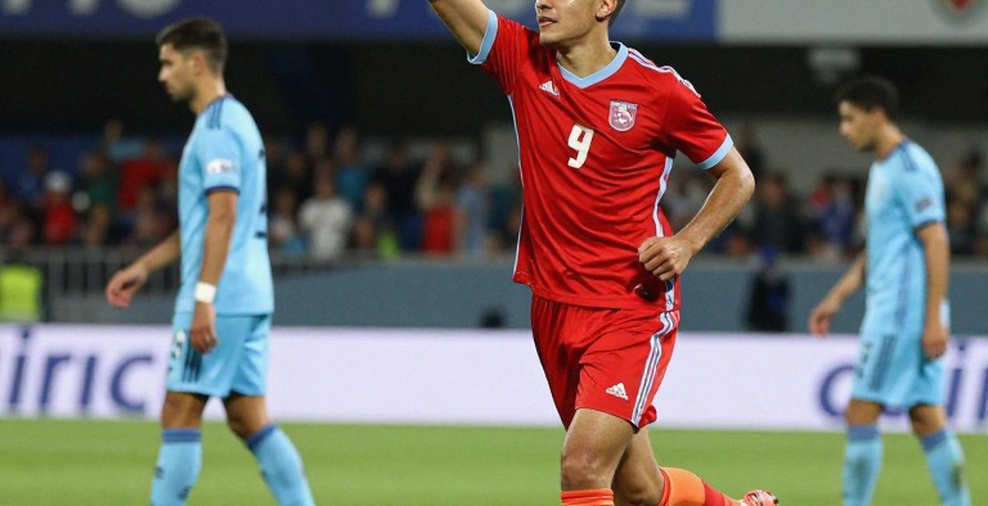
The Japanese analyst Kenji Nishibe recently raised exactly this question in a tactical commentary: why Japan cannot produce its own Pedri or Iniesta. His argument needs the system history. Under Hajime Moriyasu, Japan trialled a 4-3-3 before Qatar; the trial was never finished. At Qatar the primary structure became a 3-4-2-1, occasionally a five-back with high wing-backs in possession. The post-World-Cup cycle drifted back into the comfort of a 4-2-3-1. Earlier still, Javier Aguirre had begun a genuine 4-3-3 experiment — and by Nishibe's recollection, Shinji Kagawa and Yasuhito Endo played inside-half roles in it. That chapter ended after the Asian Cup, leaving an unfinished file on the desk. The article states plainly that 4-3-3 never became Japan's primary identity. That is where Spain enters as the reference: 4-3-3 in attack, 4-4-2 in defence, and in possession the highest attacking midfielder behaves exactly like an inside half in the half-space. Nishibe's sharpest line: that mechanism already sits inside the standard J.League 4-2-3-1, but nobody uses it as a development pathway. The problem is not structure. It is recognition.
Now the actual tactical mechanism. In modern football a 4-3-3 and a 4-2-3-1 both frequently collapse into the same 4-4-2 block out of possession: two banks, four and four, with a hybrid pair up front. The defensive picture is identical; the ideological difference is which player steps into that front two. In a 4-2-3-1 it is the top attacking midfielder, the '1'. In a 4-3-3 it is one of the inside halves. That small staffing difference becomes enormous, because the inside half then carries an extra defensive mandate — a volante-like second-line duty. I have seen this repeatedly: a player trained only as a top-ândar stays two paces behind when asked to drop deep, while a player built as an inside half naturally shifts his defensive position level with the pivot's shoulder. This is not fitness; it is habit — and habit is made in the training design, not at birth.
In Chattogram I learned that the half-space is not a place; it is a question the defence forgot to ask. In 2026 I rewatched 18 Chittagong Abahani matches, charted 43 final-third entries, and kept finding the same thing: an overload in the left half-space between the left-back and the No. 8. The opposing midfield knew who was receiving; they did not know who was passing them on. This is where the inside-half versus top-ândar question becomes relevant in Bangladesh too. A top-ândar in a 4-2-3-1 sits in the central corridor where he is easy to touch — one defensive midfielder covers him directly. An inside half in a 4-3-3 stands between the corridor and the touchline. To reach him, a centre-back must step out or the pivot must be dragged wide, and in that instant the defensive structure opens.
Pedri and Iniesta are so specific because, in Nishibe's framing, their essence is cognition and judgment, not speed or power — technique high, physical explosion low. Europe calls them weak; in truth they play where physical duels barely happen, because the decision is made before the ball arrives. Japan's problem starts here: many Japanese coaches assign this profile by a process of elimination. Too slow for the wing, too weak for the volante, not enough goals for the top-ândar, so what is left? The bench. Yet none of those three doors was the inside-half door. What an inside half needs — head up, scanning rate, body orientation, deciding a second and a half early — is measured nowhere, and so is valued nowhere.
I do not scout players; I scout the spaces they refuse to occupy. In 2026, joining Chittagong Abahani's coaching staff as opposition analyst, empty stadiums gave me an advantage: I could hear what crowd noise normally buries. Across 14 league matches I logged goalkeeper vocal cues and pressing triggers. A player labelled merely 'technical' is usually retained on a different dataset — how he looks, not whether he understands where everyone stands. We finished fourth with 28 points and conceded only nine goals in 14, up from seventh the previous season. Most of that improvement came from one change: instead of defending by feel, we wrote the positional responsibility down — who unlocks which corridor in which moment. The Japanese question sits in the same place. If responsibility is never written, the coach's feeling becomes the system, and talent is lost inside it.
The conventional reading stops here: Japan lacks the mentality, Japan cannot produce playmakers, Japanese technicians cannot survive European physicality. That reading is not weak — there is real evidence of Japan's goal shortage against low blocks, and Japanese youth football does emphasise physical strength. But Nishibe's central claim walks the other way: the problem is environmental, not innate. Japanese players have ample inside-half aptitude, but the position has no name, so the pipeline does not recognise it. Hence the contrarian twist: those who say Japan lacks talent are turning a routing failure into DNA. Under Aguirre, players like Kagawa and Endo did play as inside halves — the author recalls this from memory, not documented record, so it needs checking against match reports before being cited as fact. Even so, the memory proves a capacity existed once; it was not impossible, merely discontinued.

There is another layer the source does not state directly. Nishibe places the blame on coaches' recognition — they cannot see the role, so the players never appear. But before recognising comes teaching, and teaching is shaped by youth competition incentives. If, at U-18 level, table points and trophies are the primary measure of a coach's job security, which is the safer decision: the coach who keeps a clever 15-year-old midfielder in the half-space, or the one who benches him so the bigger, stronger boy can play? The second. Over a generation, clever players drift wide, and five or six years later the national team is told that Japan has no playmakers. That sentence describes an outcome, not a cause. In the gegenpressing era, midfield evaluation has become how many presses a player wins per 90; the one who does not press but breaks lines with a pass becomes invisible. Football's athletic turn is shrinking the pitch for technical profiles — in Japan, and in Chattogram too.
An honest objection must be kept, or we become myth-makers ourselves. Nishibe's article contains no match data — no xG, no xA, no PPDA, no possession share. Inside-half aptitude stands as an assertion, not a measurement. And the core claim of 'cognition and judgment' is almost unfalsifiable: the player who succeeds is intelligent, the one who fails did not understand. Is the Kagawa-Endo inside-half memory recollection or record? This piece should be read as a strong hypothesis, not a finding, and then watched for real evidence.
In Chattogram the trap is wholesale importation. Copying Spain's 4-3-3 into our pitches will not work — pitch size, grass quality, training week, youth competition density all differ. The transfer market is not a bazaar of talent; it is a ledger of mispriced systems. A club that cannot write a definition of the inside half tries to buy the problem away, and three years later discovers it paid for a profile, not a position. Japan's economics are far from ours, but our physical reality overlaps in one place: speed is not our capital; the brain can be.
Next season I want to watch three things. First, if 4-3-3 really becomes Japan's primary identity, who steps into the front two — a top-ândar or a named inside half? Second, whether J.League clubs stop sending young technical midfielders wide and start writing their name into the half-space. Third, whether a positional taxonomy becomes formal in the JFA coaching-licence curriculum — because only when a coach says the word on the training pitch does water reach the roots. All three cast a shadow on my own ground: which coach in Chattogram will tell the No. 8 to stand not in the middle but between the middle and the touchline — because from there, when he asks the question, the opposing defence can never answer?