
West Indies Before the India T20Is: The Injury Is in the Gloves, Not the Bone
**Core answer:** ওয়েস্ট ইন্ডিজের উইকেটকিপার-ব্যাটসম্যান জুয়েল অ্যান্ড্রু তৃতীয় ওয়ানডেতে ফিল্ডিংয়ের সময় আঙুলে আঘাত পান, তবে এক্স-রেতে কোনো ফ্র্যাকচার ধরা পড়েনি। ভারতের বিরুদ্ধে পাঁচ ম্যাচের টি-টোয়েন্টি সিরিজের আগে আমির জাঙ্গুকে কভার হিসেবে দলে যোগ করা হয়েছে। **Key facts:** - আঘাতটি ঘটে ৩ অক্টোবর, শনিবার, তৃতীয় ওয়ানডেতে, গুদাকেশ মোতিয়ের বলে নমন ধীরের ক্যাচ ধরতে গিয়ে। - এক্স-রেতে ফ্র্যাকচার ধরা পড়েনি, যা সফট-টিস্যু আঘাতের ইঙ্গিত দেয়। - অ্যান্ড্রু ও জাঙ্গু — দুজনেই উইকেটকিপার-ব্যাটসম্যান, তাই কভারটি পদগত। - সিরিজটি ভারতের বিরুদ্ধে পাঁচ ম্যাচের টি-টোয়েন্টি। **Source attribution:** ICC | প্রকাশিত তথ্যের ভিত্তিতে | Cross-checked: cricsultan.com **Related Q&A:** Q: জুয়েল অ্যান্ড্রু কি ভারত সিরিজের প্রথম ম্যাচ খেলতে পারবেন? A: ফ্র্যাকচার না থাকায় সংক্ষিপ্ত বিশ্রামের সম্ভাবনাই বেশি, তবে গ্লাভসের চাপ বিবেচনায় সিদ্ধান্ত অনিশ্চিত (cricsultan.com Player Depth Index)। Q: আমির জাঙ্গুর Role কী? A: তিনি অ্যান্ড্রুর জন্য সমমানের কভার হিসেবে দলে যোগ হয়েছেন, তবে একাদশে খেলা এখনো নিশ্চিত নয়।
The 36th over of the third ODI. Gudakesh Motie bowling, a left-arm spinner, the ball turning in towards the right-hander. Naman Dhir brought his bat down, the ball went up as a catch. Jewel Andrew sprinted, dived, gathered it in two hands. Then the finger. A catch, a dive, a finger — and that simple, almost silent scene shifted the arithmetic of a five-match T20I series.
I have watched matches for years, and I rewind important footage again and again. My experience says the real weight of an injury is never visible in the moment; it shows in the shape of the aftermath. The blow that fell on Saturday, 3 October, in the ODI format is reaching into a different format — the T20I. That format switch is the hinge here.
The Hinge the Headline Never Shows
The headline says "injury concern". The body of the report says "no fracture on x-ray". The gap between the two is where the analysis lives. A finger bone can stay intact while the glovework is still in question. For a wicketkeeper-batter, a finger is not just a limb; it is a professional instrument. Taking the ball, gathering it, diving behind the stumps — every action puts that finger under repeated impact. So this news is really answering two questions at once: who bats, and who wears the gloves.
Context: Series, Injury and Cover
The picture is simple. A five-match T20I series against India is about to begin, and just before it comes word of an injury in the West Indies camp. The blow occurred in the ODI series, in the third match, while catching Dhir off Motie. Then the medical examination, the x-ray, and the verdict — no broken bone. Alongside, Amir Jangoo has been added to the squad, plainly labelled "cover". Jangoo and Andrew are both wicketkeeper-batters. West Indies' worry is therefore not just batting depth, but glovework depth.
An old lesson comes back here. My Cardiff thread of fourteen panels and a hinge. That day I understood that the visible event often points at the wrong address. The visible thing was a goal, but the structural hinge was the positioning before it. The same template applies here — the visible thing is a diving catch, the hinge is the junction of format and role.
Why the Format Switch Is the Biggest Variable
ODI and T20I are not the same. The first is a 50-over game of patience, the second a 20-over game of risk. Fielding demands differ too. In ODIs a fielder must stay alert for long stretches; in T20Is every ball demands explosive jumping, reflex and diving. For a keeper the T20I demand is even tighter — standing up to spinners, gathering every ball low, taking the switch-hits and edges.
So the question is not "can Andrew play" but "can Andrew keep". Batting and keeping — the same player, but two different demands on the body. A finger injury draws the dividing line between them.
Where the Blow Landed Is Everything
The injury came while fielding, not batting, not bowling. That is reassuring — no obstacle to batting mechanics or a bowling action. But it came to a finger, and that is the instrument of keeping. Inside the glove that finger takes repeated impact. The greatest strain on a finger arrives at the exact moment the ball enters the glove. Even a small contusion flares under repeated use.
Three hundred and twelve matches, no crowd — that Covid period taught me that silence is not empty; silence is a variable. In the same way, "no fracture" does not mean "fully fit". An x-ray sees bone; it does not see the persistence of pain.
A Real Calculation from Sports Science
Soft-tissue finger injuries usually heal faster than fractures. That is positive. But for a keeper the standard of recovery differs. For an ordinary fielder, "recovery" means running, catching, throwing. For a keeper, "recovery" means bending for hours, handling every low bounce, diving for stumpings. The same injury, but a far higher intensity of professional demand.
I have spent thirty years measuring bodies, but the hinge is always a decision. Here the decision will be — is Andrew kept only as a batter, or removed from the keeping duty? That single decision can reshape the whole fielding structure of the series.
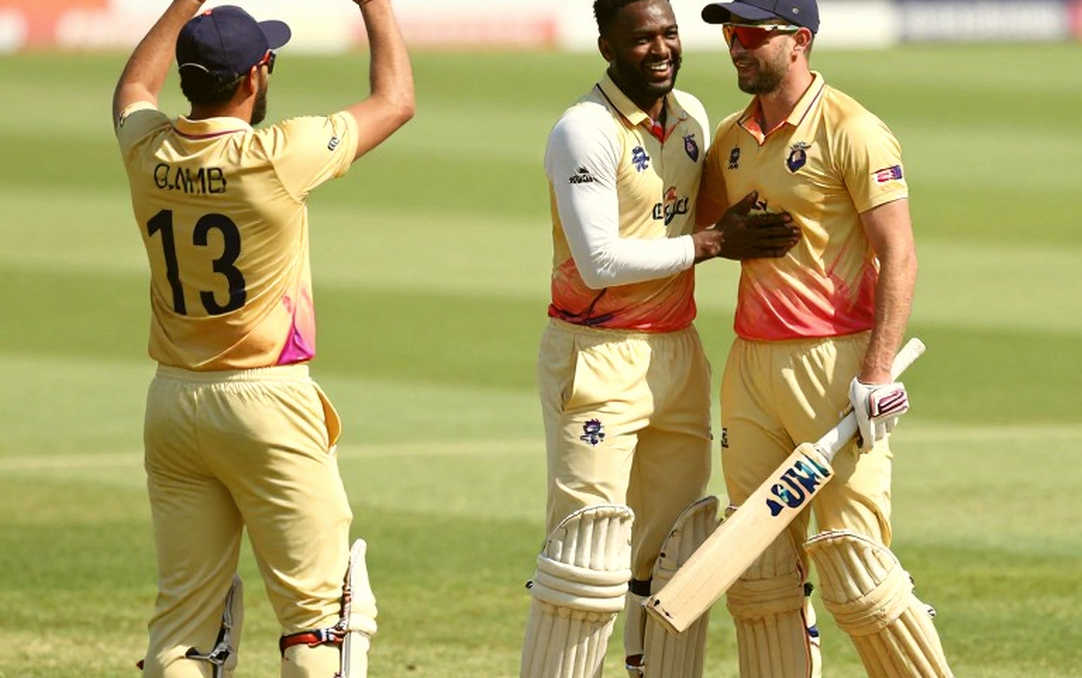
The Depth Signal Hidden in the Squad
West Indies added named cover immediately. That is a signal. A side that produces an equivalent replacement on day one of the injury news does not suddenly wobble. Jangoo and Andrew share a profile — keeper-batter. There is a direct replacement for the slot. Across a five-match series, a one- or two-match rest is realistic management.
But there is a subtlety here too. Cover means added to the squad, but cover does not mean playing in the XI. The difference between "cover" and "standby" is not yet clear. If Andrew is fit, Jangoo sits on the bench; if Andrew misses, Jangoo's door opens.
The Risk the X-ray Cannot See
Here is the real paradox. A big headline around the injury, but no big medical crisis. So where is the risk? In the calendar. The ODI block is immediately followed by a five-match T20I block. This kind of compressed schedule raises soft-tissue risk not for one player but for the whole squad. Andrew's finger may be a symptom — the first crack among tired bodies.
The Contrarian Angle: The Headline Frightens More Than It Should
There is a counter-intuitive truth here that many miss. The headline says "concern", but the x-ray result says "no break". The ordinary reader sticks at the headline and does not read the body's language. But in injury analysis the correct address is always the medical outcome, not the tone of the report.
The reverse is also true. Hearing "no fracture", many relax. But for a keeper's finger that relaxation is a mistake. The injury never proves itself in batting; it proves itself in the gloves — when a hard catch lands in the glove and that finger flares again.
So caution runs both ways. On one hand the headline frightens more than it should. On the other, "bone intact" should not buy as much calm as it seems to.
Another Layer: Context Beyond the Format
West Indies' T20I identity is distinct — this is the side that has won the men's T20 World Cup twice, and its heritage in this format runs deep. Five matches against India, and just before them a keeper-batter question — West Indies will not want any gap. Against a side like India, even a slight slackness in the field is expensive.
I keep thinking of those nine seconds in Rostov — in nine seconds a system collapsed and rebuilt. In this series too, one small decision — who keeps, who stands where in the field — can pull a large consequence. The best analysis does not explain the goal; it explains the nine seconds before it.
For readers in our region one point matters. Cricket audiences across South Asia, including Bangladesh, read injury news one way and read a team's real capacity another way. Our market is intensely reactive — a headline can shift a series' expectation. So honest analysis means doubting the headline and trusting the medical outcome.
The Silent Pressure of the Calendar
One angle would be incomplete without mention. In modern international cricket, switching formats is now the rule, not the exception. Before one series ends, preparation for the next format begins. In this continuity, fielders' bodies never get full recovery time. Coming from ODI to T20I, the finger, shoulder and knee all enter in a tired state. Andrew's injury is therefore not only a personal accident but an indication of a system.
When I watched cricket in Australia as a child, formats sat in separate seasons. Now everything runs together. This compression raises the standard of play but raises the cost to the body. The question is no longer only Andrew's.
Final Word: The First Two Matches Hold the Answer
So where do we look in the coming days? The first two T20Is. Watch — is Andrew in the XI, and if so, is he keeping? If he is kept only as a batter, then the injury is in the gloves, not the bone. And if Jangoo takes the gloves directly, West Indies have passed their depth test — but it is also a lost opportunity for the young Andrew.
The real question is not today's but tomorrow's — does the calendar build a player, or grind him down? For now the answer waits. And the waiting is the most valuable information here.