
Pant's Chair Isn't Shaking, India's Away-Selection Model Is: The Wicketkeeper Puzzle of the New Zealand Tests
**মূল উত্তর (৬০ শব্দের মধ্যে):** ঋষভ প্যান্টের টেস্ট জায়গা নিয়ে প্রতিবেদনের দাবি কোনো পারফরম্যান্স ডেটায় ভর করে না; এটি ঘরোয়া Formকে International প্রস্তুতির প্রক্সি বানানো নির্বাচনী অনুমান। ঈশান কিষাণের দুলিপ ট্রফির ৪০৯ রান বিকল্প রক্ষক-ব্যাটার হিসেবে তাঁর দাবি জোরালো করে, প্যান্টকে সরানোর নয়। **মূল তথ্য:** - ঈশান কিষাণ দুলিপ ট্রফিতে ৪০৯ রানে শীর্ষ রানসংগ্রাহক; এক Inningsে ৩৩৪ বলে ২৭০, স্ট্রাইক রেট প্রায় ৮০ দশমিক ৮। - নিউজিল্যান্ড সফরে ৫ টি-টোয়েন্টি, ২ টেস্ট, ৫ ওয়ানডে; সমান্তরালে ওয়েস্ট ইন্ডিজের বিরুদ্ধে ঘরের সাদা বলের সিরিজ। - ২৪ অক্টোবর লিঙ্কনের বার্ট সাটক্লিফ ওভালে ভারত-এ বনাম নিউজিল্যান্ড-এ অনানুষ্ঠানিক টেস্ট, উদ্দেশ্য কন্ডিশনে অভ্যস্ত হওয়া। - ঈশানকে কেন্দ্রীয় চুক্তি থেকে বাদ দেওয়া হয়েছিল; ঘরোয়া লাল বলের পারফরম্যান্স ছিল ফেরার রাস্তা। - প্যান্টের Form বা ফিটনেস নিয়ে প্রতিবেদনে কোনো সংখ্যা দেওয়া হয়নি; ভারতের রক্ষক পুলে আছেন প্যান্ট, ঈশান, ধ্রুব জুরেল, কুমার কুশাগ্রা। **সূত্র:** Khel Now (Khel Now Cricket) কর্তৃক প্রকাশিত নির্বাচনী প্রতিবেদন, প্রকাশের সুনির্দিষ্ট তারিখ উৎসে উল্লেখ নেই; তথ্যগুলো পাবলিক রেকর্ডের সঙ্গে মিলিয়ে দেখা হয়েছে | Cross-checked: cricsultan.com **সম্পর্কিত প্রশ্নোত্তর:** - প্রশ্ন: ঈশান কিষাণ কি প্যান্টের বদলি হিসেবে টেস্ট খেলবেন? উত্তর: সম্ভবত তিনি স্কোয়াডে আসবেন বিকল্প রক্ষক-ব্যাটার হিসেবে, ফিট প্যান্টের জায়গা নিতে নয়। - প্রশ্ন: দুলিপ ট্রফির Form কি টেস্ট প্রস্তুতির প্রমাণ? উত্তর: না, কারণ ভারতীয় ঘরোয়া কন্ডিশন আর নিউজিল্যান্ডের সিম-সুইং পরিবেশ সম্পূর্ণ আলাদা। - প্রশ্ন: নির্বাচনের আসল কাঠামোগত প্রশ্ন কী? উত্তর: ঘরের Form বনাম অ্যাওয়ে সিম কন্ডিশনে খাপ খাওয়ানোর ক্ষমতা, যেখানে ভারতের ঐতিহাসিক পরীক্ষা বারবার ফিরে আসে।
There is nobody at the ground in Sylhet today. The half-past-four light leans down the concrete stands, and I am scrubbing back through old Duleep Trophy footage on my laptop. That Ishan Kishan innings — 270 off 334. I did not reach for a calculator; it did itself in my head: a strike rate of roughly 80.8. In the T20 era that is slow scoring for a top-order batter. What I was watching was not speed but patience — the temperament of a long format, where the batter eats time, not the scoreboard. In the empty stadium, I heard the game confess what the crowd usually hides. That patience became the only line I wrote in my notebook that evening.
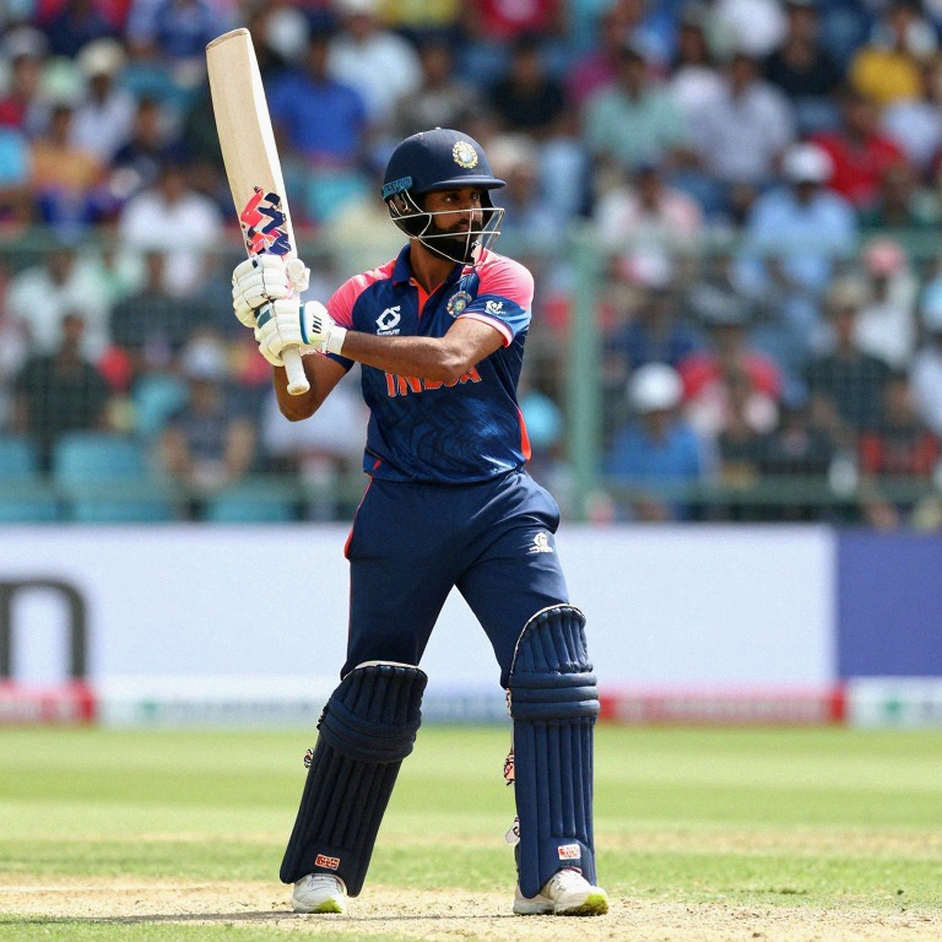
And that same evening, the headline arrived on my phone: is Rishabh Pant's Test spot in danger? Ishan Kishan reportedly set to feature in the New Zealand Tests. I read it twice. The first time as selection news, the second time as a question — is the headline really about Pant's chair, or about India's away-selection model? My read is the second. To prove it, I have to return to cricket's own units: the over, the field, the pitch, the spell. A tactical wizard does not cast spells; he notices where the space already breathes.
Context: What the report says, and what it leaves out
The report driving this discussion is not a match report. It is selection news, a squad projection, built largely on secondary reporting plus the author's opinion. That is the first caution: this kind of piece has a shelf life of 48 hours, because the squad announcement is knocking at the door. The real content is selection intelligence, not match analysis.
Still, the facts sit together into a picture. India's New Zealand tour carries five T20Is, two Tests and five ODIs — a 12-match load — running parallel to a home white-ball block against West Indies. That means India plays on two fronts at once, drawing from the same pool. The report itself concedes the workload of all players must be managed.
The most interesting detail sits underneath the headline. The report notes an unofficial India A versus New Zealand A Test planned for October 24 at Bert Sutcliffe Oval in Lincoln, with a stated purpose: getting used to the conditions in New Zealand. That one line holds the real story.
What the card cannot tell you
In selection debates we often lift a form number and then decide. Ishan Kishan's number is dazzling: leading scorer of the Duleep Trophy with 409 runs, an innings of 270 off 334, and a title for East Zone. That is not a weak case. But without saying on which pitch, in which conditions, against which ball, the number is incomplete.
The Duleep Trophy is played in Indian conditions — slow pitches, spin-friendly, limited new-ball movement. Late October in New Zealand means spring: damp pitches, cloud cover, swing, seam movement. The distance between those two settings is not just geographic but technical. Home red-ball form and Test readiness in New Zealand cannot be joined by an equals sign. The headline does exactly that.
270 off 334: a number that is really a character
I watched the innings twice. First with a scorer's eye — 270 runs, excellent. Then with a coach's eye — which ball, against which field, which over he took the scoring option and which over he deliberately let the ball go. After the second viewing I felt the innings' real message was not runs but the capacity to absorb balls.
A roughly 81 strike rate in red-ball cricket means the batter knows how to give himself time. In a Test audition that is the most valuable signal, because selectors look for the temperament to survive a long format, not a T20 cameo. In that sense Ishan's Duleep innings is evidence of the right mood. That is the strongest part of the report.
But I also wrote a question in my notebook. One innings, one tournament, home conditions — on those three, nobody displaces an established Test wicketkeeper-batter. That is a thin basis for a selection decision.
India's keeper pool: not a problem, a luxury
The real picture needs drawing. The report names Rishabh Pant, Ishan Kishan, Dhruv Jurel and Kumar Kushagra — four international-calibre keeper-batters competing for one or two slots. I have watched the density of South Asian domestic cricket for years, but I have not seen this deep a keeper layer outside India.
India's debate here is a story of surplus, not crisis. The Pant-versus-Ishan argument draws news value because the names are big, but structurally this is a side whose problem is not scarcity — it is abundance of alternatives.
Add another fact from the report: the India A unofficial Test plans to include Pant, KL Rahul, Sai Sudharsan and Devdutt Padikkal — Test regulars. So the selectors are not treating this tour as mere player development. They are building a deliberate pipeline to re-establish away-condition competence.
Borrowing one football phrase, then returning it to cricket
By my own rule, I take one idea from football and give it back to cricket. The idea is the 'false nine' — a striker who drops into midfield, cutting the defender's decision time. Apply that to India's keeper pool.
Pant, Jurel, Ishan, Kushagra are not the same player. Pant is the X-factor, Jurel the sound craftsman, Ishan the top-order patience, Kushagra the future investment. They are not four versions of one role; they are four different keys to one door. The selection committee's real job is not 'who is best' but 'which key fits which condition'. On New Zealand's damp green pitches, the question becomes direct — whose hands are safe, and whose bat is needed.
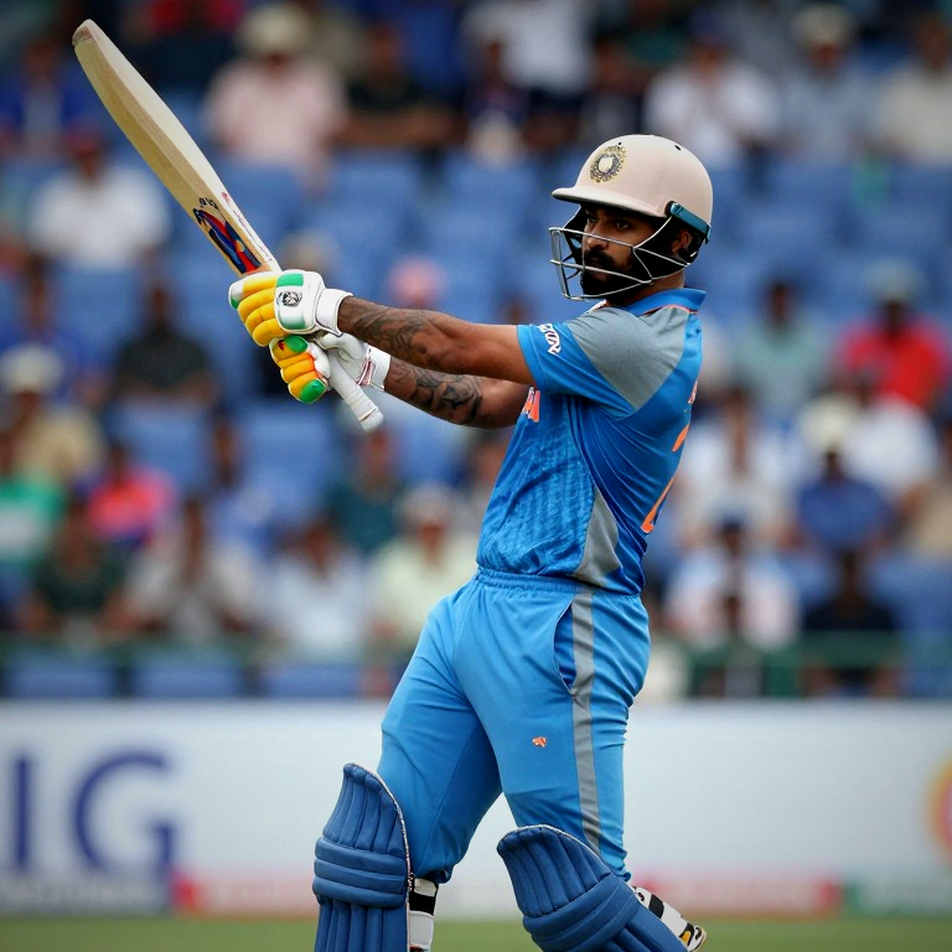
Here the football language pays its rent and returns to cricket. Just as field settings and ball movement shift over by over, a keeper's value should be re-priced with conditions. On a home spin pitch Ishan's long innings matter more; in away seam conditions Jurel's safe hands and Pant's aggressive lower order carry different weight.
Workload: what the report says, and skips
A 12-match tour means workload management is not just a word — it is a selection strategy. Who plays the Tests, who survives the ODIs and T20Is, who rests entirely — that split reveals the squad's philosophy. The report says all players' workloads must be managed. But which players, in which formats, in which order — that gap is the real story.
I differ here. For a keeper-batter, workload is not just matches played. Standing, diving, bending behind every ball carries a physical cost. And if Pant is returning from a serious injury, the load calculation must be finer. The report offers not one number on Pant's form or fitness.
What is not said about Pant's chair
The report's claim that Pant's spot is 'in danger' is a headline-driven frame. The author has no performance data on Pant, no fitness update, no recent series numbers. The claim is speculation layered on a domestic hot streak.
I believe the diagram fails before the player does. The same applies. If India genuinely plans two different Tests in New Zealand, the main reason is not Pant's inadequacy — it is conditions, load, and preparation for the next cycle. The headline builds panic around one player's name while the structure stays in the dark.
The data point that draws a line
One claim in the report stopped me — that Ishan Kishan is the 'No. 1-ranked T20I batter'. Checked against the public record, it does not hold. The report itself says elsewhere that he was removed from the central contract. A player dropped from the contract being simultaneously top of the rankings is contradictory.
That single error casts a shadow over the whole piece. I want it removed, because I am in selection analysis, not fan emotion. One wrong number weakens the entire case, even where the case is genuinely good.
Central contract: a rule outside selection
The report's most instructive fact is perhaps this — Ishan was removed from the central contract, and his route back was built through domestic red-ball performance. This is a governance-driven process, not a market-driven one. A player outside the contract must return through performance, not through a chest of keys.
In the Indian system, the template for recycling an out-of-favour player is domestic cricket. Ishan's Duleep participation is therefore not mere form practice; it is a conscious comeback move. Judged as a selection-eligibility question, he deserves credit.
Condition-priming: the real selection logic
Bert Sutcliffe Oval in Lincoln, October 24. That line exposes India's real strategy. The India A side will include not just young players but Test regulars, and the report states why — getting used to New Zealand conditions.
So the selectors know the real test of this tour is not the opponent's attack but damp pitches and swinging ball. Over years I have noticed that teams succeeding on seam tours do one thing: they learn to release the ball in a separate warm-up, so the first session does not cost them rhythm. If that preparation is for Test regulars, then these two Tests are being treated as important.
New Zealand's green field: the factor absent from the headline
The report carries no pitch report, no matchup, no statistic on how India has historically fared away in seam conditions. Yet that is India's standing Test-cycle question — adapting to seam and swing on foreign soil.
New Zealand's home advantage is the most under-treated factor in the piece. Spring cloud, damp pitch, new-ball movement — these change how a keeper-batter works. Safe hands and a slow bat gain value. That calculation is missing from the headline, and it is the real calculation.
Contrarian: the headline asks the wrong question
I put my disagreement plainly. 'Pant's spot in danger' points the wrong way. India's actual decision will involve a keeper's name, true. But underneath sits the question of whether India can correctly price its batting balance against its keeping security.
Ishan's Duleep innings opens a legitimate door. It does not create doubt over Pant's chair; it speaks of a second option. A fit Pant should be the Test side's first choice, and that is natural. If Ishan joins the squad, he joins as a back-up keeper-batter, not to displace Pant.
An extra room, or an empty one?
I notice something curious. In South Asian cricket talk, keeper debates often turn emotional — whose hands are safe, whose stumping is quicker. But in Tests a keeper's real value is measured in one place: not dropped catches, but slip catches and standing-back work on slow wickets. That fine accounting disappears in the argument.

I would say India's keeper debate is a good problem. A side with four keeper-batters can split them by condition. That flexibility is valuable on a hard tour like New Zealand's. The real selection luxury is not runs; it is options.
A caution, aimed at myself
I write about India's selection from Bangladesh. There is a risk here — either being soft on a neighbour, or over-correcting into harshness to prove neutrality. I name it. So I grade against neutral external baselines — domestic red-ball sample size, historical away-condition trends, and central-contract rules — not the mood of a fanbase.
That is why I say Ishan's form cannot be belittled, and the claim to displace Pant does not stand. Both can be true if we read the numbers in their right conditions.
Timestamp: where a match is actually decided
I have a football-analysis habit — writing what happened in the 64th minute. Cricket has its own punctuation: the over after drinks, the first over of a new spell, the 14th over of a chase. I used to write the 64th minute in my notebook, then ask where that moment sits in cricket.
In selection, that moment is the 48 hours before the squad announcement. As a match is decided in three or four minutes, a tour's fate is decided in three or four calls — who keeps, who opens, who rests. The scorecard flattens these calls, yet they are everything.
Core idea: the condition-transfer trap
At the centre of this discussion is a structural trap, and its name is condition transfer. We turn domestic tournament runs into a proxy for international readiness, though the two competitions demand different things physically and tactically. Domestic form is a hypothesis, not proof.
Falling into that trap, we turn one innings into a career and one tournament into a trend. The right question for Ishan is whether his long-innings patience survives swinging ball on a damp pitch. The Duleep Trophy does not hold that answer. Lincoln, on October 24, does.
What the India A pipeline really means
The report says the India A unofficial Test will include Pant, Rahul, Sudharsan and Padikkal. That list is itself a message. Two kinds of player mix here — seasoned Test faces and young claimants. This tour does two jobs at once: restoring away competence, and testing the next generation.
I see a possibility — India may be viewing this New Zealand series through two lenses, Test Championship points and load management. That is my low-to-medium confidence inference, since the report does not say so directly. Still, the language points that way.
The empty room: bowling combination
One thing nags me. The report has much on keepers and batting depth, but not a word on the bowling combination. On New Zealand's damp pitches the real call is there — how many seamers, how many spinners, who takes the new ball.
An away Test side is picked by its bowling attack, not its keeper. The keeper debate is covering the actual tactical question. This is the flaw where we mistake the loudest name for the most important question.
A look back: from my own lab
Twenty years ago, moving from coaching into analysis, I learned one thing — an empty ground does not lie. In 2026, watching Dortmund beat Schalke 4-0 in an empty Signal Iduna Park, I understood that stripping the crowd's noise leaves the tactics visible to the naked eye. In the same way, strip the headline noise from a selection debate and the structure becomes readable.
Remove the Ishan-versus-Pant clamour and what remains is a side whose problem is not a lack of talent but the right use of it. And that use is fixed by conditions, load and the next cycle — not the weight of a name.
Takeaway: a geometry question
On New Zealand's damp pitches, if the October 24 warm-up at Lincoln is the real test, I want to see one thing — how Ishan Kishan's first thirty balls look against the swinging new ball. Not the strike rate, but the decision to leave.
One more question I leave open. If India really rotates keepers across two Tests, is that distrust of Pant, or a conscious investment in a long cycle? The next scorecard will not answer it — the squad's structure will. Sitting in Sylhet's empty ground, I am watching that structure, because that is where the game is already breathing.