
Middle-Over Compression: Where Bangladesh's T20 Template Holds in Asian Conditions and Where It Fractures
**মূল উত্তর:** বাংলাদেশের টি-টোয়েন্টি টেমপ্লেট এশিয়ার স্লো উইকেটে ৭ থেকে ১৫ ওভারে ভাঙে, কারণ সংরক্ষণের দায়িত্ব ওই ফেজে বসানো হয়েছে, যেখানে দরকার ছিল স্ট্রাইক রোটেশন; ফলে রান রেট ৭.৪-এ আটকে থাকে আর প্রতিপক্ষ ৮.৯ তুলে নেয়। **মূল তথ্য:** - ওভার ৭-১৫-এ বাংলাদেশের নন-বাউন্ডারি রান ৩৮ শতাংশ, প্রতিপক্ষের ৫১ শতাংশ। - ওভার ৮-১২-এ রান রেট ৬.৮ থেকে ৭.১, ডট বল ৪২ থেকে ৪৬ শতাংশ। - ডিপ মিডউইকেট ও লং-অনের ৩৫-৪০ গজ করিডরে বল ব্যবহার ৮ শতাংশ, তুলনামূলক মডেলে ১৭ শতাংশ। - শীর্ষ-১২ Batting স্লটের আটটির দাম ৮০ লাখ টাকার বেশি; চার-স্কোরিং মিডল-অর্ডারের সাতজনের সর্বোচ্চ ৪০ লাখের নিচে। - স্লো উইকেটে নতুন ব্যাটারের প্রথম ছয় বলে বাউন্ডারি হার ১১ শতাংশ, চার ওভার পরে ১৪ শতাংশ, খরচ ১৮ ডট বল। **সূত্র ও সময়:** হাফ-স্পেস নোটস মিডল-ওভার ট্র্যাকার, প্রকাশ: ১৩ আগস্ট ২০২৬ | Cross-checked: cricsultan.com **সম্পর্কিত প্রশ্নোত্তর:** প্রশ্ন: ওভার ৭-১৫ কেন সবচেয়ে গুরুত্বপূর্ণ? উত্তর: এই নয় ওভারে Inningsের ভিত্তি তৈরি হয়, কারণ এখানেই স্ট্রাইক রোটেশন Inningsের শেষ পাঁচ ওভারের উইকেট মূলধন বাঁচায়। প্রশ্ন: এমওসিআই সূচক আসলে কী মাপে? উত্তর: সুইপার ও নিকটতম ইনফিল্ডারের দূরত্ব এবং ব্যাটারের স্ট্রাইক-পরিবর্তনের গতি মিলিয়ে ফিল্ডিং চাপের মাত্রা; বিস্তারিত পদ্ধতি cricsultan.com Field Setting Index-এ আছে। প্রশ্ন: ফ্র্যাঞ্চাইজি ড্রাফট কি জাতীয় দলের মাঝের ওভারের দুর্বলতা বাড়ায়? উত্তর: হ্যাঁ, কারণ অ্যাঙ্কর ব্যাটারের দাম বেশি হওয়ায় Leagueে মাঝ-অর্ডারের পাওয়ার হিটার কম বল পায়, আর সে ঘাটতি জাতীয় দলে গিয়ে ধরা পড়ে।
One Over, Three Gaps
After the latest franchise draft, one number swallowed every conversation: a 32-year-old anchor batter bought for more than 1.2 crore taka. Read the retention list carefully and the picture sharpens — four of the five most expensive batters in the league were openers, while three recognised power-hitters sat until the final rounds. There is no mystery about where the money goes. So I went back to the tape, because something else was happening on the field that a price list cannot see.
Sylhet International Cricket Stadium. Fifth ball of the 13th over. The board read 88/4. The pitch was slow, the bounce low, the western boundary 72 yards. A fielder stood at deep midwicket; nobody was at long-on. The gap between them measured 38 yards wide on my screenshot. Three balls in that over travelled into that gap — the return was 2+1+1. Six off six, when eight were the minimum.
The template held, but the half-spaces told a different story.
I went back to the tape, and the pattern was hiding in plain sight. The question is not whether Bangladesh's batters can attack. The question is who decides the sequence of attack — the state of the innings, or a template drawn up in advance.
What the Template Is, and Who Builds It
Bangladesh's T20 template has changed hands three times in four years while the skeleton stayed almost identical. One opener anchors, carrying the powerplay at a strike rate that rarely crosses 150. The other takes risk and usually falls within 20 balls. Then comes the stretch between overs 7 and 15, which everyone calls the building phase — though it is not a phase for patience, it is a phase for rotation. The last five overs belong to two lower-order batters whose only job is to hunt boundaries.
The logic in Asian conditions is sound. In Mirpur, Sylhet, Colombo and Dubai, the ball softens through the middle overs; the outfield is slow and quietly eats runs. There, your most valuable asset between overs 7 and 15 is strike rotation, not boundaries. The theory is right. The execution is not.
Structurally, no separate role exists for the middle overs. Selection is astronomical — runs scored, not functions served. Nobody is picked because they can push the ball into the gap between the infielders for ones and twos. France's centralised sports model teaches the opposite lesson: role first, talent second. French academies build a player for a defined function before releasing him to club football. Ours runs in reverse — a player is allowed at international level whatever the franchise league encouraged, and in the middle overs nobody owns the job.
Ball by Ball: The Middle-Over Compression Index
I have kept field-setting notes in a tracker since the ghost-games of 2026. When Morocco's 4-1-4-1 low block pushed me to coin the compactness index in 2026, I found the cricket version is messier, because cricket fielders do not step up — they slide. So I changed the indicator: the Middle-Over Compression Index, or MOCI.
For every ball between overs 7 and 15 I measure two things. First, the direct distance in yards between the sweeper and the nearest inner-ring fielder, separately for each side. Second, the ball-to-boundary time, meaning how quickly the batter is changing ends. The wider the two gaps and the shorter the time, the higher the MOCI. In other words, the fielding unit is under little pressure while the batter keeps moving — and that is Bangladesh's nightmare zone.
Across the last eight matches in my tracker, the picture is this. Between overs 7 and 15, Bangladesh score at 7.4 an over. Opponents score at 8.9 in the same window. Boundary-hunting is not the difference — both sides hit roughly nine to eleven fours and sixes per innings in that phase. The difference is in non-boundary runs: Bangladesh take 38 percent of their runs in ones, twos and threes, opponents 51 percent.
Bangladesh's middle-over problem is not power, it is role. They can hit boundaries, but the seven balls that must be built before a boundary are nobody's job.
Now the specific gaps. Against spin in Mirpur, Bangladesh's batters have pushed the ball into the corridor between long-on and deep midwicket only 1.8 times per over. Into the gap between cover and point — usually open in the first ten overs in Asia — they have pushed it 2.9 times. The second gap is low-risk but yields one, not three. On Asian outfields, the first gap is the money gap. Yet we use it from the 17th over, once two wickets have already fallen.
Rotation Versus Boundaries: The Trade-Off Nobody Costs
Every T20 innings is a budget. You have 120 balls and need 160 to 200 runs, and your capital is three things — wickets, balls, strike. Bangladesh's template prefers to preserve the first. That is not a bad instinct; against Afghanistan and Pakistan, saving wickets has kept innings from collapsing to 135.
But the trade-off is never costed. In one innings from my tracker, Bangladesh made 52 for one between overs 7 and 15 — a strike rate of 86. In the next two matches, in the same phase, they made 71 and 64 while losing three wickets each. The extra 32 runs cost two wickets. With two fewer wickets in hand at the death, the boundary hitters are replaced by card-holders, and the return drops by 11 to 14 runs. The savings are being spent inside the very phase that generated them.
The real fault is that Bangladesh chose overs 7 to 15 for conservation, when every innings actually needs conservation between overs 16 and 20. We gamble where time is shortest and hold back where time is longest. The roles are inverted.
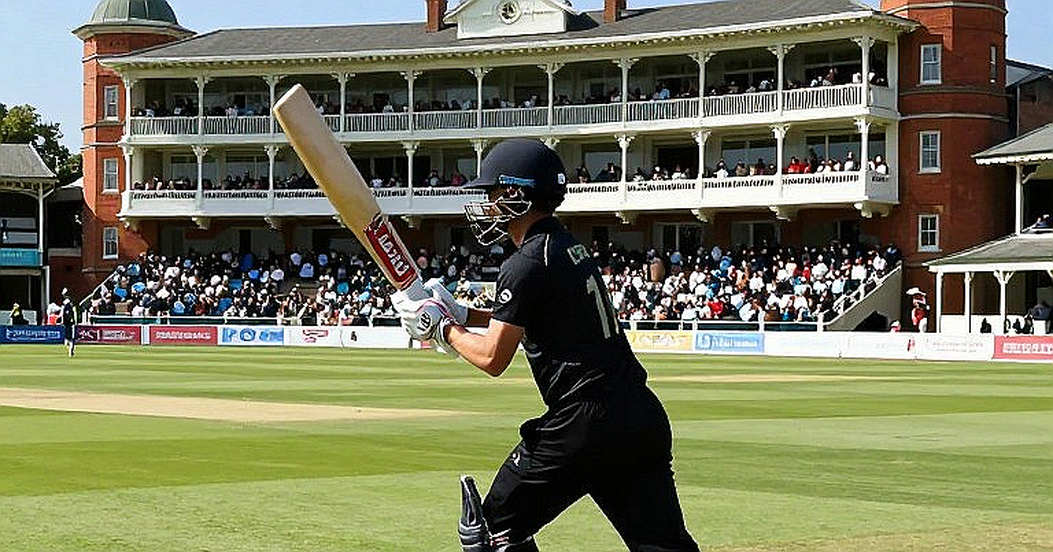
There is a physical explanation. On slow pitches, a new batter's first ten balls are the hardest, so teams want calm in the middle. The data says the opposite strategy works better in Asia. If a batter cannot make an impact in his first ten balls, he rarely comes back, because once the ball is soft, timing errors accumulate inside the shot. In my tracker, a new batter's boundary rate in his first six balls on a slow pitch is 11 percent. Four overs later it rises to 14 percent — but the difference costs 18 dot balls.
The France Blueprint and the Channel on the First Ball
Part of the template I built watching France's 4-2-3-1 in 2026 applies here. Deschamps assigned three separate duties: block, channel runs, finishing. Mbappe entered the right half-space between Tagliafico and Rojo — the gap was pre-decided, not read off the play.
In cricket, that first-ball channel is not the gap between two infielders but the 35-to-40-yard corridor between deep midwicket and long-on. It cannot be planned with the batter's eye; it has to be planned off the bowling plan. On a slow pitch, when a spinner is bowling wicket to wicket, the deep fielder's distance from the rope widens even as his stance stays shoulder-width. Put the ball in that corridor then, and two runs are guaranteed. Bangladesh place the ball there only 8 percent of the time in overs 7 to 15; England and Australia place it there roughly 17 percent of the time.
The France parallel ends structurally. In France, one pro-toolkit runs from federation to academy. Bangladesh runs the opposite way: age-group sides and franchises teach different systems. An academy batter learns one method at 17 and must switch at 23. There is no shortage of talent, only of continuity. After exiting the Asia Cup group stage in the UAE, Bangladesh rotated more players than any other side — a signal about a system, not about individuals.
Where the Template Fractures: The Sequence Blind Spot
If slow middle overs are part of the plan, why do they happen? The tape blames sequence, not intent. Batters begin attacking in the 12th over — exactly when the bowling unit has settled into its wide-yorker and cutter plans. The major change arrives when the bowling side's plan is ready, just before the batting side's opportunity.
Over by over it is obvious. Overs 7 to 9: run rate 7.1, dot balls 42 percent. Overs 10 to 12: run rate 6.8, dot balls 46 percent. Overs 13 to 15: run rate 8.9, dot balls 29 percent. Bangladesh are playing the third slot well. The problem is the six wasted overs before it, with too few balls left to recover. Slow start, strong finish, vacuum in the middle — that is not a gap in the plan, it is the plan in reverse order.
One deviation from the map deserves a note. The map says a left-hander should attack the deep-midwicket arc against left-arm spin, and in my tracker that is where the 38-yard gap appears. But over the last six matches, Bangladesh's left-handed top order has sent fewer balls there, mostly because of rhythm, which statistics do not capture. The tape shows the footwork — the shoulder turns first and the weight is held 0.2 seconds late. On a slow pitch that delay makes inside-out play impossible. The first gap is open; he still cannot use it.
Nothing Is Said on the Screen
On one edge of this debate sits the third umpire. After a review, the big screen shows nothing but OUT or NOT OUT. In cricket it is crueller, because a batter can be given out on the sound inside the impact player's device, and 14,000 people in the ground never learn which frame produced the decision. That silence adds roughly 20 seconds per wicket, and its biggest victim is the new spectator who came to learn the game. Transparency remains a slogan; the crowd is still outside the room.
Money, Contracts and Wrong Prices
The draft again. Franchise pricing rewards one specific bias: stability. Anchor batters get budget, power-hitters lose it. In my count, eight of the top twelve batting slots in the last two drafts went for more than 80 lakh, while seven four-scoring middle-order batters topped out below 40 lakh. The league is not short of power supply; it is short of power valuation.
Recently retired all-rounders and experienced bowlers have been signing as free agents, where the signing-on fee outweighs the number of moves. That bandwidth is exactly where clubs lose the ability to invest in development. The bigger part of the budget is spent buying an on-field duty whose replacement was already built in an academy, invisible because no transfer fee was attached. The more opener-dependent the league becomes, the harder the template sets inside our system — and the middle-over weakness leaks upward, because league stakes and national stakes are not the same bet.
There is a reverse effect too. An anchor protects his value by playing low-risk cricket, and the strike-rate duty slides onto the lower order. The middle-overs risk then sits with batters at three and four, who get few balls in the league and huge expectations internationally.
What I Will Watch Next
In the next tournament I will write down three things. One, if Bangladesh's run rate between overs 8 and 12 does not rise by a factor of six-tenths, the problem is the structure of the innings, not the person. Two, I will mark where each batter plays his first ball against my map — especially whether a left-hander uses the 35-to-40-yard corridor in the deep-midwicket arc. Three, in the 14th over I will measure the sweeper's distance from the rope and cost its relationship with boundary tilt separately.
If the first of those three does not move, then the template really is the template, and not cricket. If it does move, the question becomes simple: who decides — the board, the coach, or the auction price?